Arriving at Siem Reap–Angkor International Airport (SAI) , three hours behind my originally scheduled arrival, would normally not affect me. Today, however, I have made it my mission to avoid any and all unnecessary terminal time moving forward.
The flight itself is barely two hours, but for olfactory reasons, I put all bodily functions on hold — requiring an immediate pit stop upon landing to ensure peak performance for what lies ahead.
Barreling past old ladies with canes, narrowly missing young children, and slithering into the disabled stall a split second before Ms. Wheelchair Lady buys me a solid five minutes.
Continuing briskly through the terminal, my eyes scan, seek, and lock onto the fastest-moving immigration line. Pertinent paperwork in hand and positioned for expedited handoff, I activate International Frequent Traveler Who Has No Time for Amateurs mode. Intimidation eliminates two travelers in front of me, shaving three precious minutes off the estimated seven to baggage claim.
Standing flush to the luggage spit-out spot, I focus beyond the black rubber curtain thingee, assuring immediate retrieval of my stuff. Within seconds of grabbing my belongings, I roll through customs in record time. Initializing my prepaid Cambodian eSIM, I open my Grab app to order a ride to my hotel.
My finger, poised and prepared to select the top option — having done so more times than I can count — stops midair.
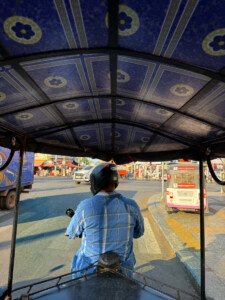
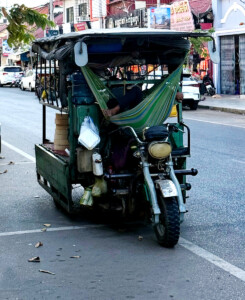
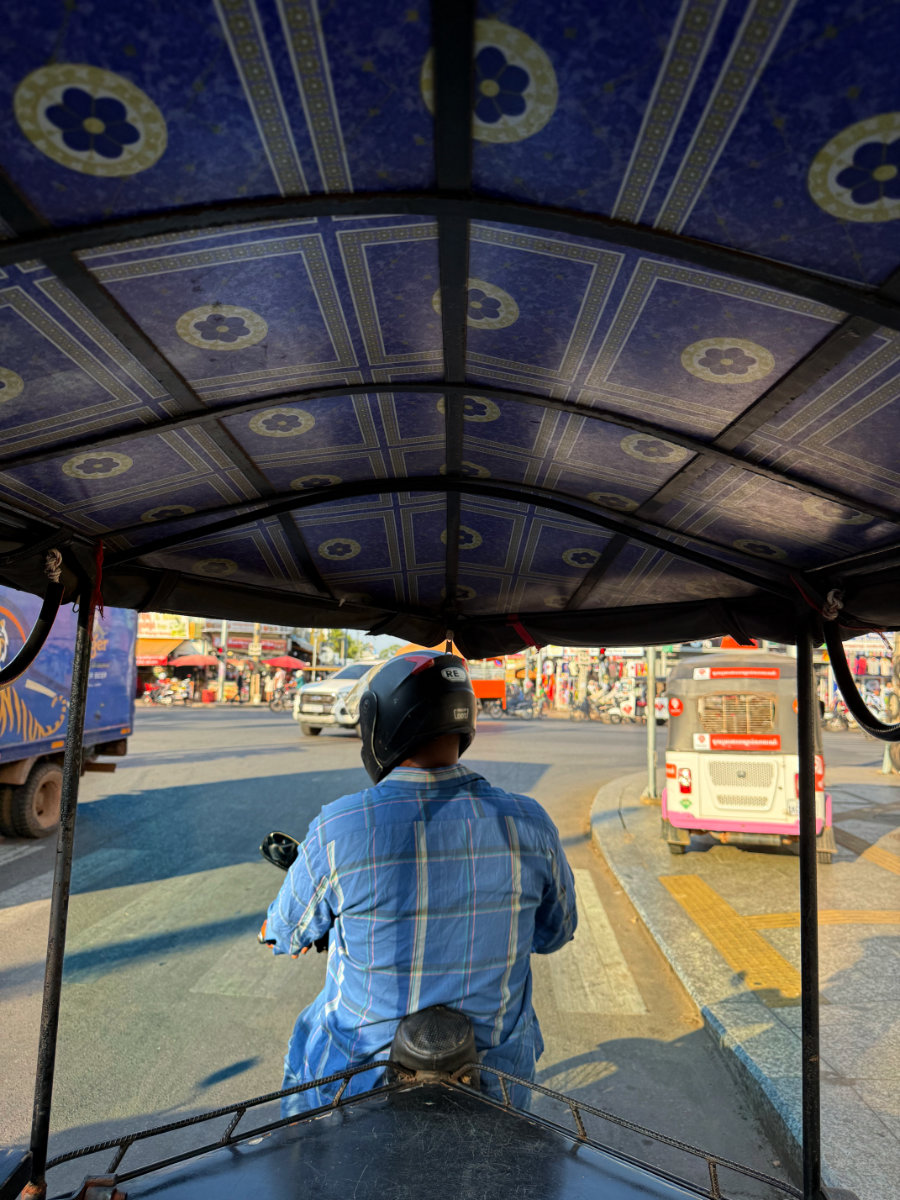
Tuk-tuk?? What the fuck-fuck?
Time is of the essence. No matter the transport option, all are twenty minutes out — eliminating my prior gains. Defeated, I order a car just as a man approaches asking if I need a Grab.
“Ya, for sure. How do I book you?”
He opens his Grab app and shows me the route to my hotel.
“Cancel that car. I’ll take you.”
“I don’t have any cash”, I say.
“No problem. We can charge your card over here with a five-dollar discount.”
I pay and follow him to his van parked a bit away.
No matter. I’m still on track to complete the mission.
“We’re at war, you know,” Mr. Taxi Man says.
Actually, I had no idea.
“Cambodia and Thailand at the border.”
Oh ya. I was in Thailand a couple months ago and heard about it then.” I’d already heard the Thai version of the ruckus — who started it, who crossed first, who was to blame. War is always the other guy’s fault. Switch the country names and the villain changes.
“It started again. Supposed to be a truce for New Year’s… maybe it will last.”
An actual war. Guns and tanks. People shooting and killing at the border between Thailand and Cambodia. Far enough away not to affect my safety — but still something to stay alert to. Shootings happen all the time in the U.S. The only difference with war is, you know who you’re fighting against thanks to uniforms.
An hour drive in the pitch dark. I do my best to chill in the back.
BANG.
I go flying, hitting the seat in front of me before landing on the floor.
OMG we’ve been hit.
Actually, we hit the car right in front of us.
Well… he did. Not me.
“You okay?”
“Ya, fine,” I say, picking myself up off the backseat floor. “Just a little scrape.” It’s barely bleeding as I inspect where my elbow kissed the seat.
Twenty minutes of heated negotiations between the three cars involved — family members driving in from nearby for support — and it’s decided my driver will pay $25 for the damage incurred. His pregnant wife forks over the cash, still mid-argument, as we drive away.
There goes all my hard work..Mission failed.
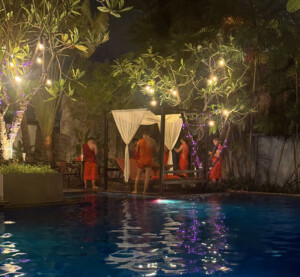
Still recovering from whiplash acquired walking around Vietnam, I am ill-prepared for getting hit in a car. After checking into my Siem Reap hotel — still shaky and technically in one piece — I head straight to the pool bar. Sipping my somewhat drinkable white wine, I feel the intensity of the day’s journey racing around my anatomy.
The next day I’m plum tuckered out. Annoyed with myself for not wanting to get out of bed, I try to rally but fail miserably. My mind refuses to accept that my body is not bionic.
Life is short, baby. I’ve got places to go, people to meet, and stuff to see.
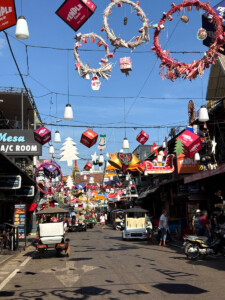
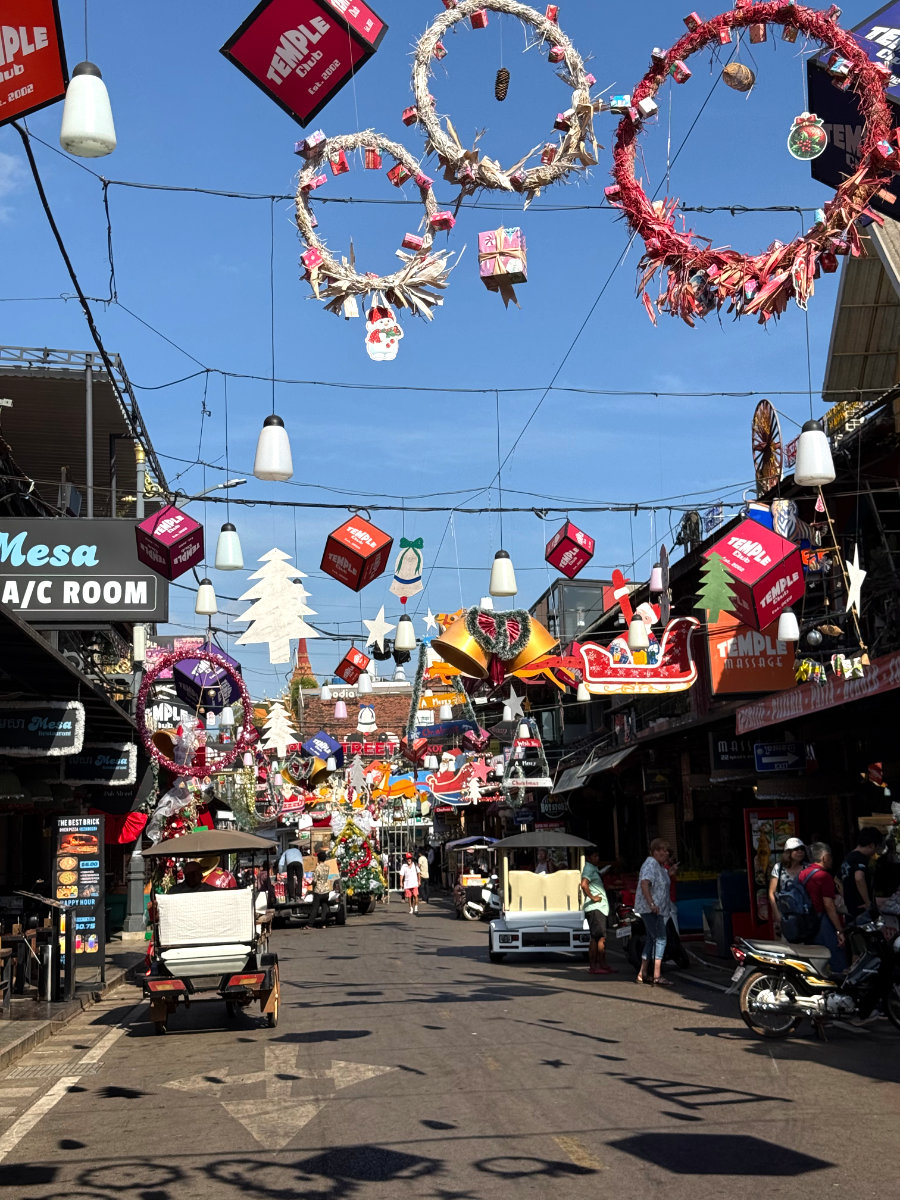
I manage a walkabout to the center of Siem Reap along the aptly named Pub Street.
Under my current circumstances, it’s a bit too lively. Picking up on frat-house vibes, I make my jaunt a short one. A few happening spots advertise themselves as Angelina Jolie’s favorite place, offer a drink named after Angelina Jolie, or proudly claim Angelina Jolie ate here and loved it.
The movie Tomb Raider was filmed at nearby Angkor Wat starring you-know-who. Apparently, Ms. Jolie made quite the impression.
Personally, I’m on Team Brad.
Ringing in the New Year on Pub Street is a hard no. For the first time in probably ever, I am fast asleep by 11:00 p.m.
Turns out Cambodia wasn’t in party mode either. Due to the border conflict, respect for fallen soldiers, and overall public safety, fireworks were banned throughout the country.
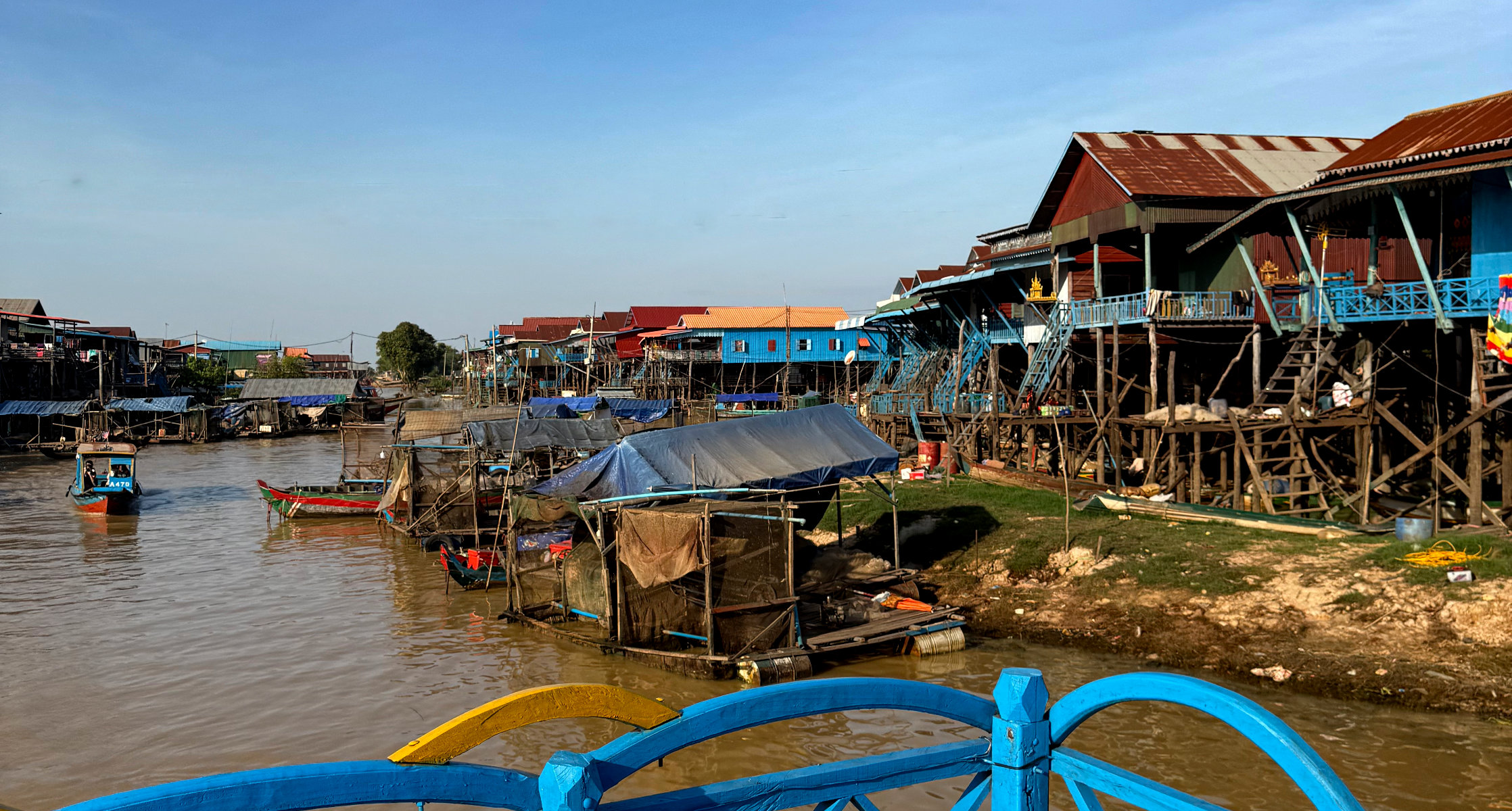
For such a small country — roughly the size of Missouri — Cambodia has a significant and layered history. With limited knowledge beyond “Angelina Jolie was here,” I begin my explorations with a tour to the Floating Village of Kompong Phluk.
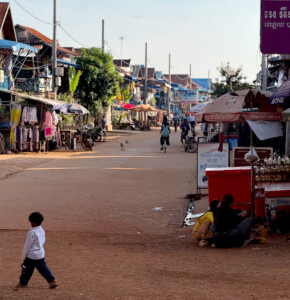
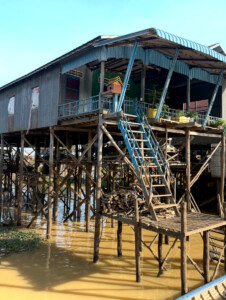
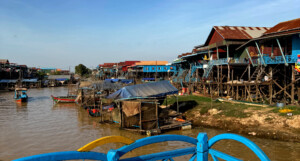
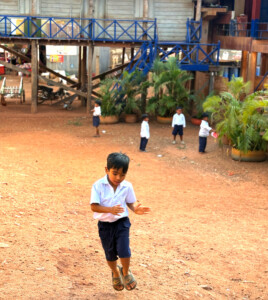
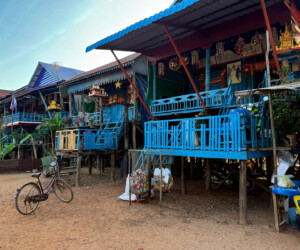
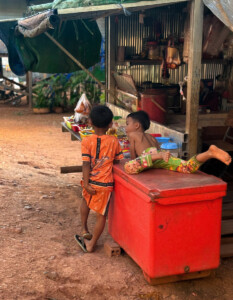
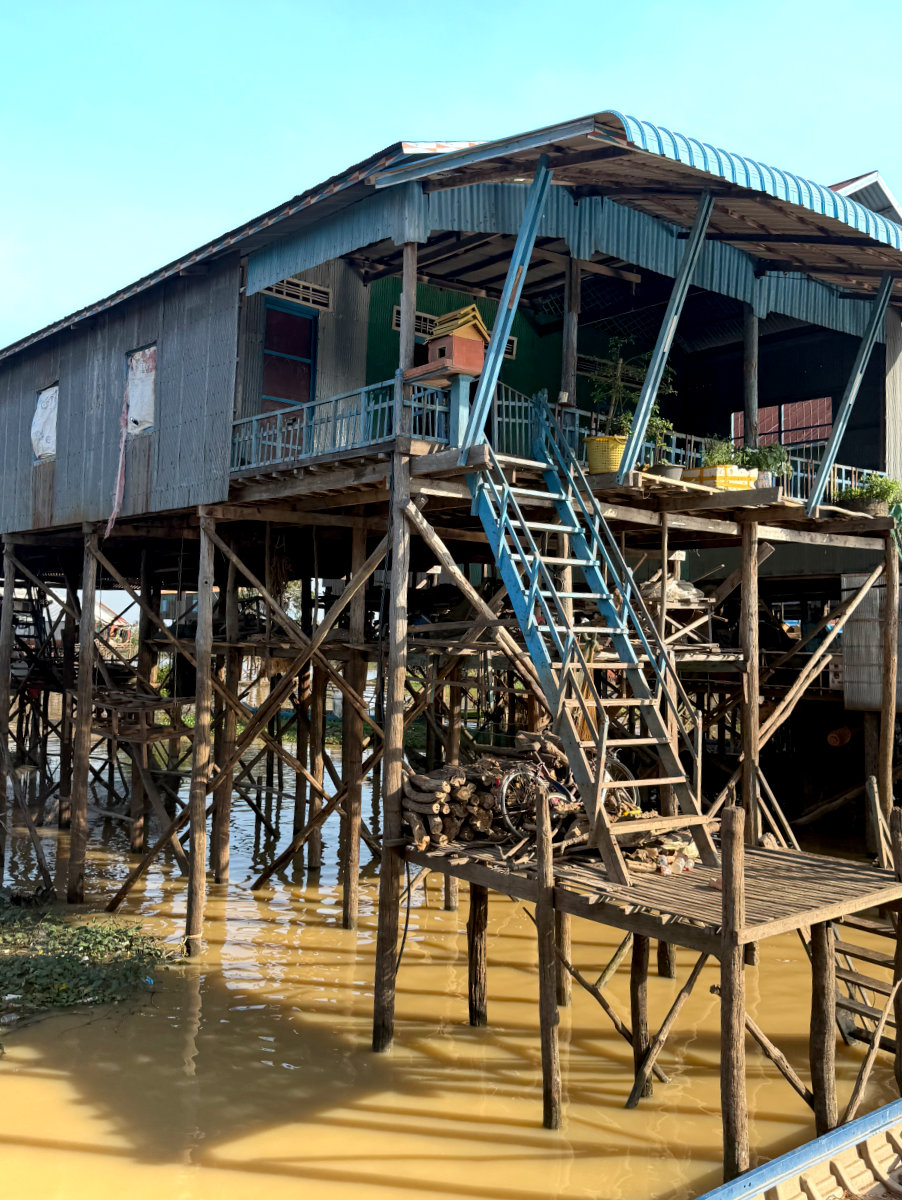
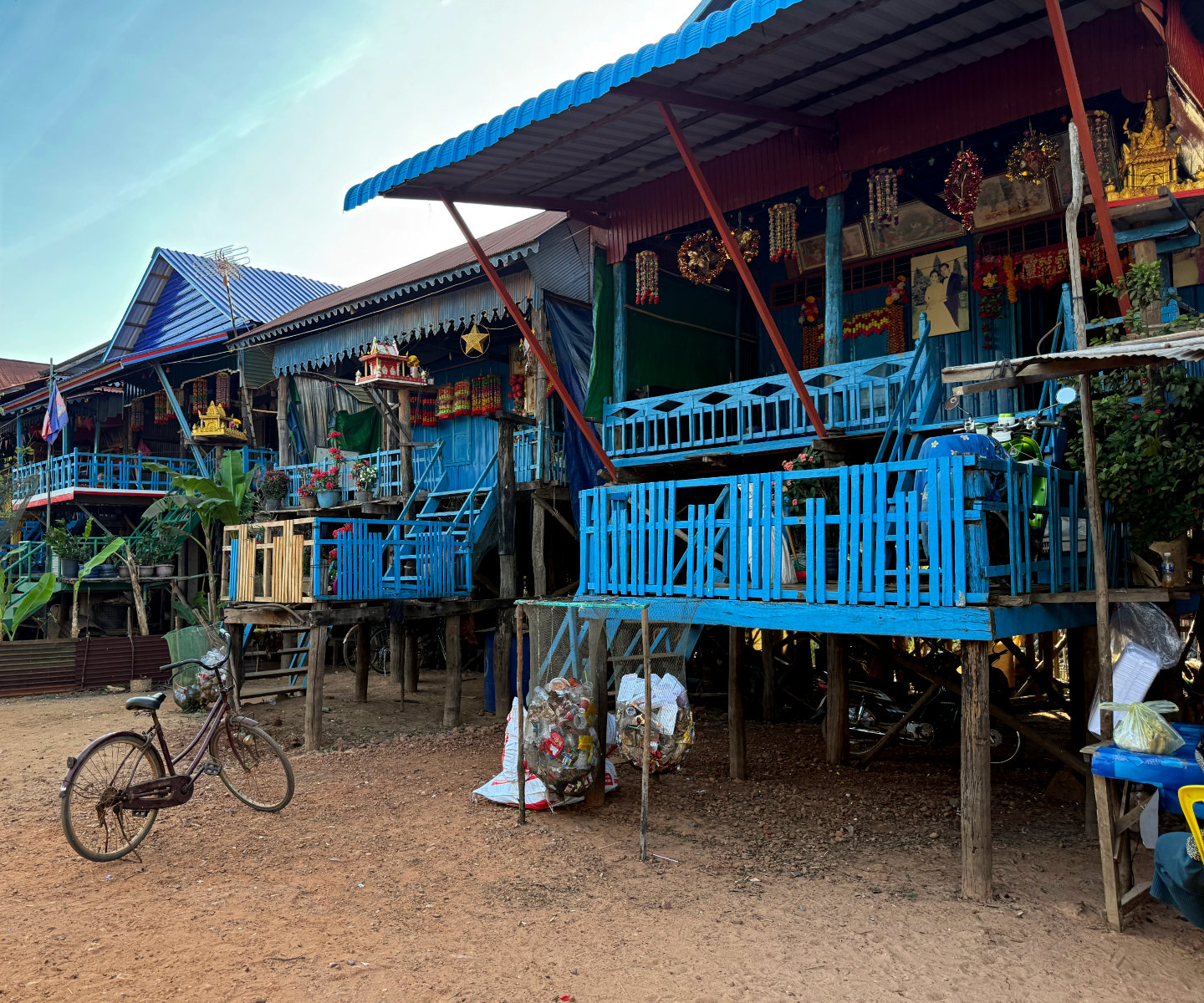
Kompong Phluk is a long-established fishing community located about 16 kilometers southeast of Siem Reap on the floodplain of Tonlé Sap Lake, Cambodia’s largest freshwater lake. The village is built on high wooden stilts — some reaching 6 to 8 meters — to accommodate the lake’s extreme seasonal changes.
During the monsoon, water from the Mekong River reverses the flow of the Tonlé Sap River, causing the lake to expand dramatically and submerge the surrounding forest and farmland. In the dry season, much of the area beneath the houses becomes exposed land. This annual flood cycle has sustained Cambodian life since the Angkor period and continues to support fishing-based livelihoods today.
What looks at first like a tourist excursion is, in reality, a community engineered entirely around water — rising and receding, predictable yet never fully controlled.
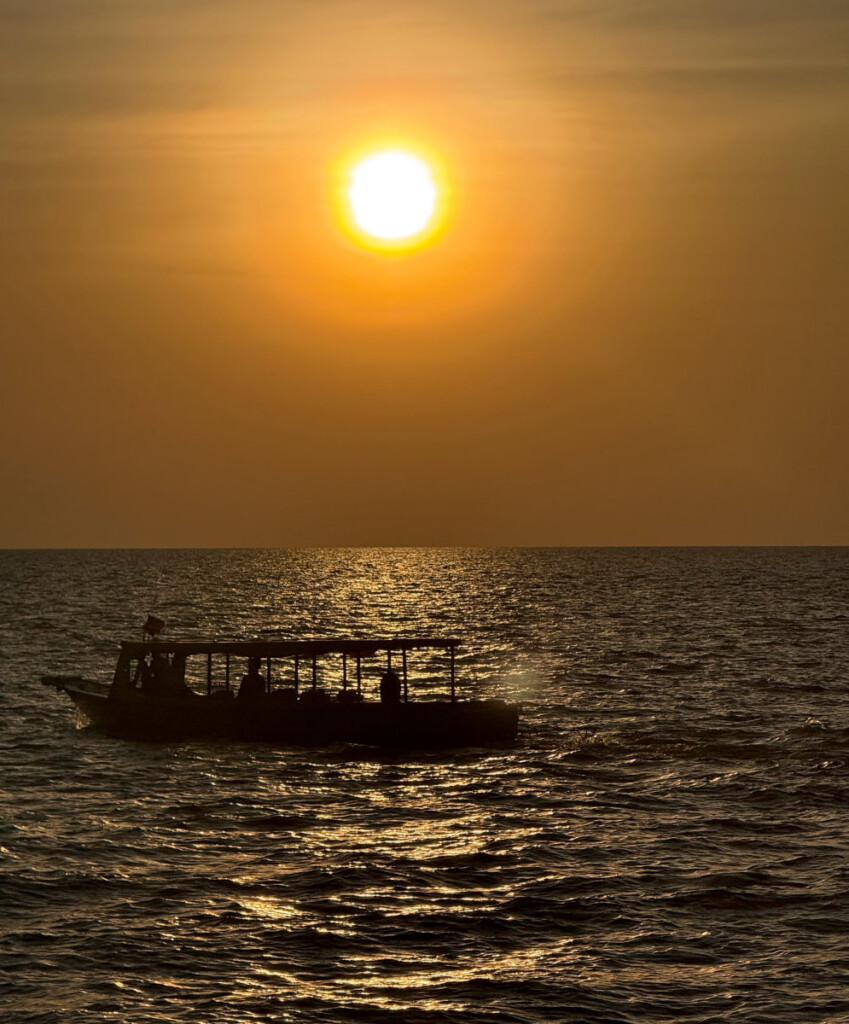
Passing the village our boat continues into the large expanse of water ahead. How can this be a lake.. it’s ginormous. And it sure acts Oceanic.
They call it a lake. The sign says it’s a lake. Intellectually, I understand it’s a lake. My brain keeps pushing back. Lakes are supposed to feel contained. This one stretches past the limits of the word. The water lies flat and brown under a sky that refuses to offer an edge.
I’m not sure why I need it to make sense. And yet, I do.