Hoi An Vietnam Travel Humor Essay
Every party needs a pooper—that’s why we invited you fer.
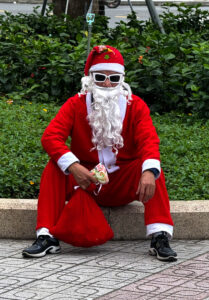
Determined not to be that guy at Christmas—especially since I was the only one at the party—I signed up for a tour. Mingling with the masses might jump-start whatever holiday spirit lies embedded deep within my solar plexus.
White Rose Dumpling Restaurant (Bánh Bao–Bánh Vạc) is our designated meetup spot.
The restaurant originated over 130 years ago with a local family of Chinese descent. The authentic, original recipe is still held and produced by a single family here in Hoi An. For real—they supply restaurants throughout the city from this one location.
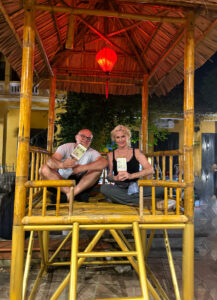
Our group consists of me, our guide, a lesbian couple from Atlanta, and an engineer from Germany. Excited to put my German to use, I strike up a conversation with the kraut.
“Guten Tag, ich habe meine Hausaufgaben schon gemacht, und mein Geburtstag ist der neunte Juli. Möchten Sie eine Tasse Kaffee?”
Telling him I’ve finished my homework, that my birthday is July 9th, and asking if he’d like a cup of coffee fails to spark any meaningful response. I pivot back to English.
But boy—these dumplings are awesome.
I usually abstain from delicacies such as these. Out of embarrassment, I shove three into my mouth at once, giving it something to do.
Heading toward our next culinary destination, Madam Khanh’s, our guide gives us the lowdown on the city.
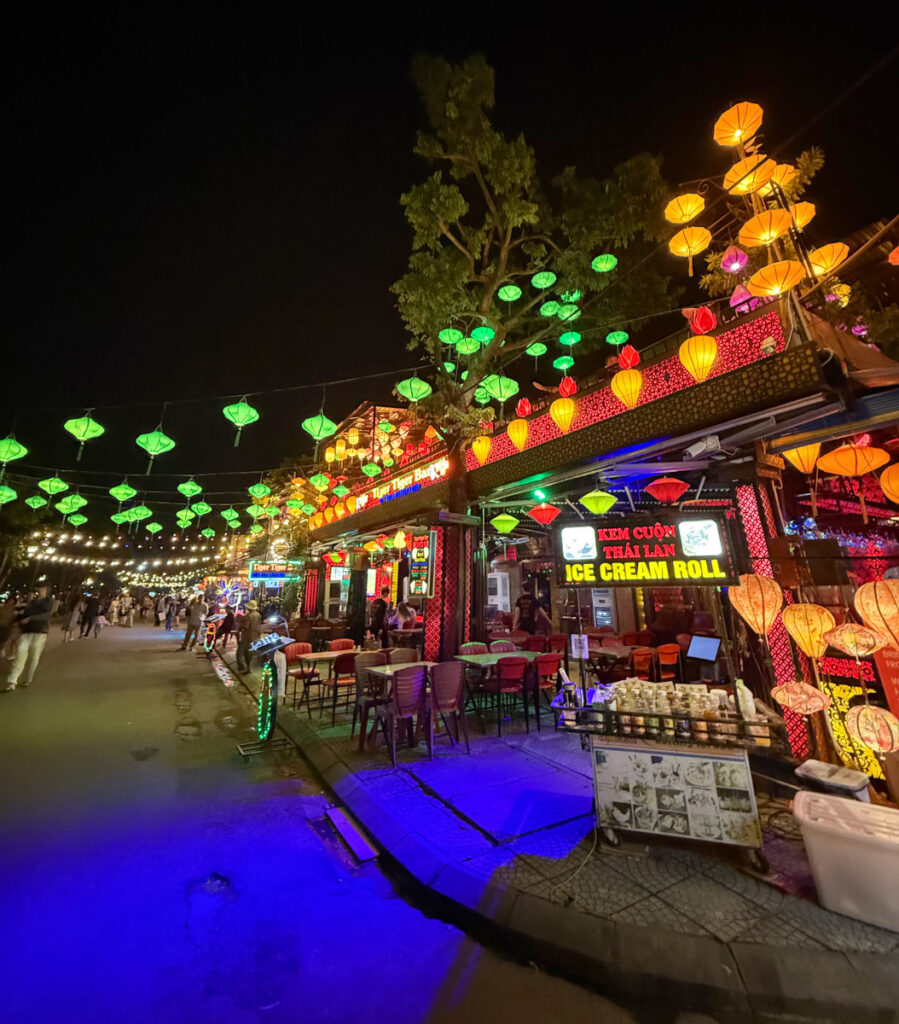
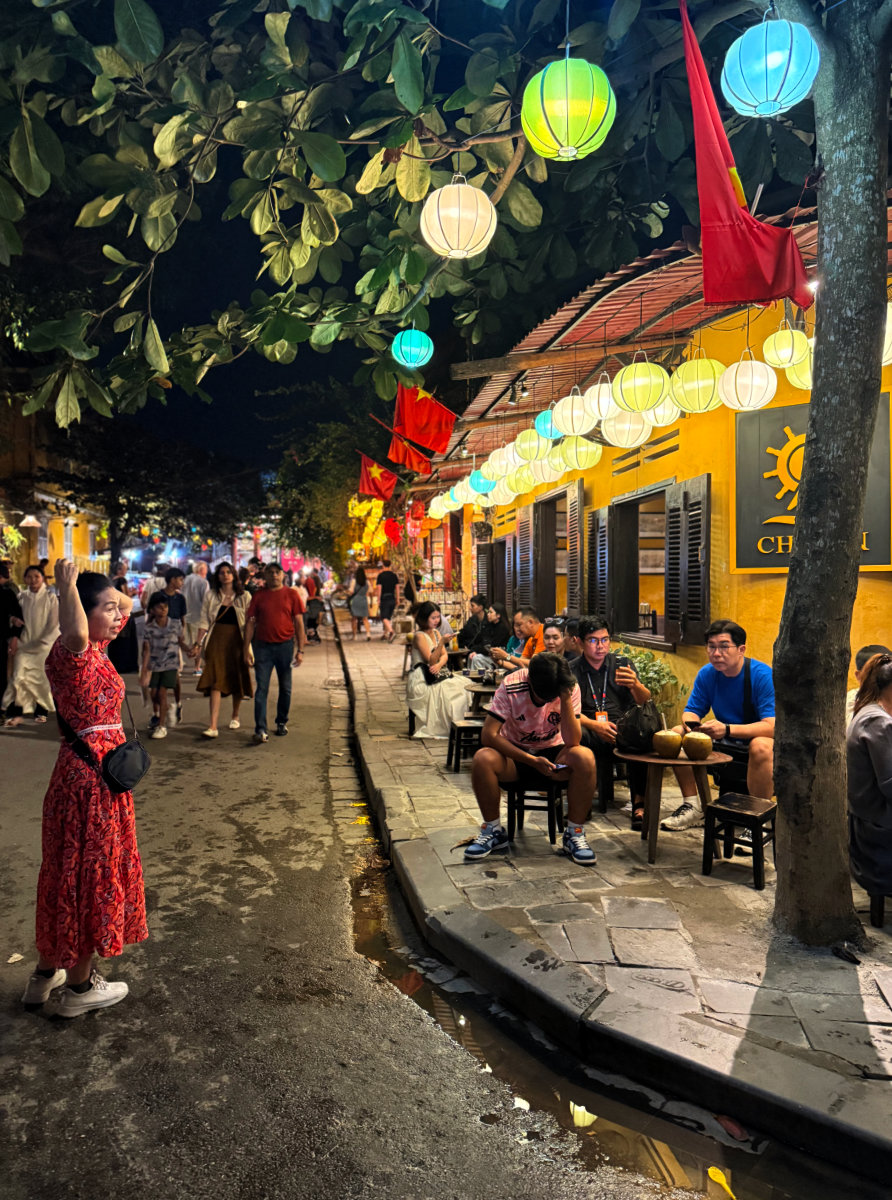
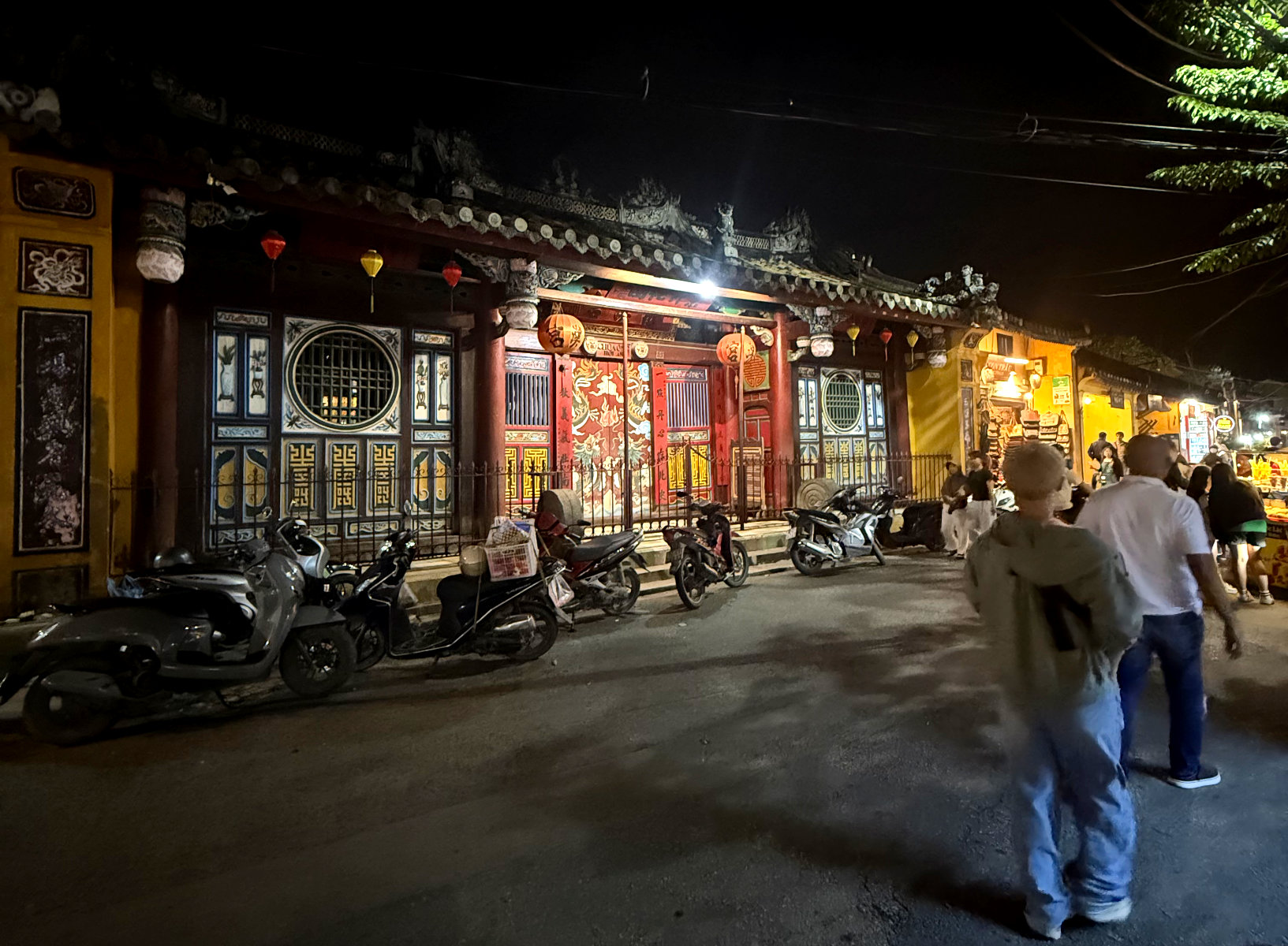
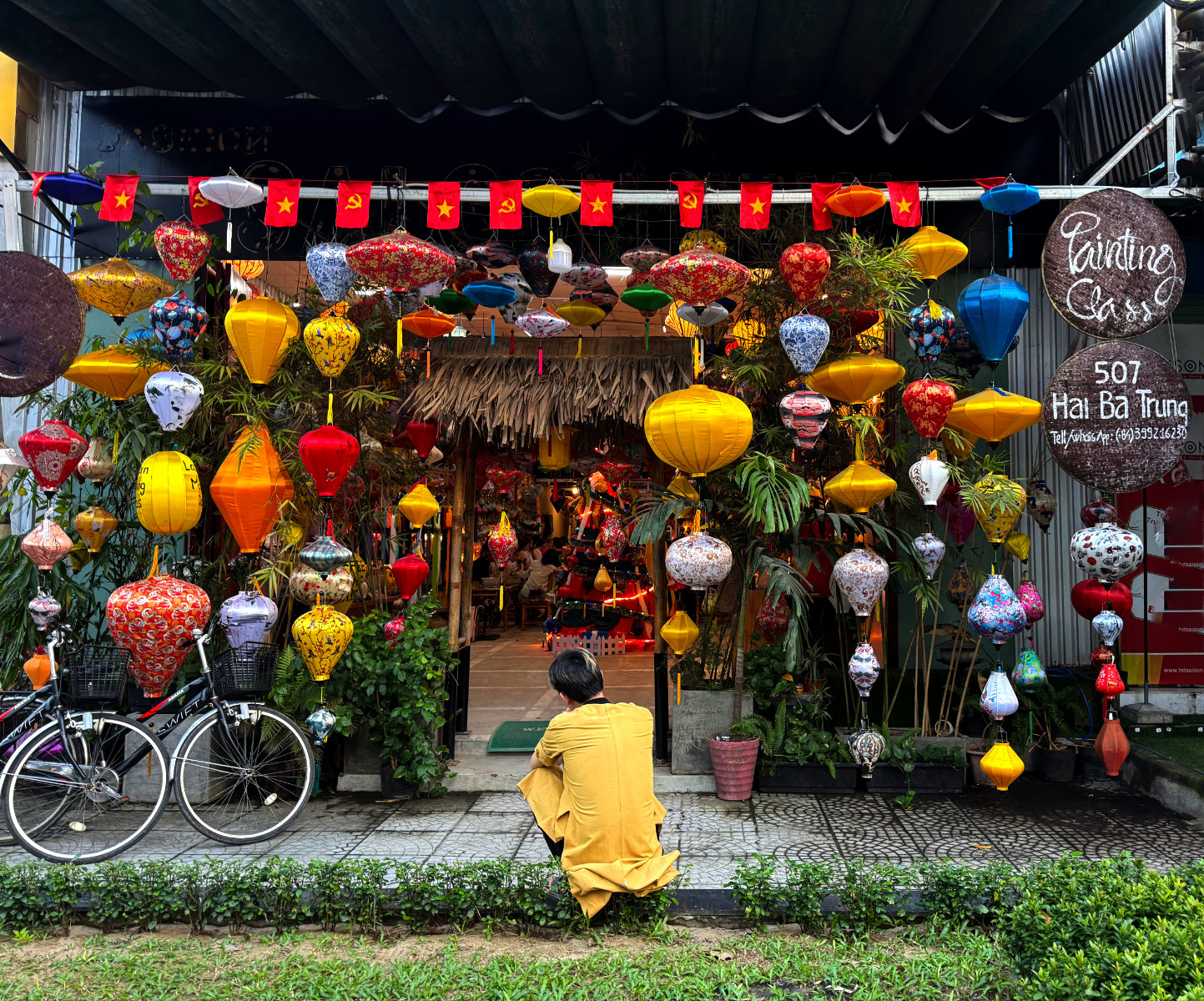
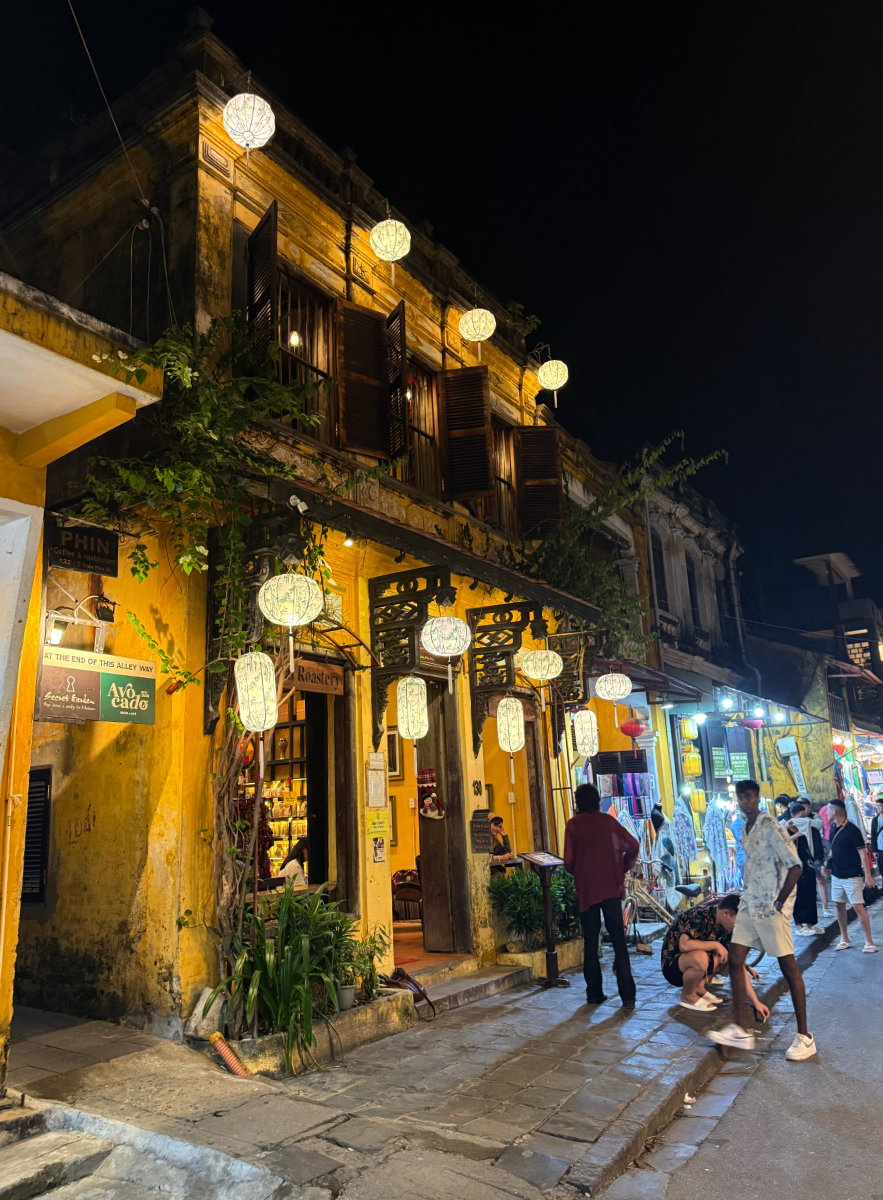
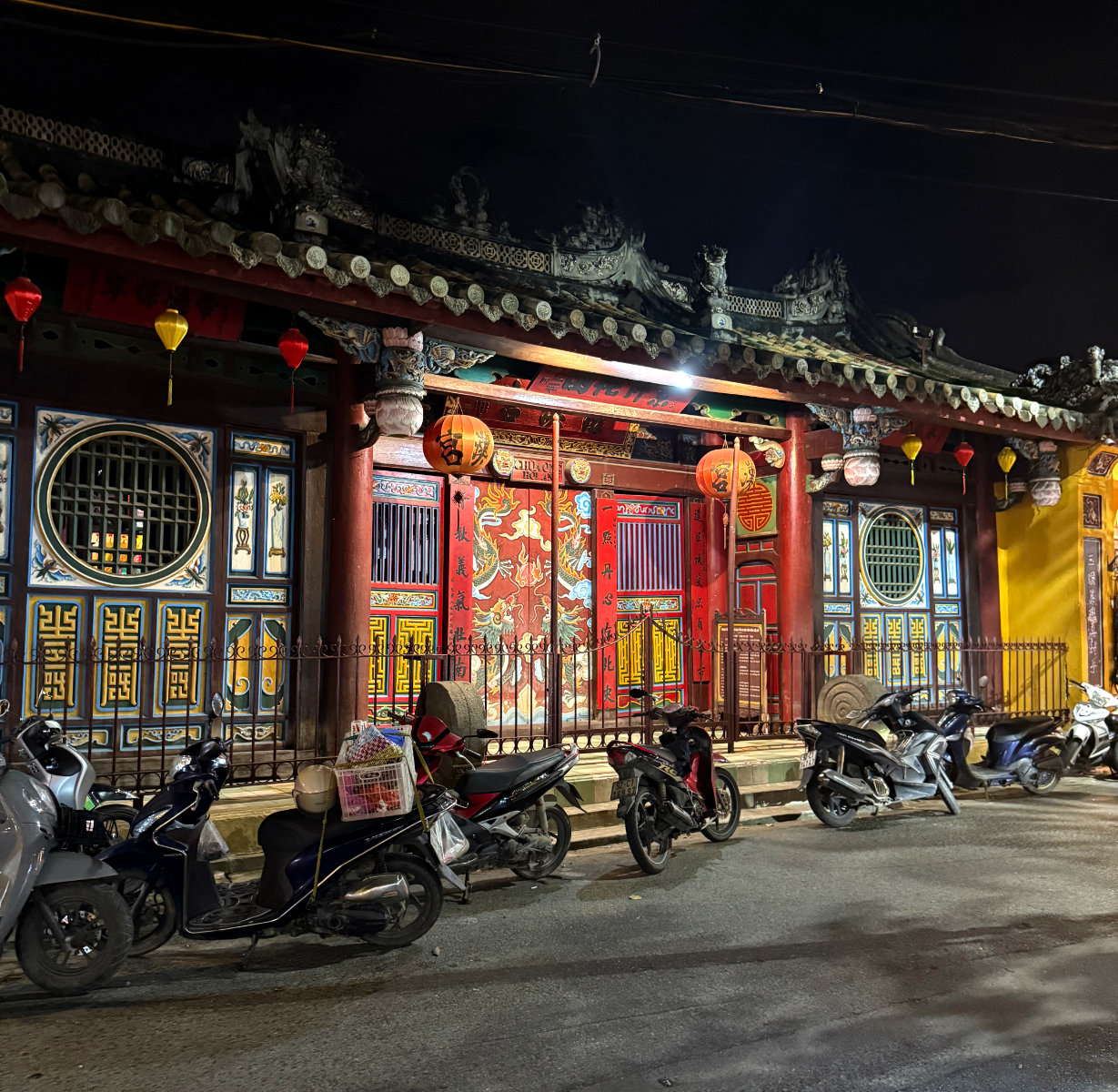
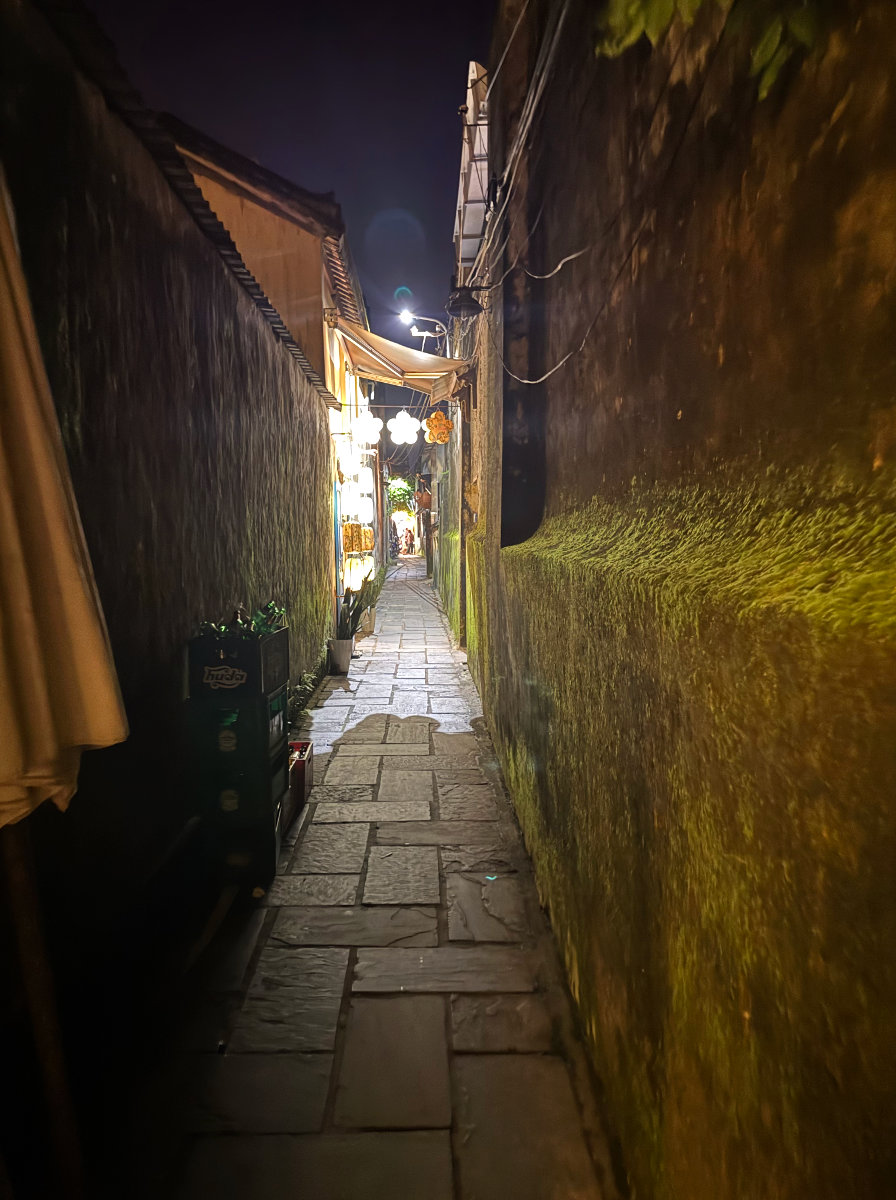
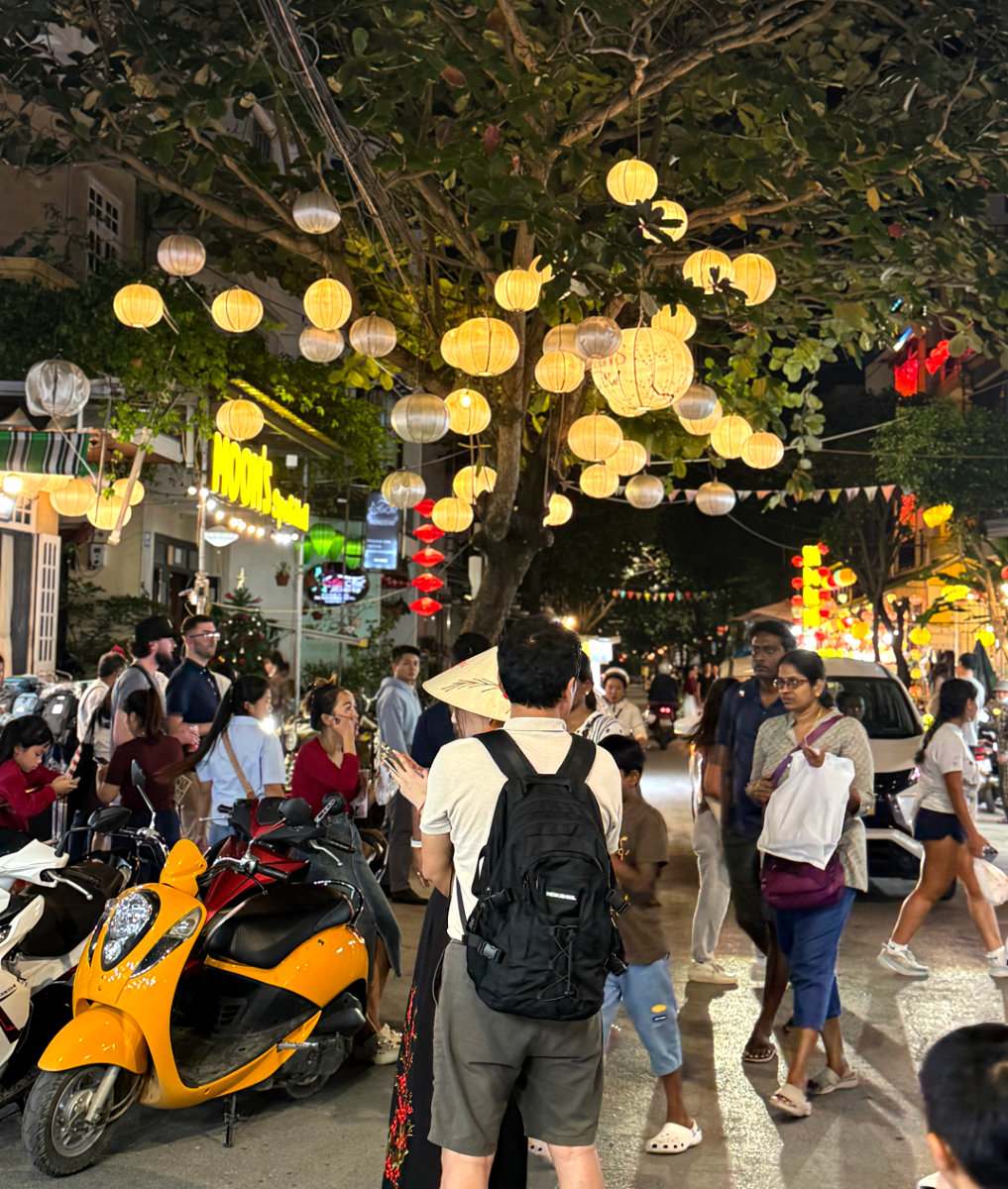
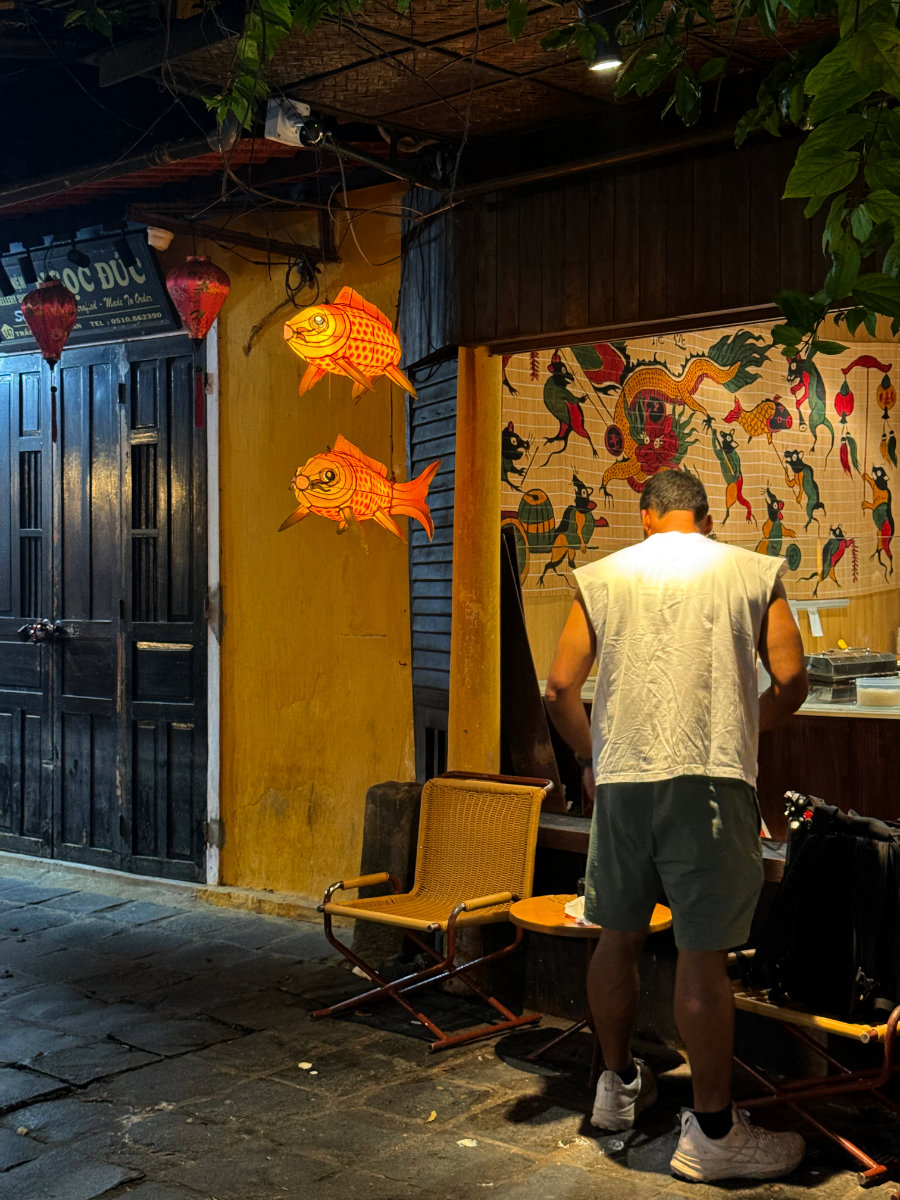
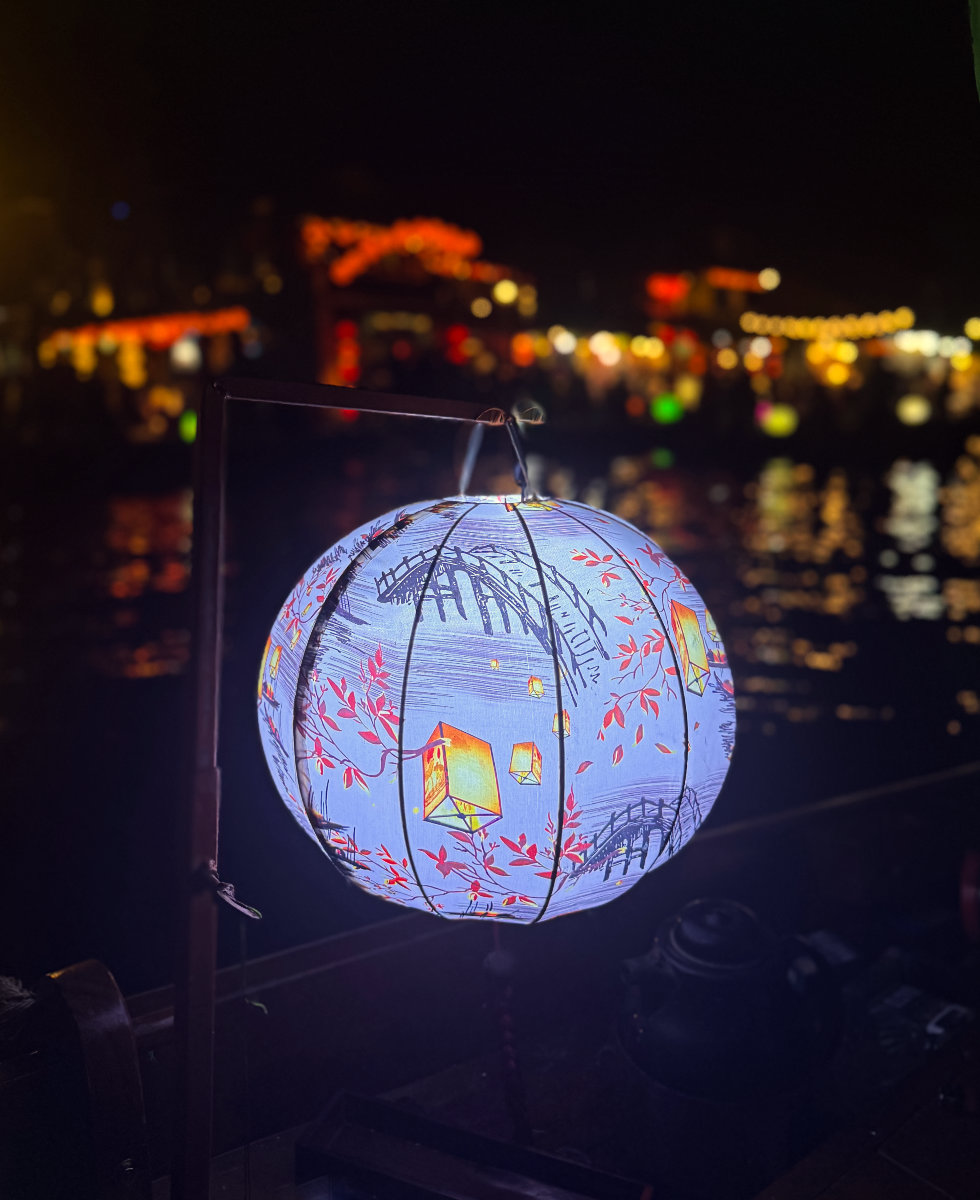
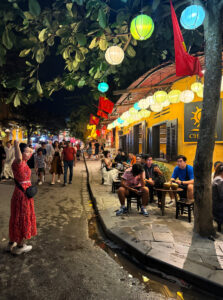
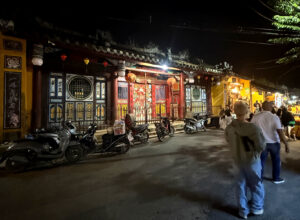
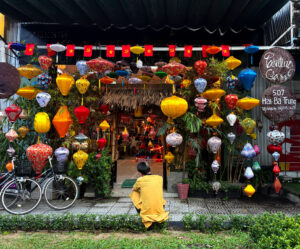
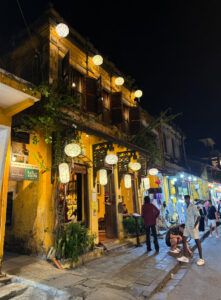
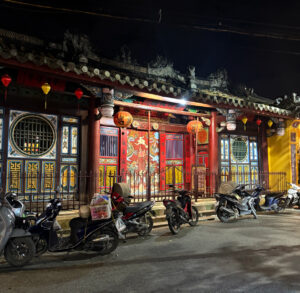
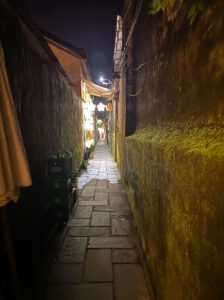
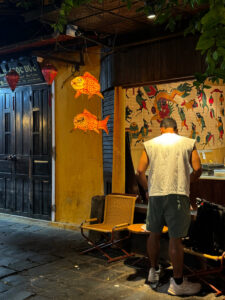
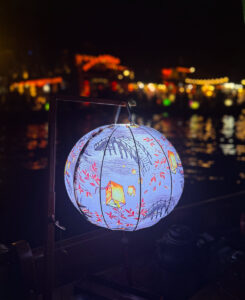
Hoi An, Vietnam, located in Central Vietnam about 19 miles—or in Vietnamese, 30 kilometers—south of Da Nang, is a renowned UNESCO World Heritage site. Known as the “Lantern City,” this charming town features over 800 preserved historic buildings, blending Japanese, Chinese, and Vietnamese architecture.
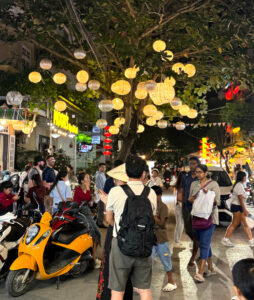
Chat was right about this place. It is stunning. With thousands of lanterns glowing all at once, it’s impossible not to feel a sense of wonder.
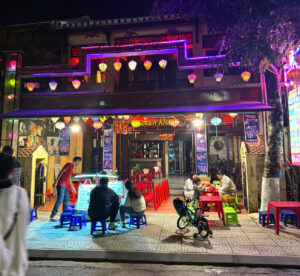
Madam Khanh is known as the Banh Mi Queen. Like I need encouragement.
Banh Mi—or as I call it, the Bane of Mi existence. Let me count the pounds..
This popular Vietnamese sandwich is served on a crispy, airy baguette, combining French and Vietnamese influences with savory fillings like grilled pork or pâté, tangy pickled daikon and carrots, fresh cilantro, cucumber, and spicy chili. The name literally means “bread.”
My first acquaintance with this devilish delight was aboard a jet headed to Vietnam. Never have I sold my soul for anything other than wine.
Like a rabid dog, foaming at the mouth, I scavenge wildly through the streets of ’Nam in search of every possible variation known to mankind—and perhaps below. One day I ate four hyper-carb-loaded Banh Mi and still craved more. One cannot help but feed the beast.
Rounding out the carb extravaganza, we slurp down Cao Lầu. These noodles are made from local rice soaked in water mixed with ash from the cajuput tree and water from the ancient Ba Le well located in Hoi An. This iconic dish is by far the most famous culinary commodity found only in Hoi An. The fact that there are three foods that can only be sourced authentically here completely blows my mind.
With my unsophisticated palate for noodles, rice, and French pastry, I’d be hard-pressed to distinguish a Hoi An noodle from a Cup O’ Noodles. For real—the dishes I’ve just thoroughly inhaled are rare. But without comparison, how do I know if it’s truly special or just new to me? Am I impressed because I don’t know any better?
Chances are this will be the one and only time I ever taste it.
Whatever. It’s scrumdiddlyumptious.
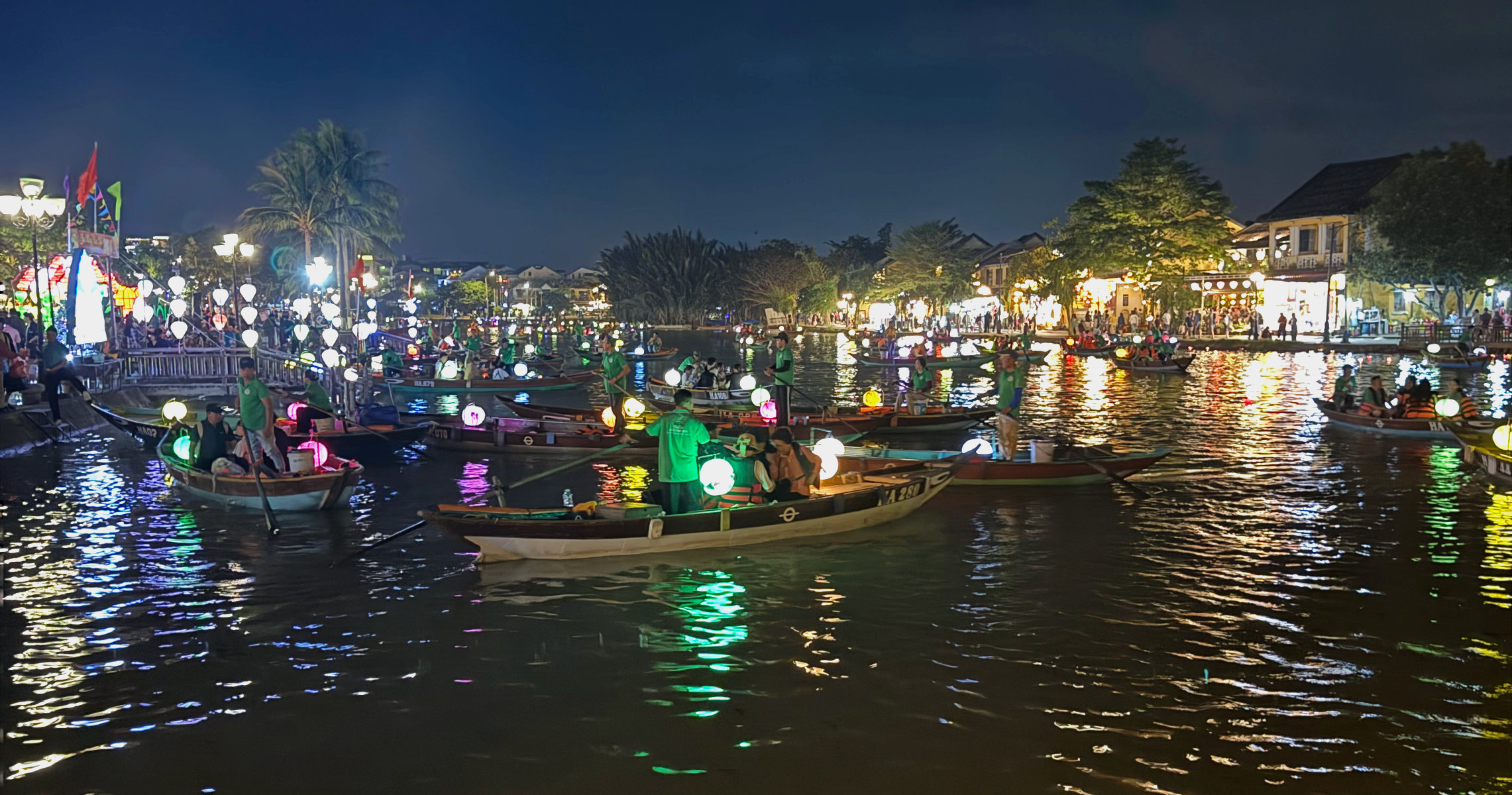
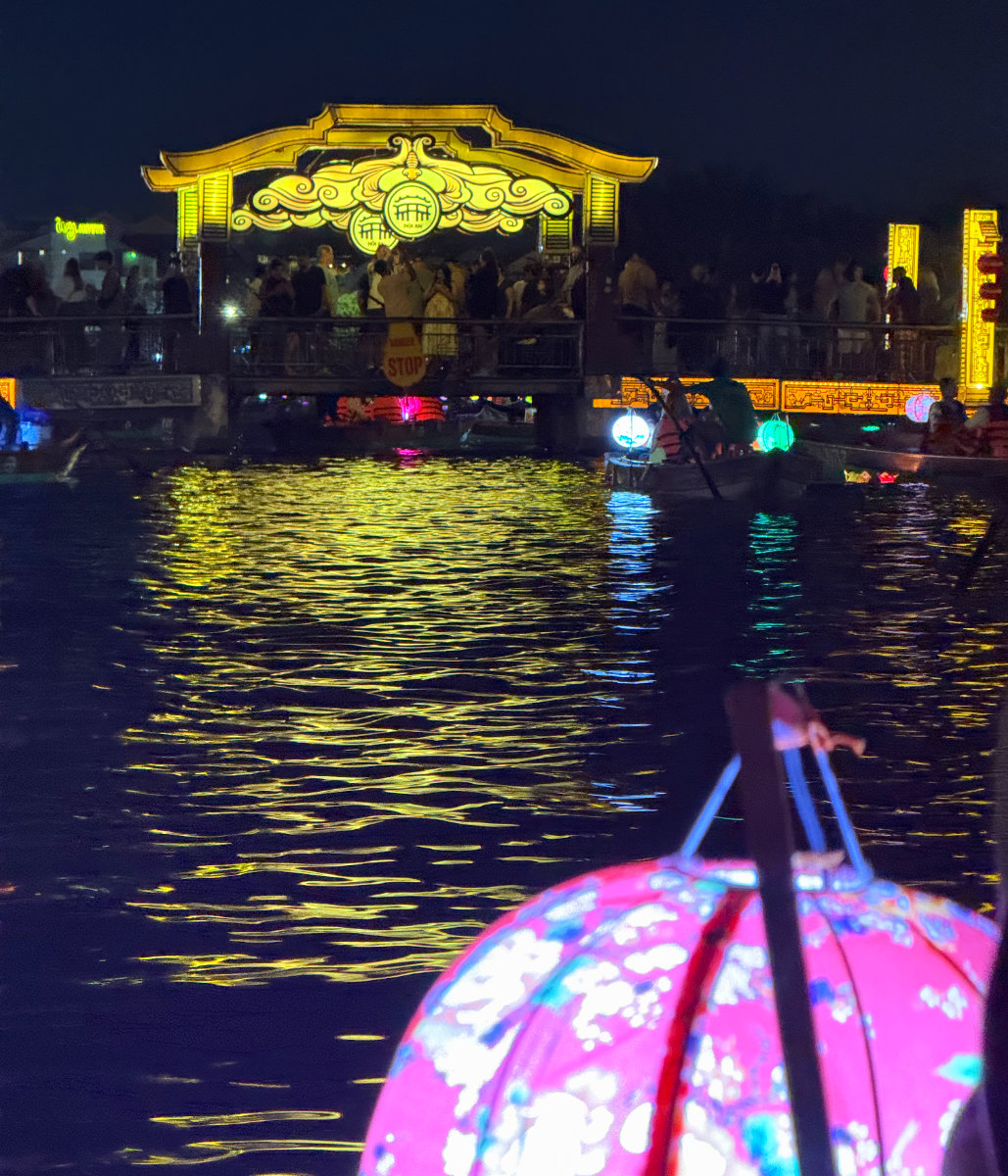
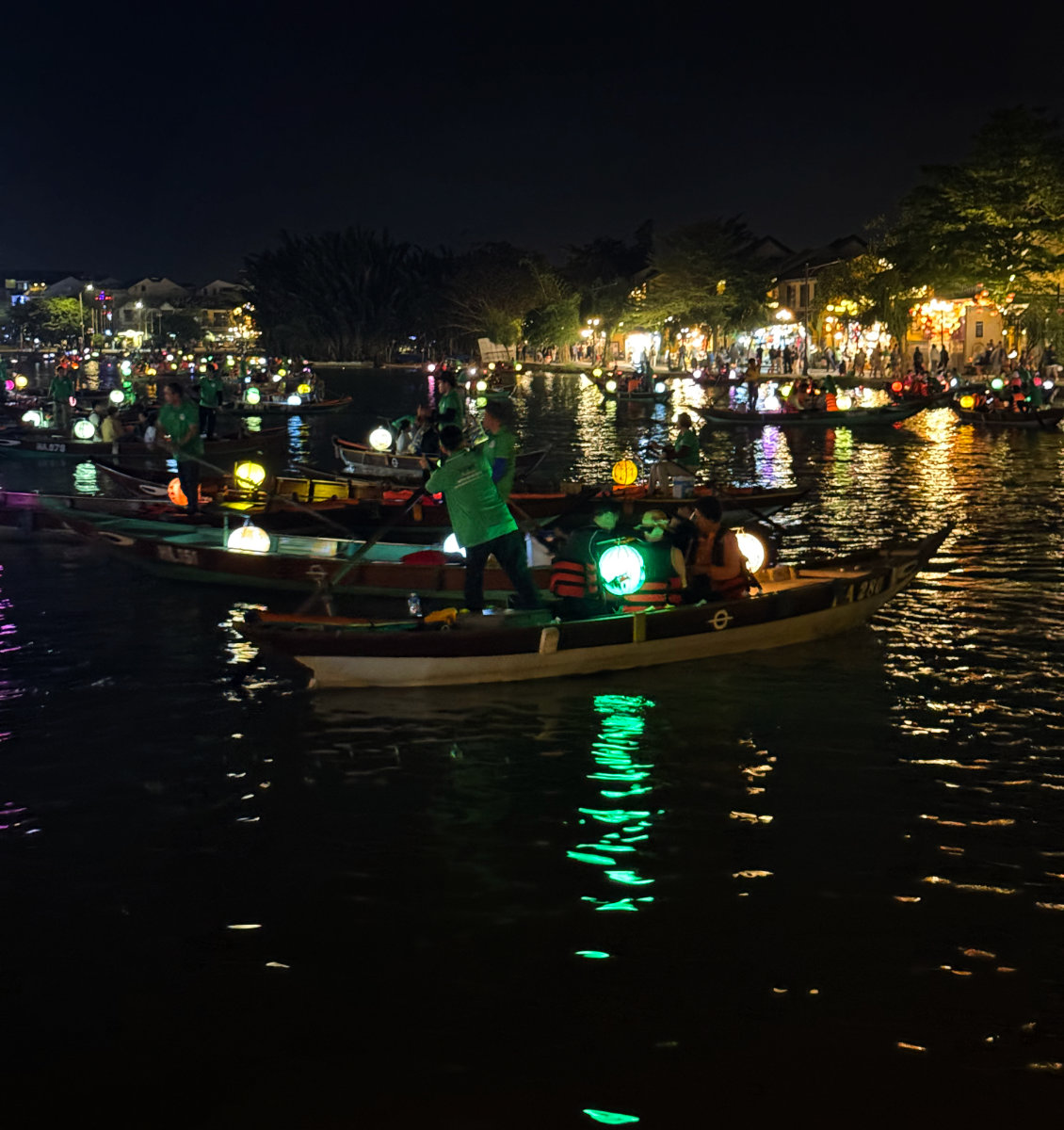
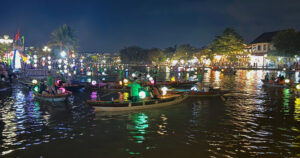
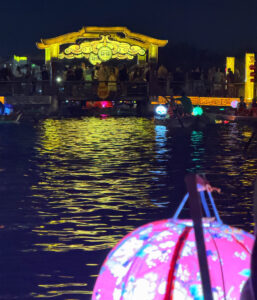
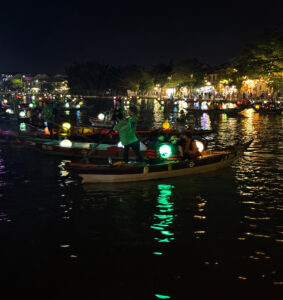
As the sun sets, magic takes over. Lights glisten in coordinated cooperation with the awakening stars above. Lantern boats drift back and forth along the Hoài River as it meanders through the heart of this ancient city. Floating candles bob in and out of the water, adding mystique to the already ethereal atmosphere.
We take our place in the boat. Mist hangs in the air. The river moves slowly, unhurried. A feeling of calm settles in—brief, unexpected, welcome. Just enough to soften the edges.
For a moment, everything feels manageable—like being untethered and lost in space, and then suddenly pulled back in. For now, I’m safe. It’s going to be OK. At least right now.
Shake it off, girl. Off the boat—we’ve got a game to play.
Games, did you say? Games?!?! Girl came to play, yes she did!!
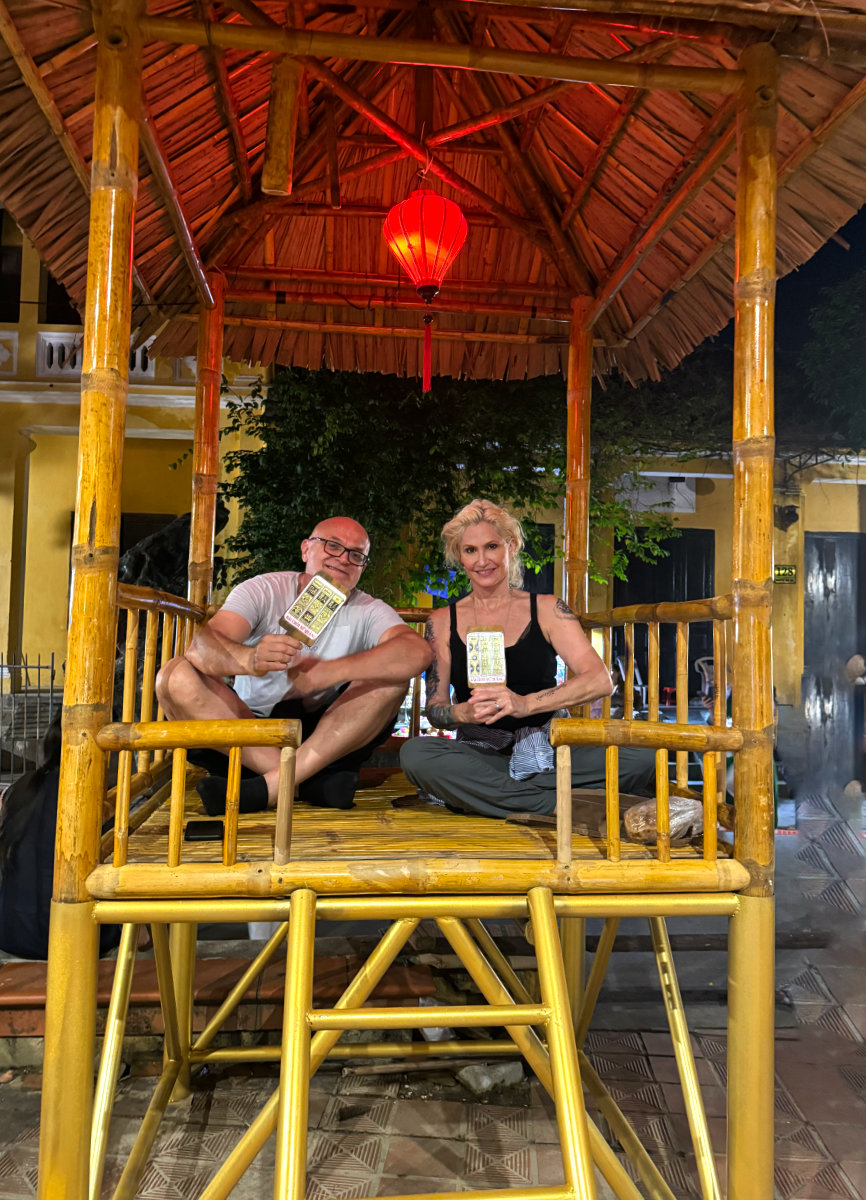
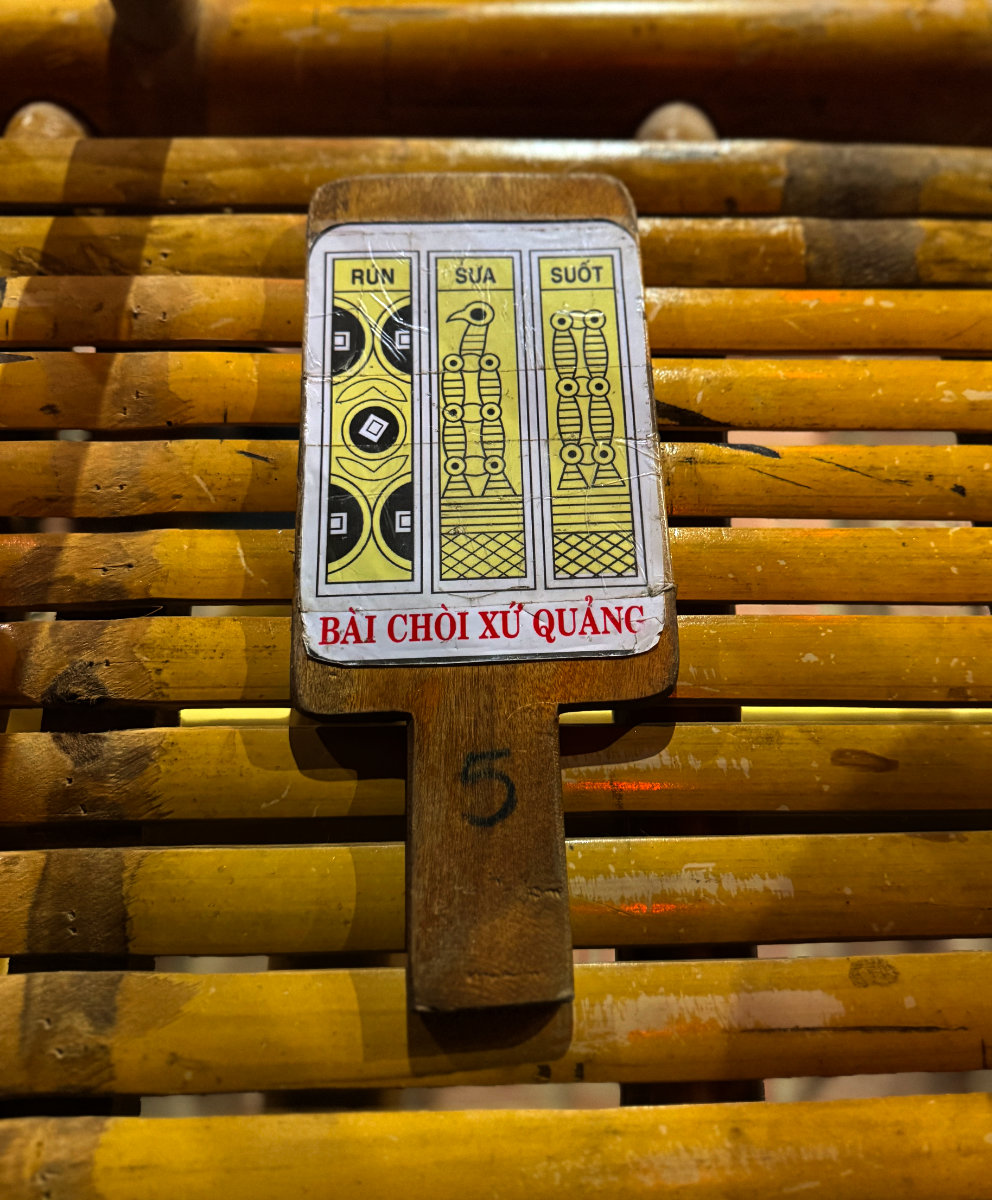
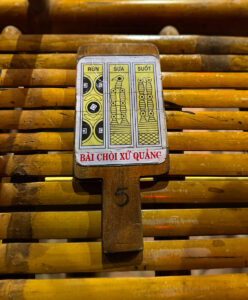
Our culminating Hoi An experience is playing Bai Choi, a traditional UNESCO-recognized folk game often called Vietnamese Bingo. Combining music, acting, and poetry—which I’m sure is a hoot and a holler if you understand the language—it’s used to identify the images on the paddle each of us is given.
Location & Time: Held nightly, usually around 7:00 PM, on the banks of the Hoài River or near the An Hoi Sculpture Park in Hoi An Old Town.
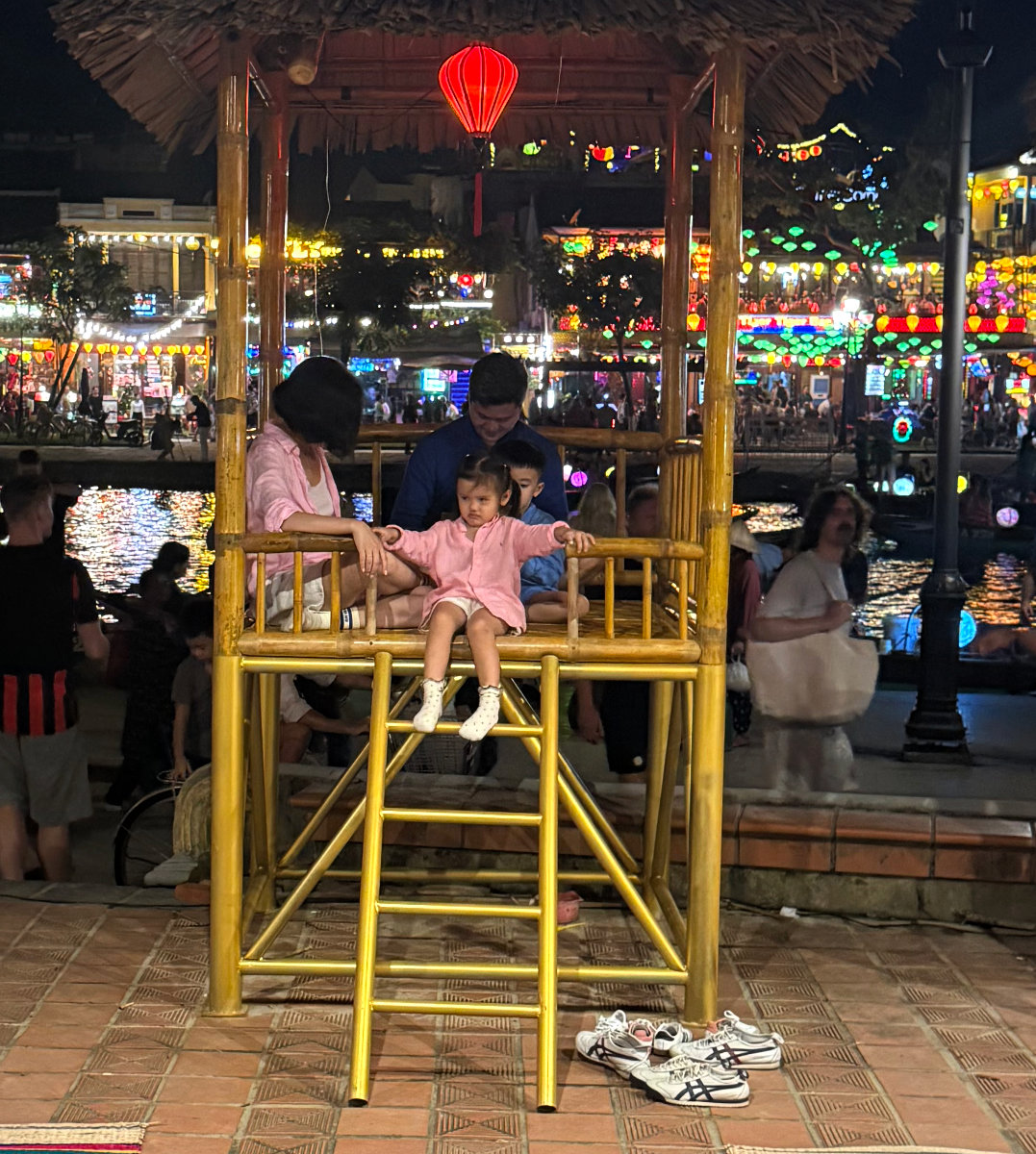
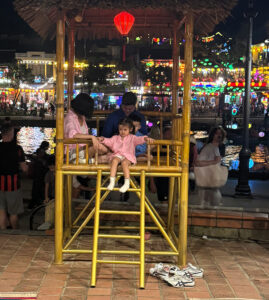
How to Play: The game involves 9–11 bamboo huts arranged in a U-shape, featuring a main hut (chòi cái). Players purchase cards (usually three) and listen to folk songs performed by hô hiệu artists.
Winning: When a song corresponds to a card a player holds, they shout, show their card, and receive a small flag. A player wins by collecting three flags.
Even though I had no clue what was said, it didn’t make me feel any better that I lost. Silly, for sure.
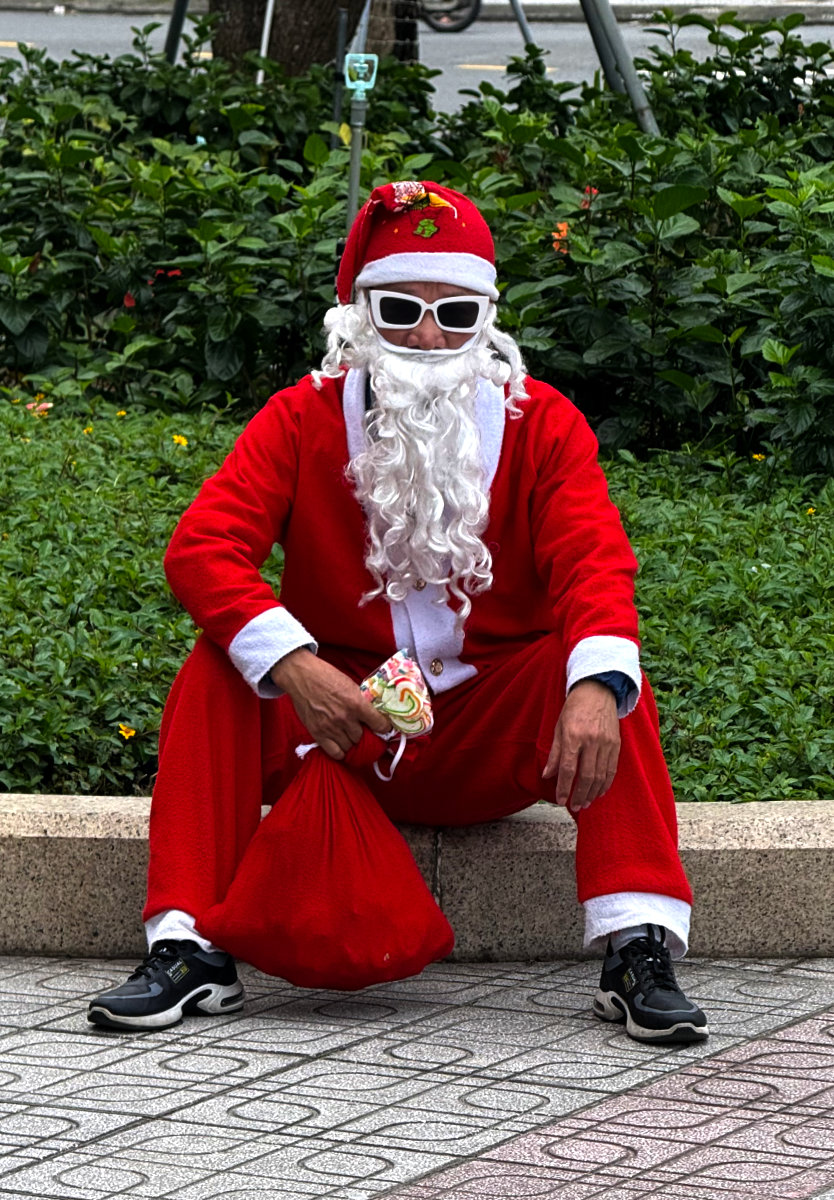
That’s the thing about me. When I’m 102 and Santa doesn’t show up, I’m gonna be sad. If I lose a stupid bingo game, I will be disappointed. If my favorite TV show gets cancelled, I’ll be bummed. I can’t help that I’m still the five-year-old me in a bigger body now—with tools to maneuver as an adult so everybody’s OK with it.
Hoi An, thank you for being the first Christmas of the rest of my life

If this story made you smile, laugh, or briefly forget where you were,
buy me a glass of wine 🍷