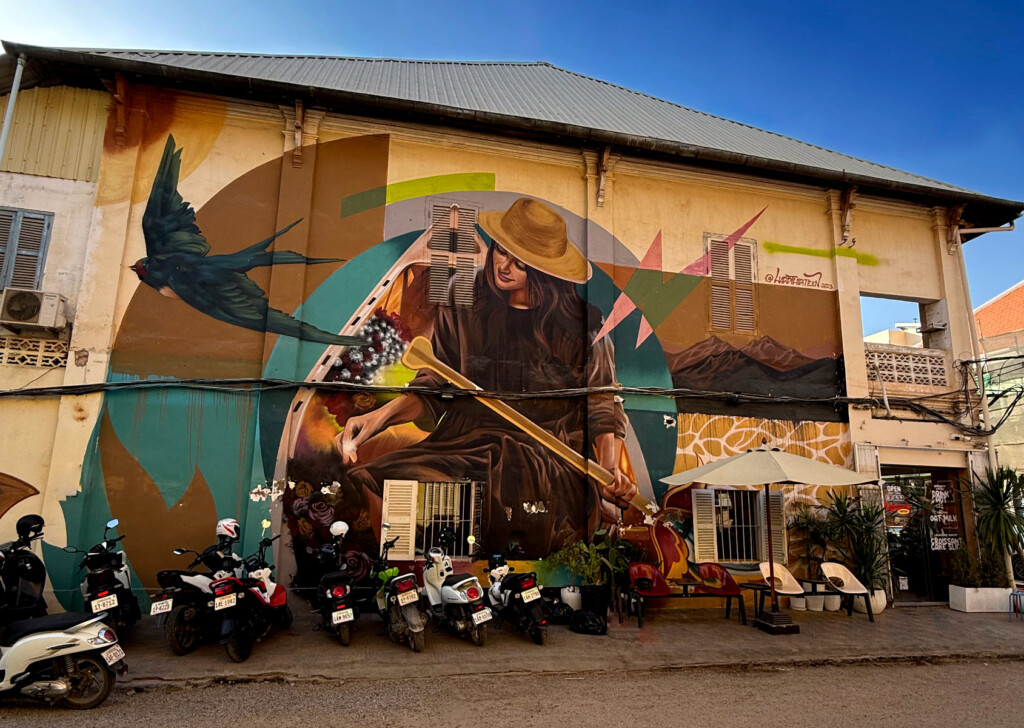
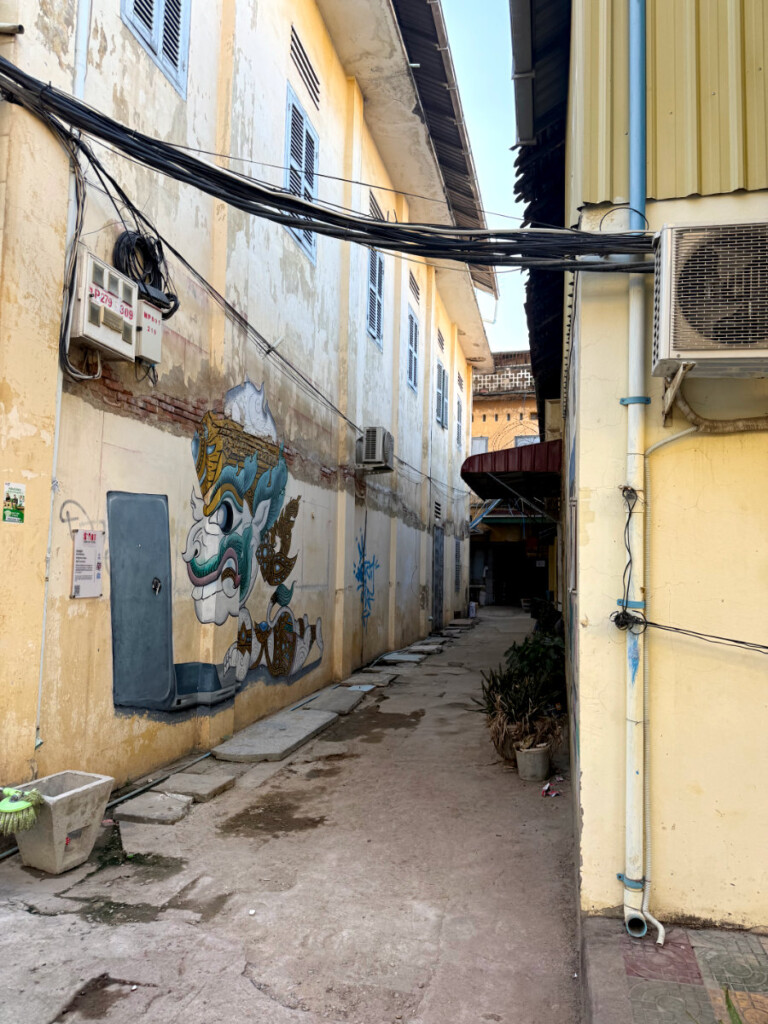
Battambang, Battabing, Battaboom…
Huge Soprano fan.. Now that that’s out of my system..Battambang, Cambodia.
Battambang Cambodia Travel Story by Lary Kennedy
Battambang Bamboo Train and Killing Caves Guide
Pronounced Bat-tam-BONG.
Bat (like baseball).
Tam (soft “tam”).
BONG (rhymes with song, slightly nasal).
Repeat after me: Bat. Tam. BONG.
Whatever you do, just don’t end it with a bang.
That’s what he said…
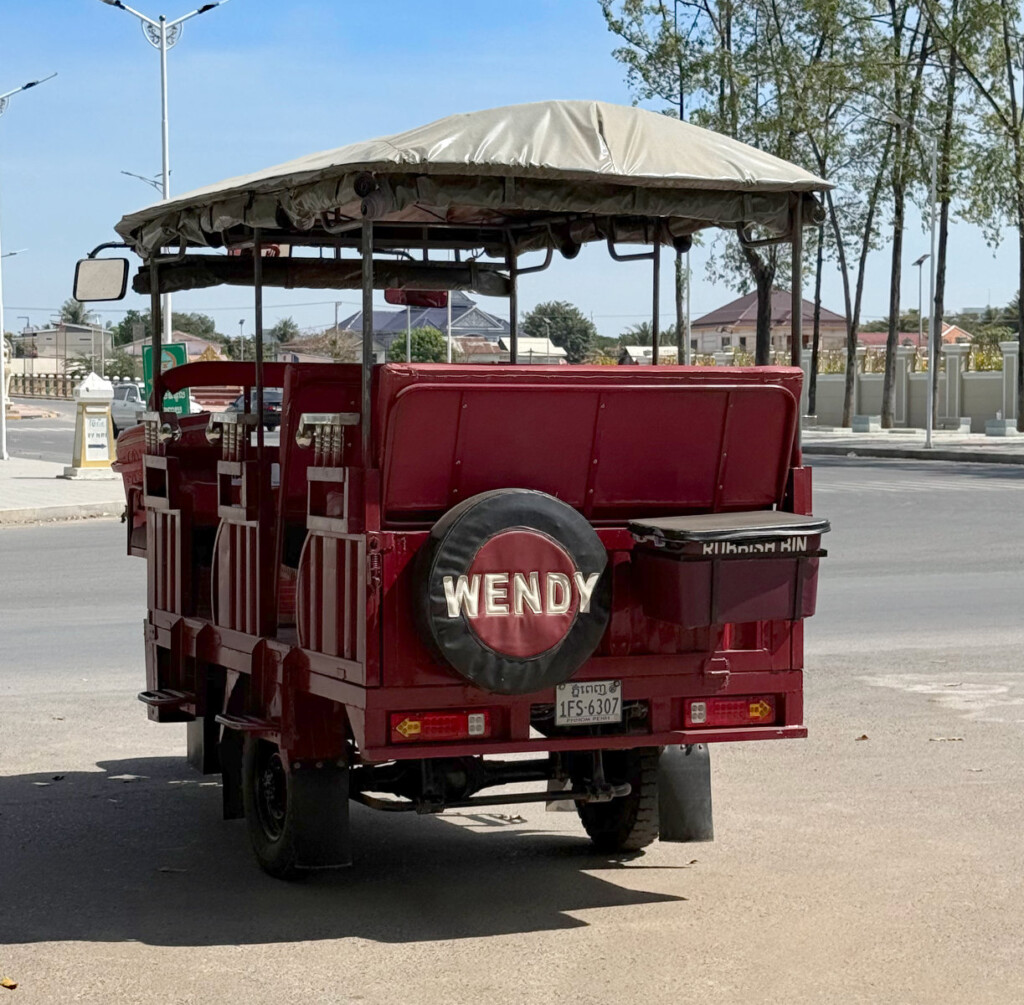
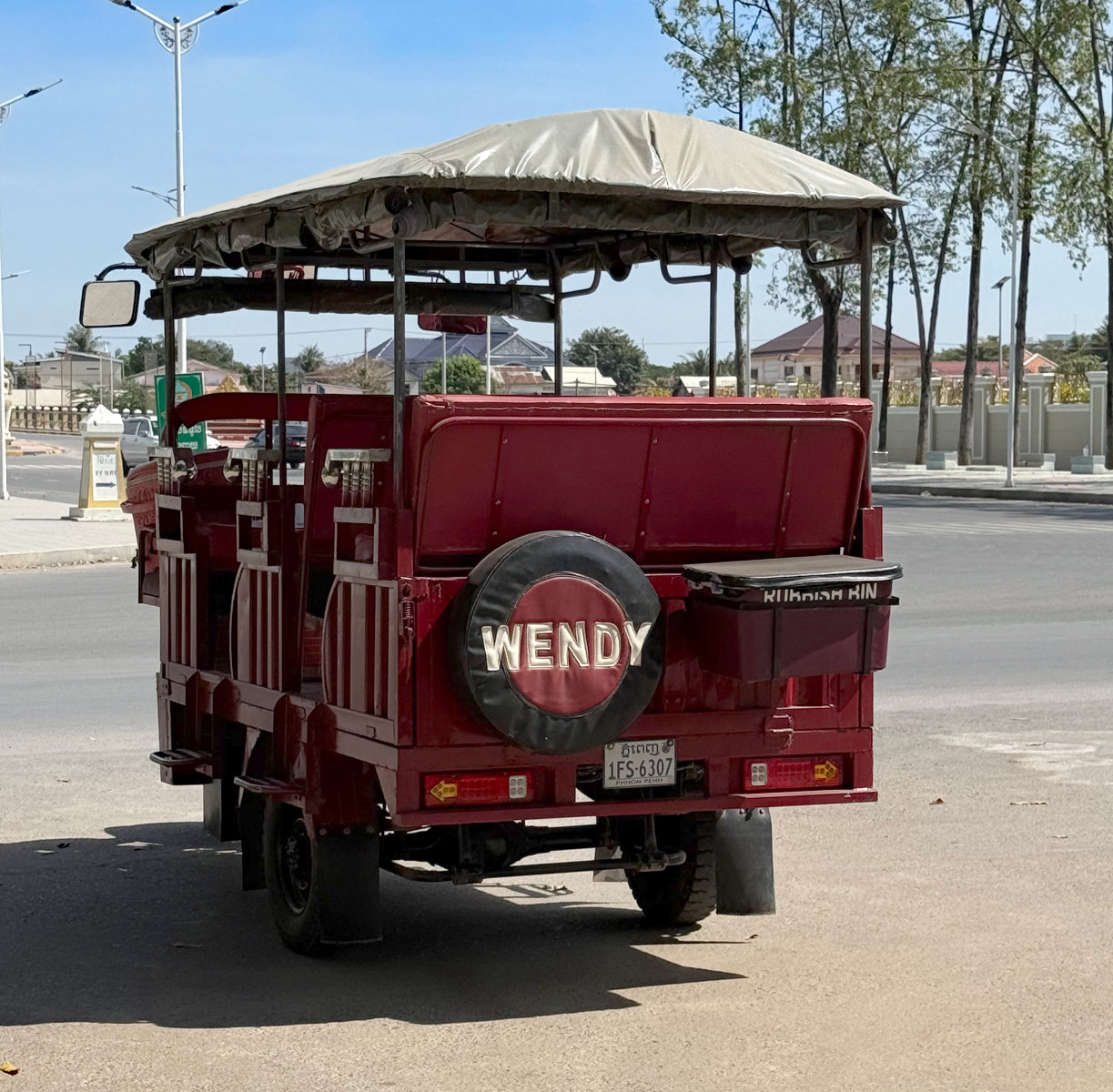
Our tour guide — after introducing himself and his trusted tuk-tuk, Wendy.
“Please do not mispronounce my beautiful city’s name. It is not Batt-em-BANG.”
He really leaned into the BANG. Twangy. Dramatic. When he put it that way, I could see why it’s a nails-on-a-chalkboard thing.
Today’s lineup: a married couple — she’s from Spain, he’s from Portugal — living in Ireland. A couple and their single friend, also from Portugal. A woman from England. And muoi.
If there were betting odds on today’s tour demographics, “one American and four Portuguese” would’ve been a sweet payout. Two Europeans technically. Statistically? A rounding error.
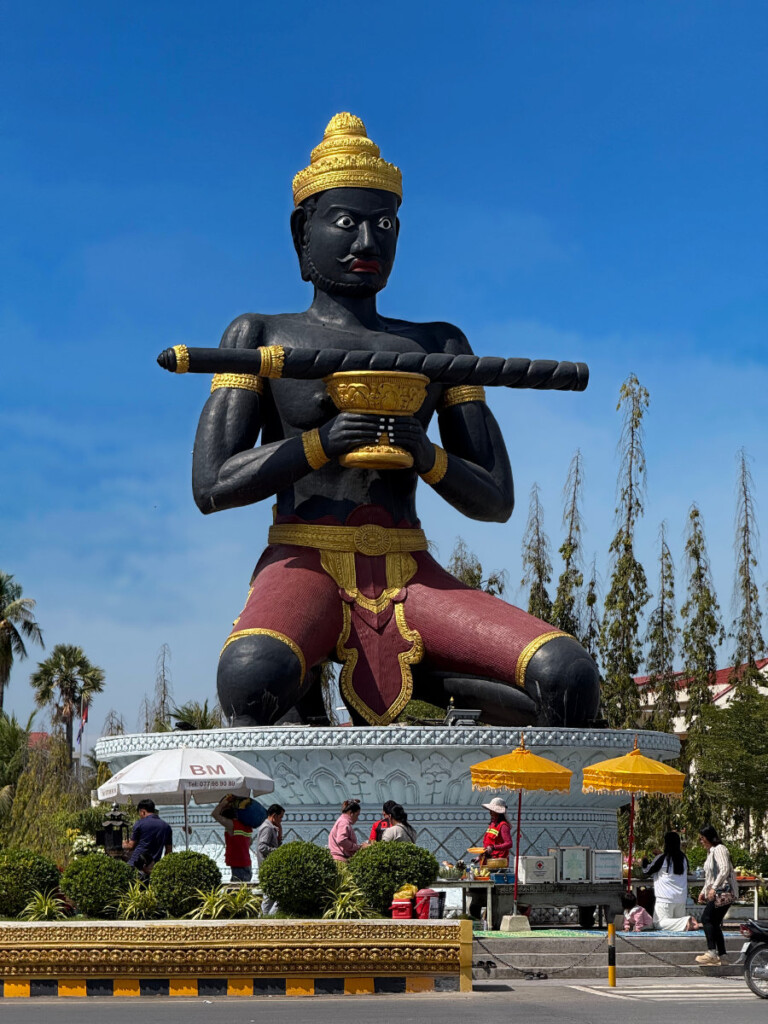
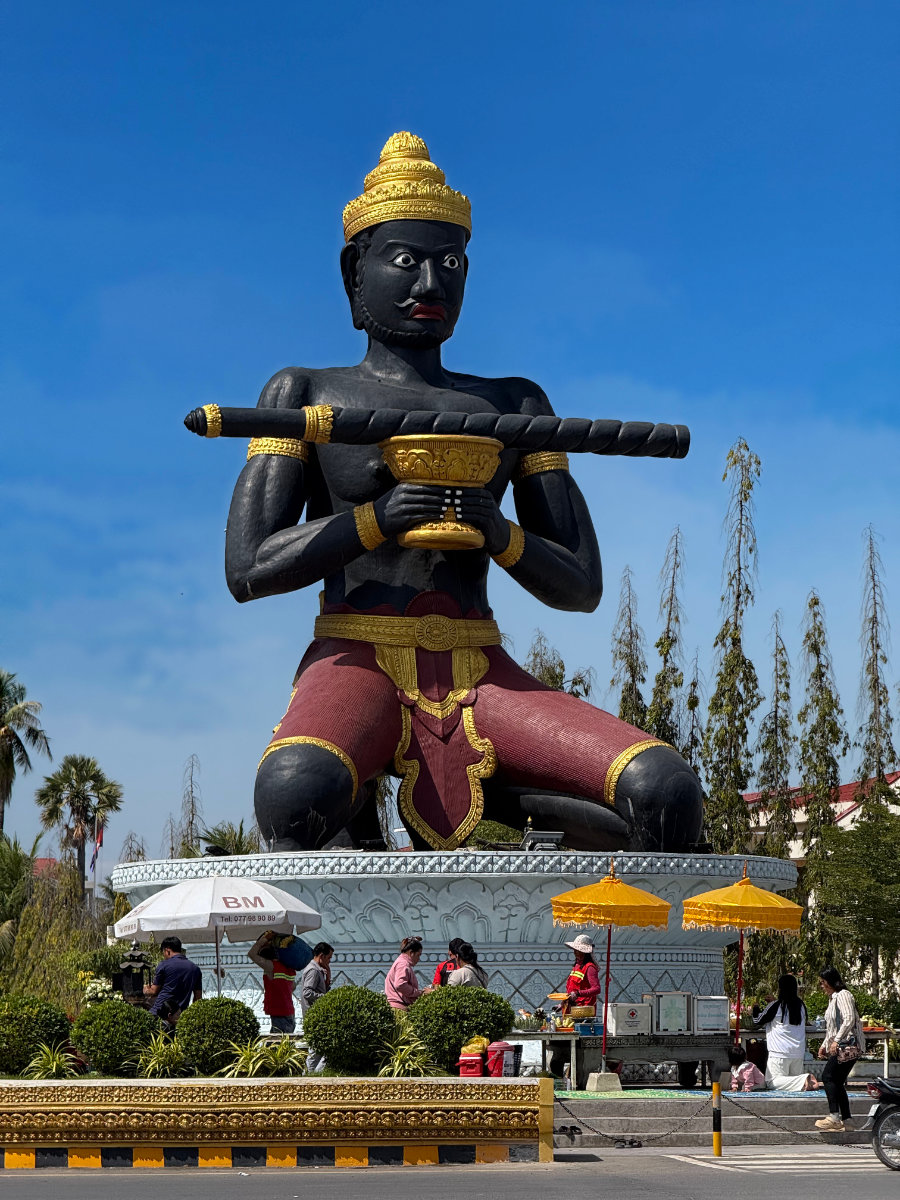
We begin at a massive jet-black statue of a kneeling warrior in the center of town. Jet black — dramatically so — gripping what looks like a big-ass baton.
Color me flummoxed.
None of the Cambodians I’ve seen look anything like this.
Turns out he’s Ta Dambong — the Black Stick King — a local legend who once overthrew a king with a magical club. When he fled, he threw the stick, and where it landed, rice began to grow. Battambang literally means “lost stick.”
Apparently the stick being black required the entire statue to be black.
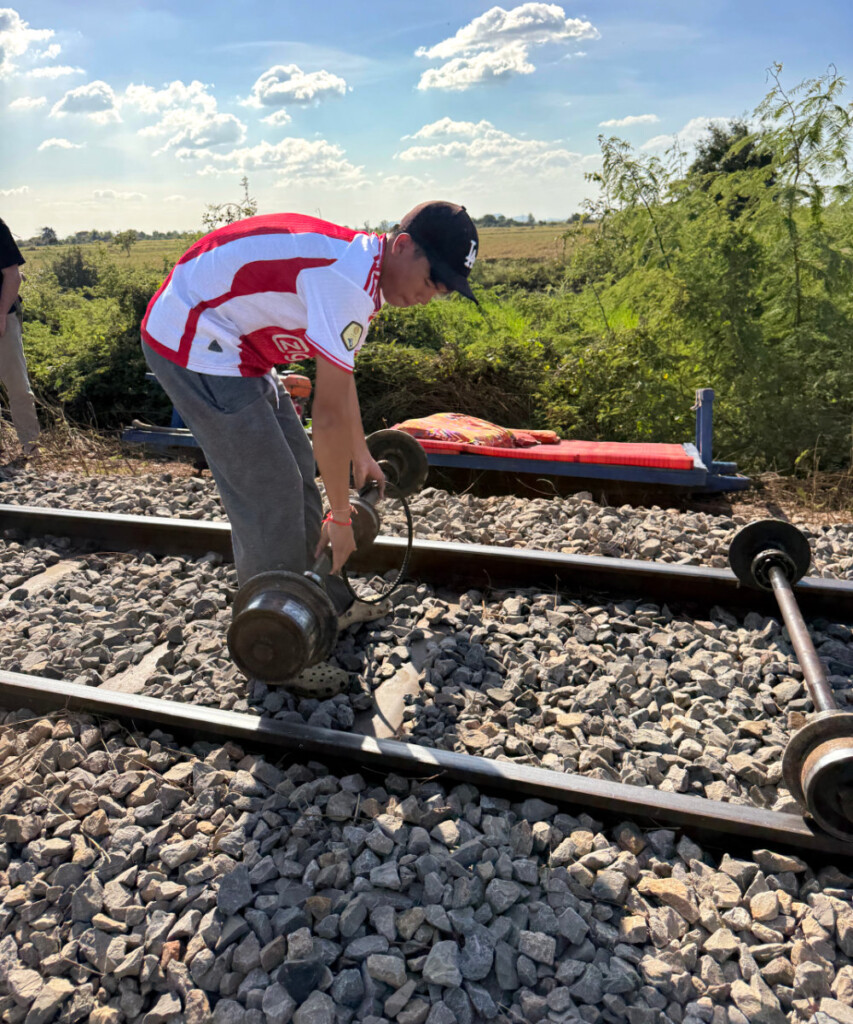
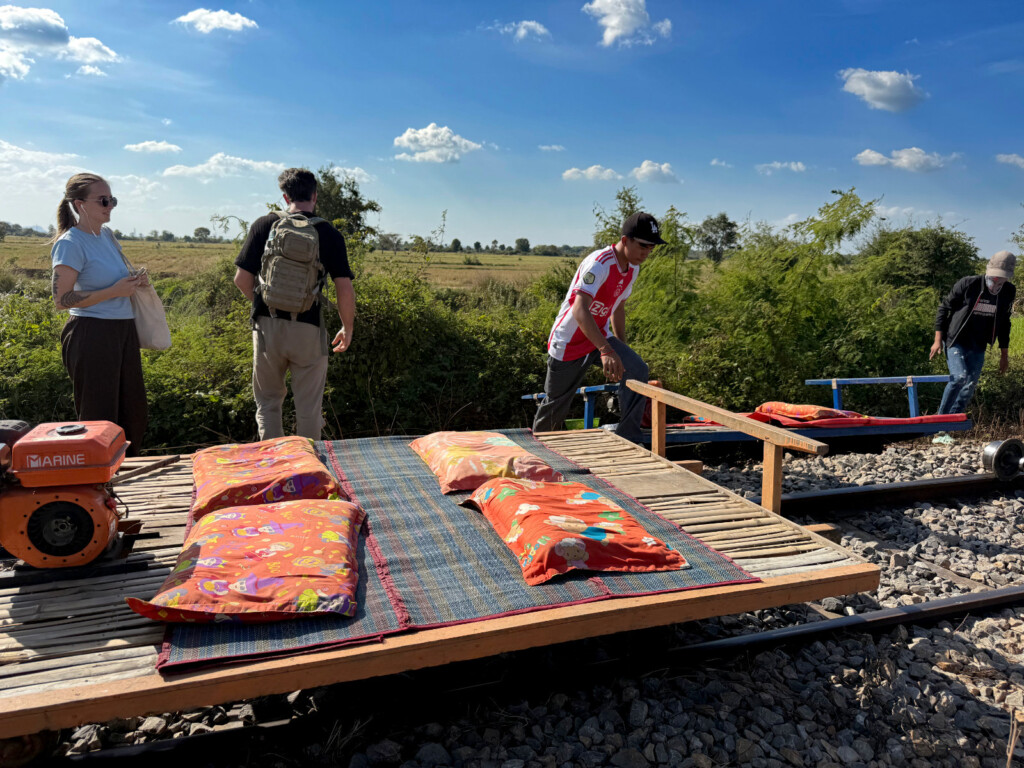
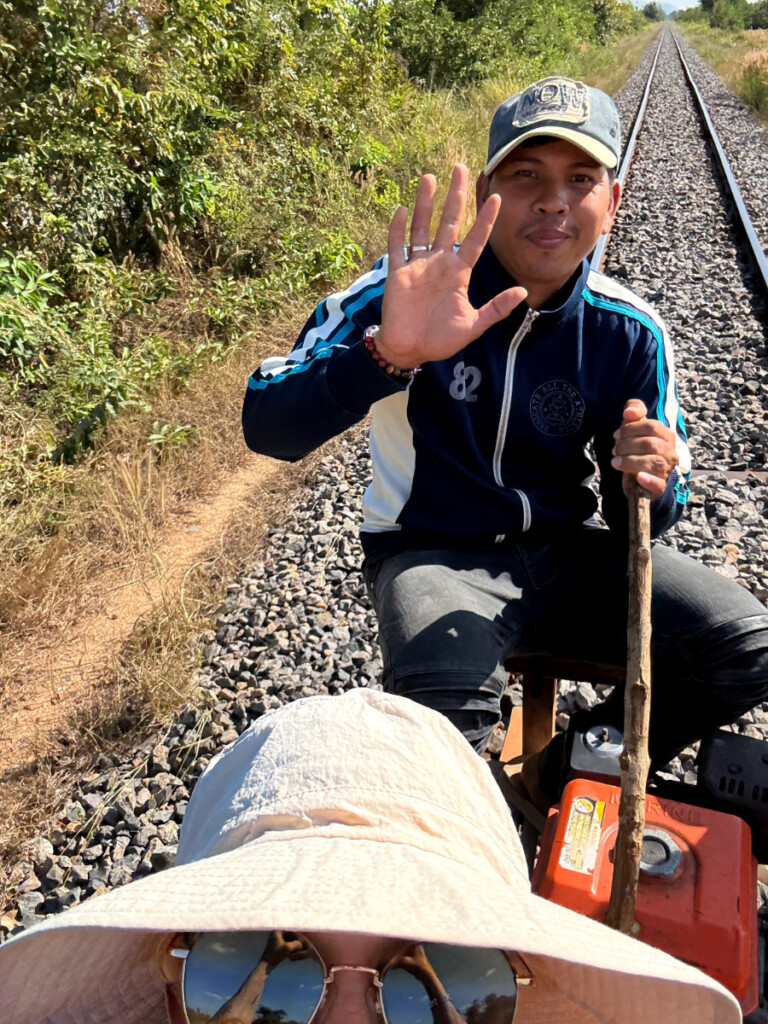
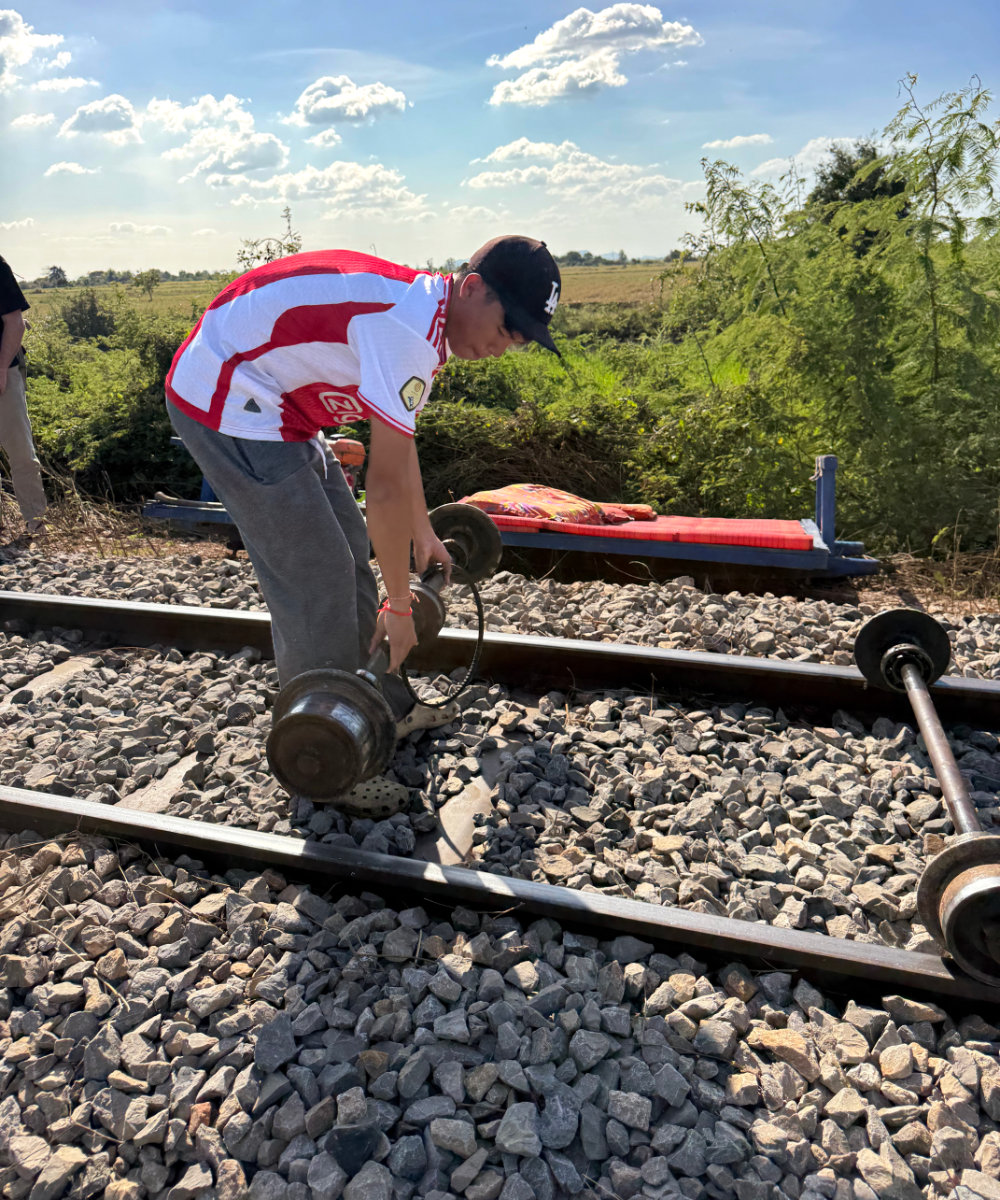
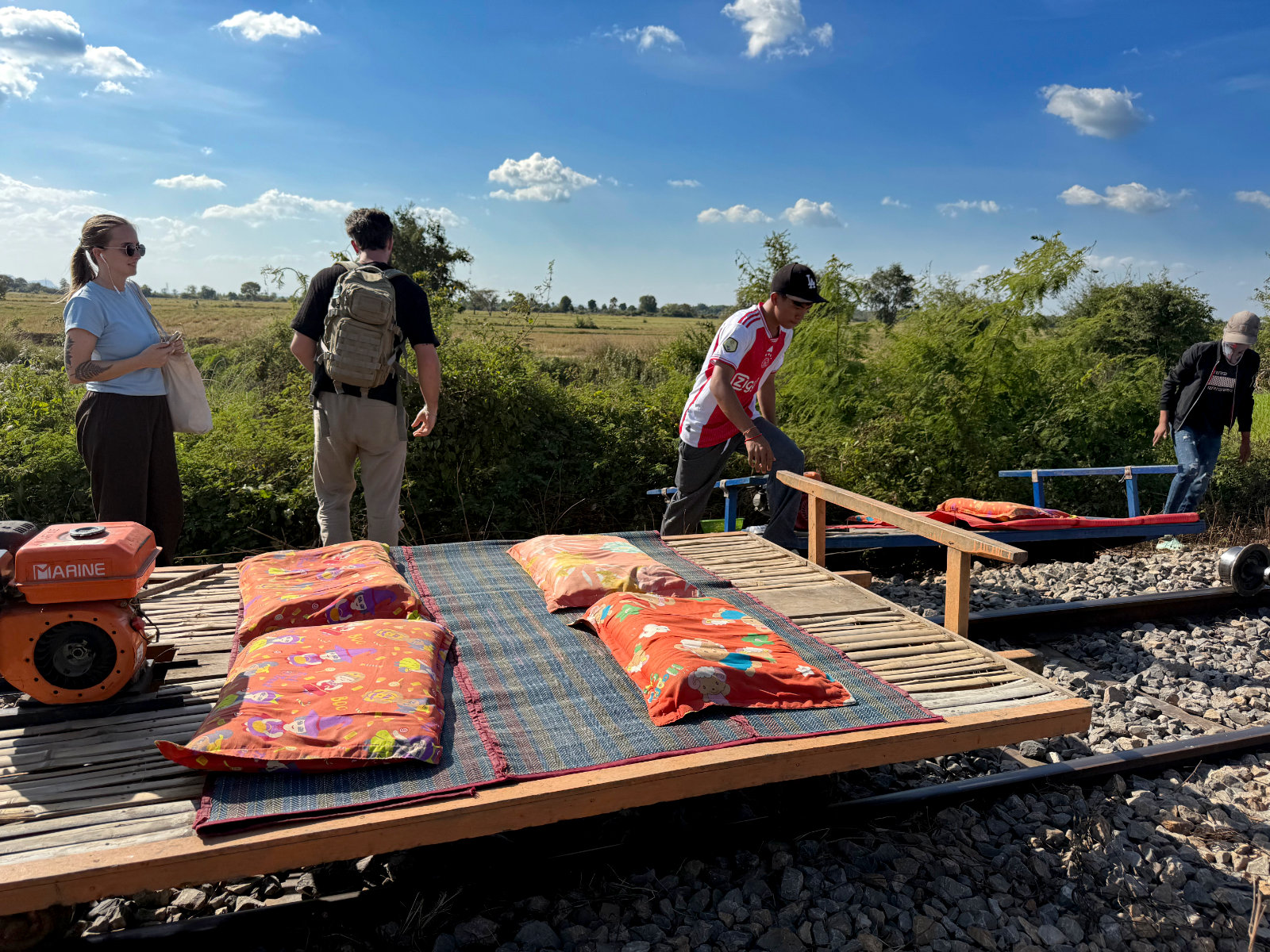
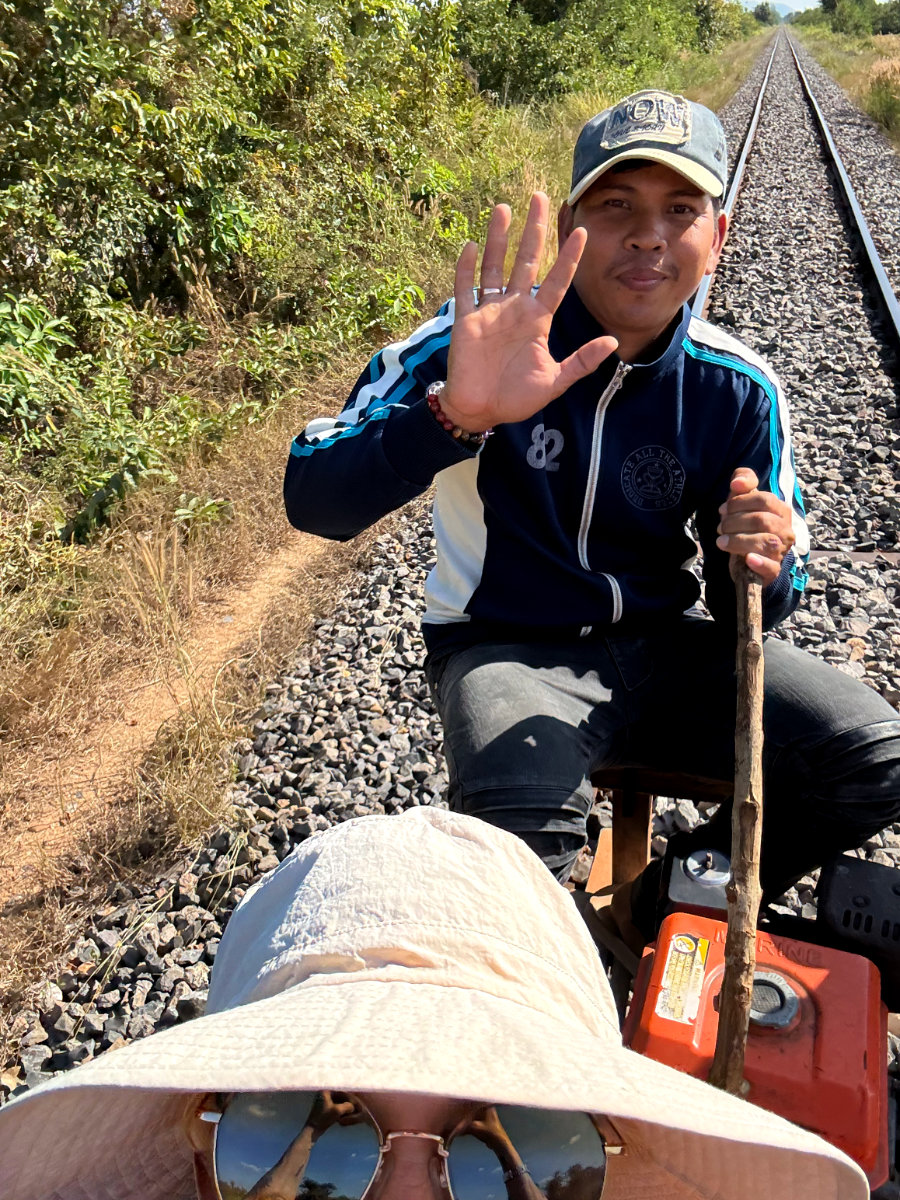
We head out of town toward the Bamboo Train. Known locally as the norry, it’s one of Battambang’s most unexpectedly brilliant inventions: a bamboo platform laid over a lightweight metal frame, powered by a small motor. It’s like riding a go-kart on train tracks — no sides, no top. Maybe less go-kart, more magic carpet that can’t fly.
Villagers created it in the 1980s after formal rail service collapsed during the Khmer Rouge regime (more on that in a minute). The norry became a way to move whatever needed moving. When two bamboo trains meet coming from opposite directions, the one with fewer passengers is dismantled, lifted off the track, and reassembled once the other passes.
Efficiency. Cambodian style.
I truly hope the ride is smoother than getting here. While Wendy the tuk-tuk is comfy, 75% of Cambodia’s rural roads are unpaved — potholes, gravel, rock, sand. Travel is aggressively uncomfortable, whether you’re in a tuk-tuk or a Mercedes.
By the time we arrive at the railway station, I’m sufficiently nauseous and ready for a smoother ride in the blistering 102-degree heat.
All aboard.
WHEE.
Okay. This is fun — once we get moving and some circulation kicks in.Hot damn, Cambodia is HOT. Kuala Lumpur hot.
Ride’s over. My watch reads Beer O’Clock. Drinks and a “special snack,” tour guide Bang assures me.
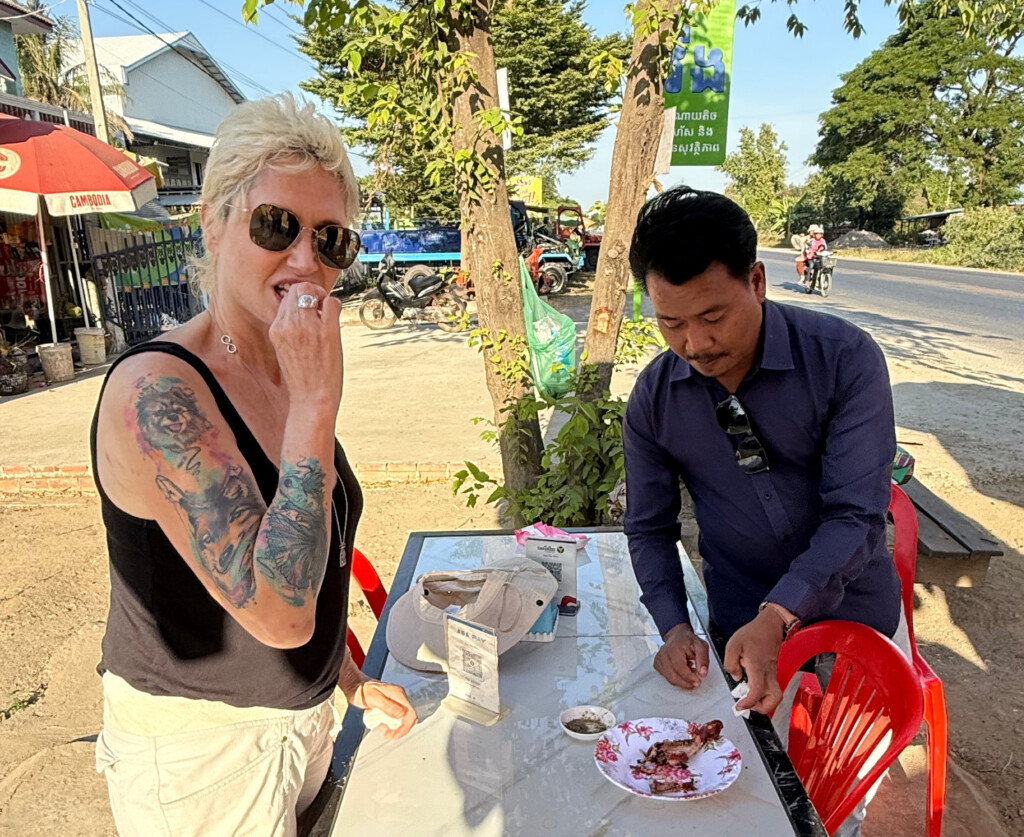
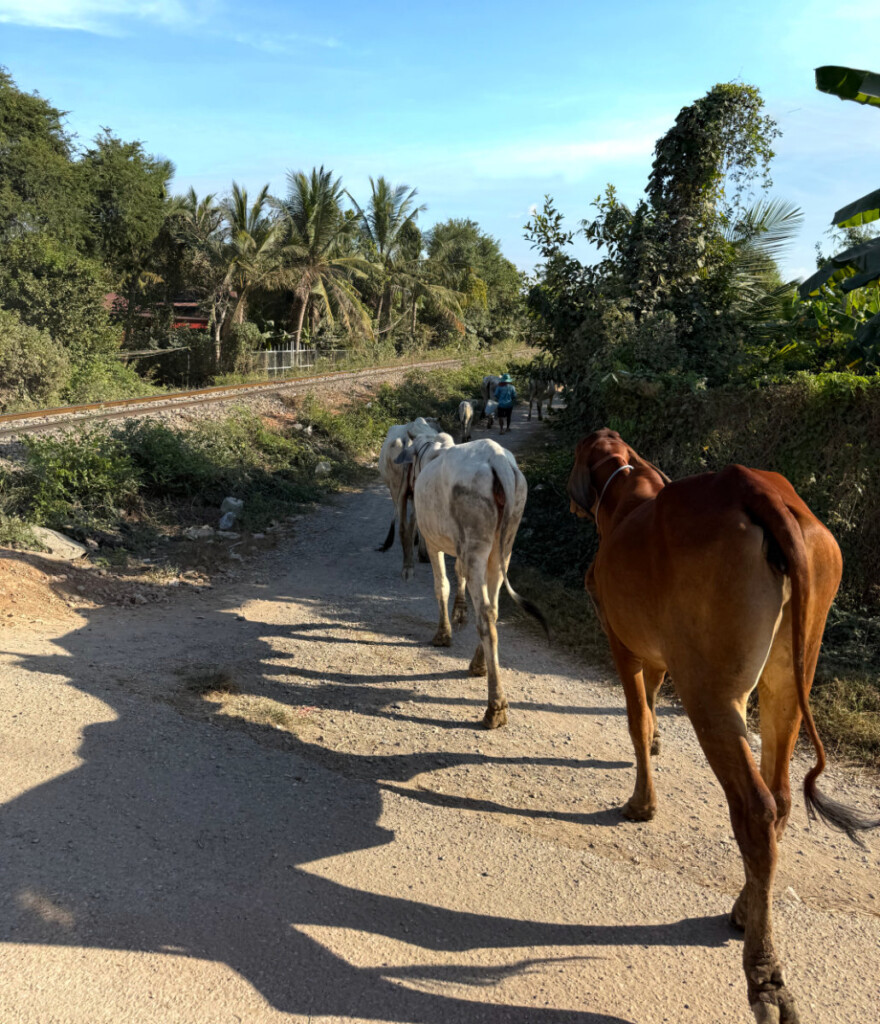
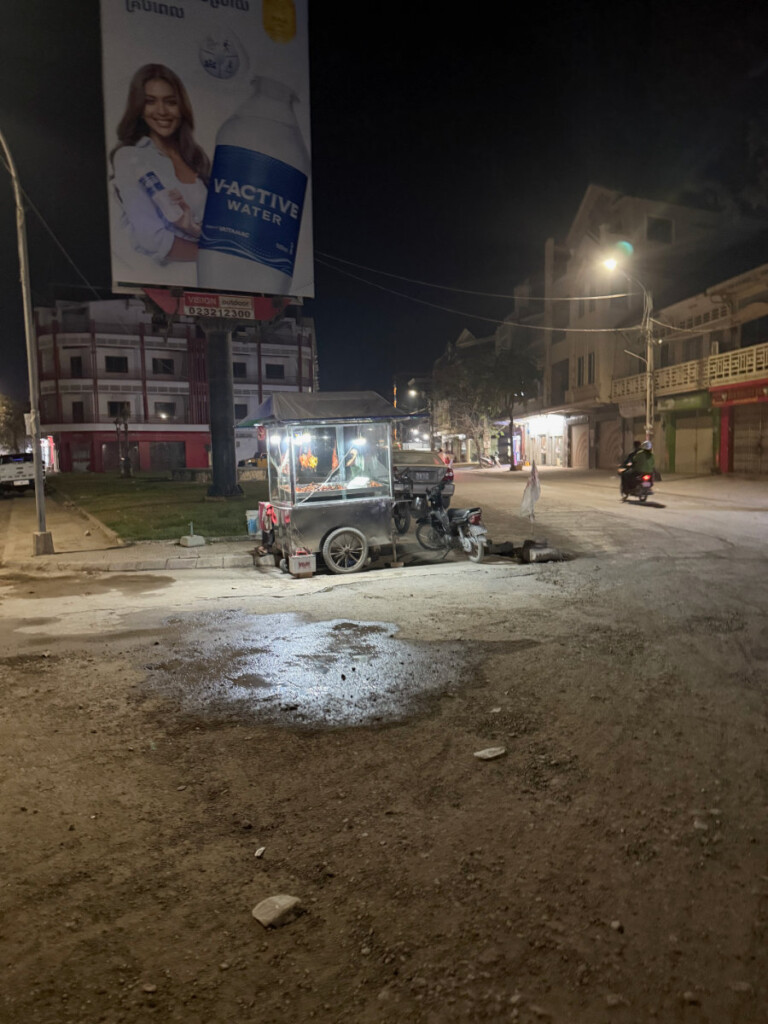
Back into Wendy for another twenty minutes of shake, rattle, and roll. We arrive at a roadside food stand.
“Who’s hungry?” he asks.
My hand flies up immediately. “And thirsty,” I add.
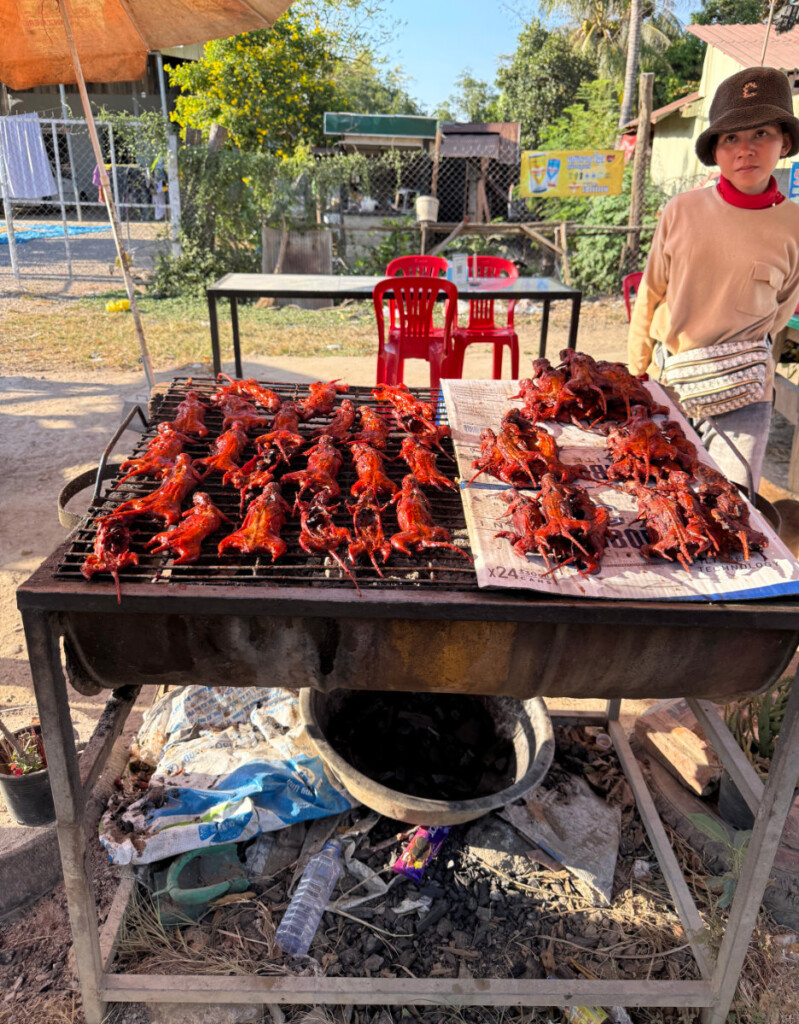
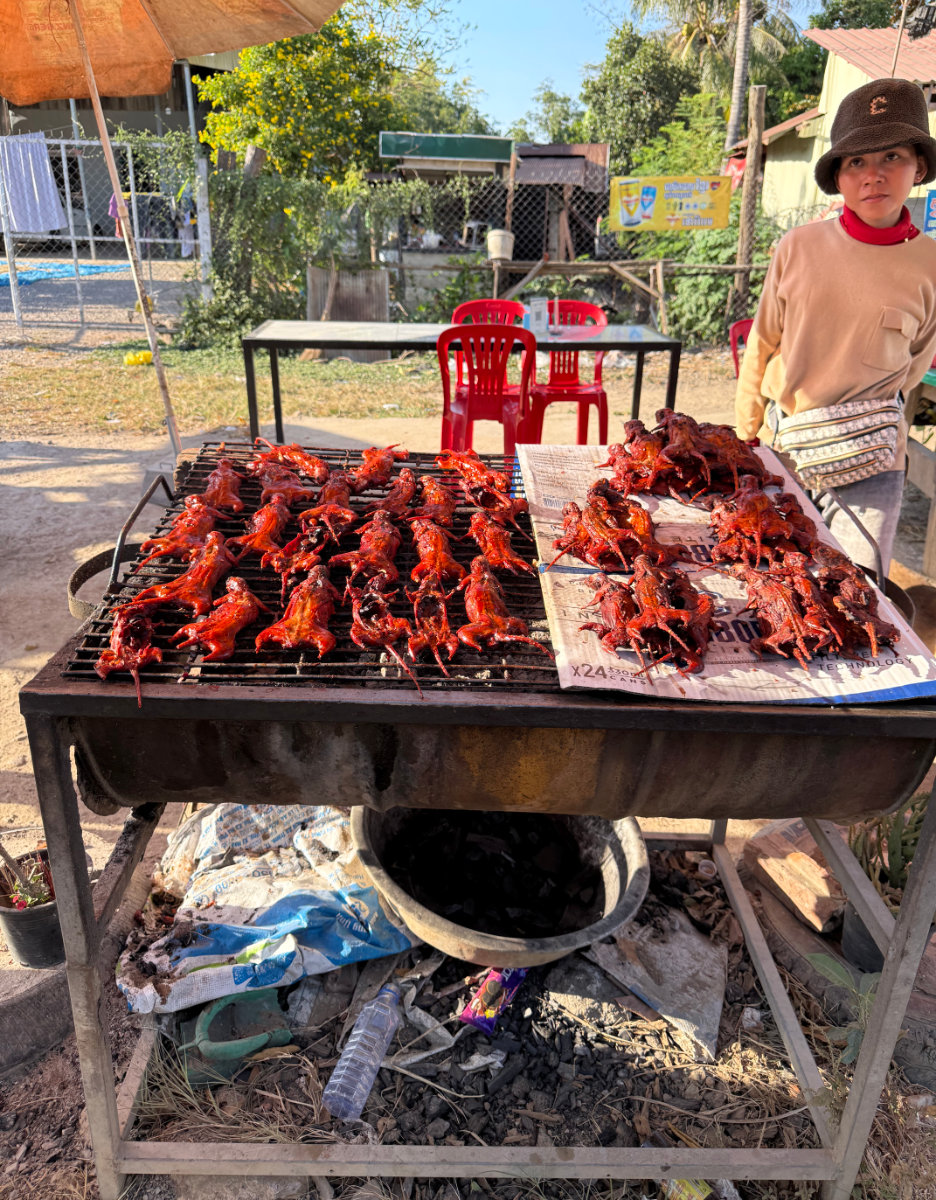
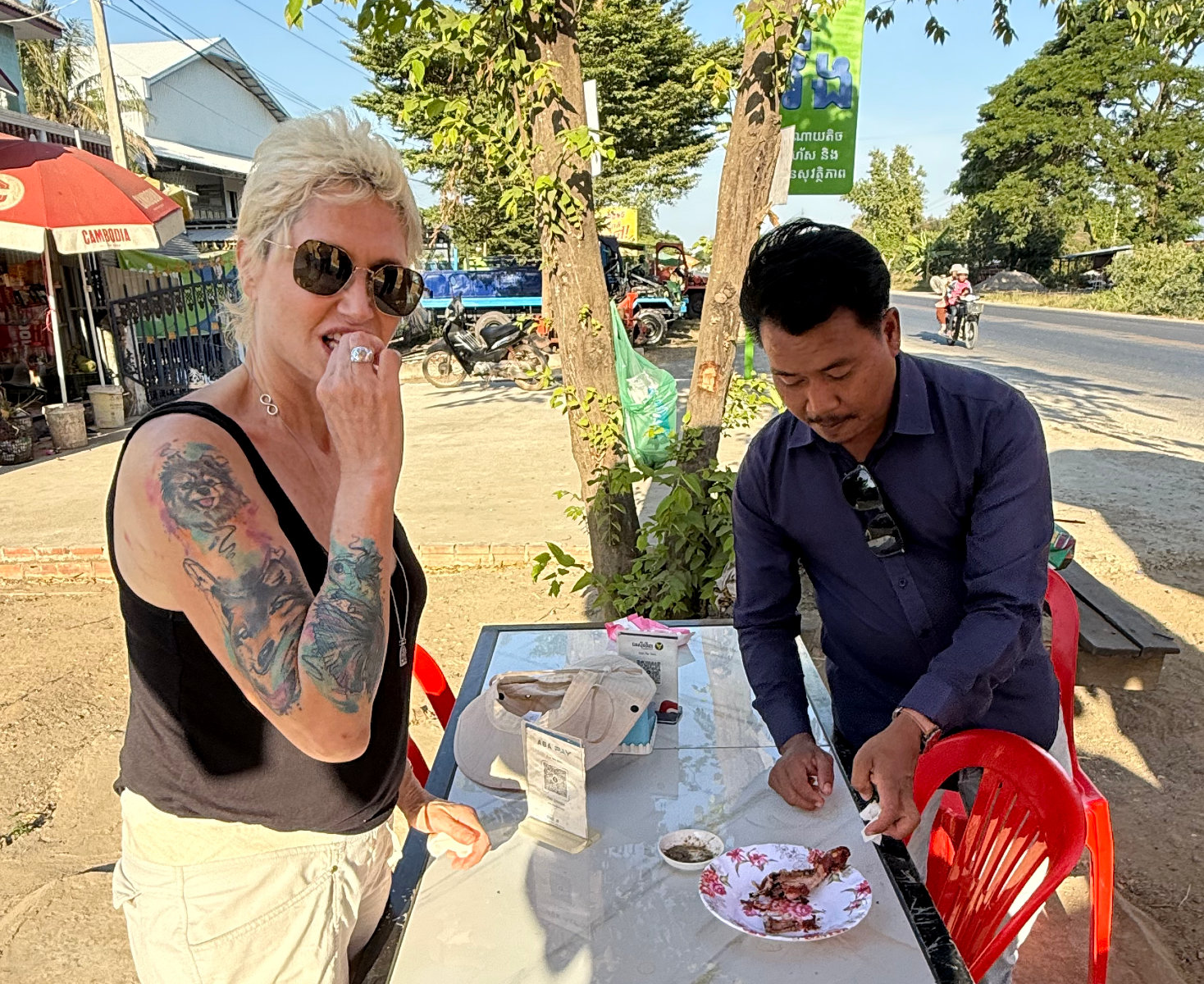
“Good,” he says. “Beer goes well with BBQ rat.”
He’s joking. Right?
I look at the group.
He is not joking.
“Who’s ready to try?” he asks.
OMG. How could I eat Nina?
He explains these are rice-field rats — not street rats, not HeroRATs. Entirely different résumé.
Well. In that case.
“Okay. I’ll eat one. But where’s the beer?”
We head to the cooler. The only beer available is warm.
Eating a freaking rat is one thing.. Drinking warm beer? HELL NO.
Tour guide Bang and I are the only takers. After a few bites, the group asks what it tastes like.
Chicken. Of course.
Next on the itinerary: the Murder Caves.
Between 1975 and 1979, Cambodia fell under the rule of the Khmer Rouge, led by Pol Pot — apparently convinced he could socially engineer perfection — who set in motion one of the most devastating genocides of the twentieth century.
Cities were emptied overnight. Money disappeared. Religion was outlawed. Teachers, doctors, monks — anyone who wore glasses or spoke another language — were marked as enemies.
Nearly everyone was forced into manual labor. Professionals were stripped of identity and sent to the fields: lawyers planting rice, monks digging canals, children hauling dirt for dams and dikes.
In four years, nearly two million people died from execution, starvation, disease, and forced labor.
This wasn’t medieval history.
This was the late 1970s.
And scattered across Cambodia — in fields, in schools, in quiet hillsides — were the places where it happened.
One of those hills rises just outside Battambang.
They call it the Killing Caves.
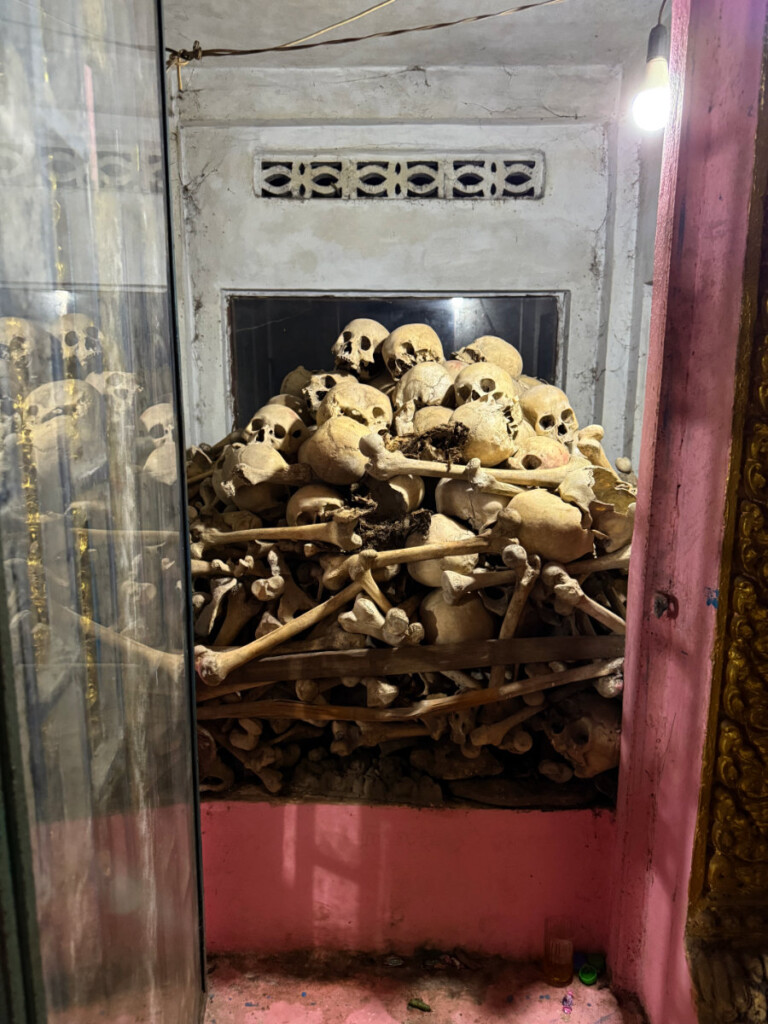
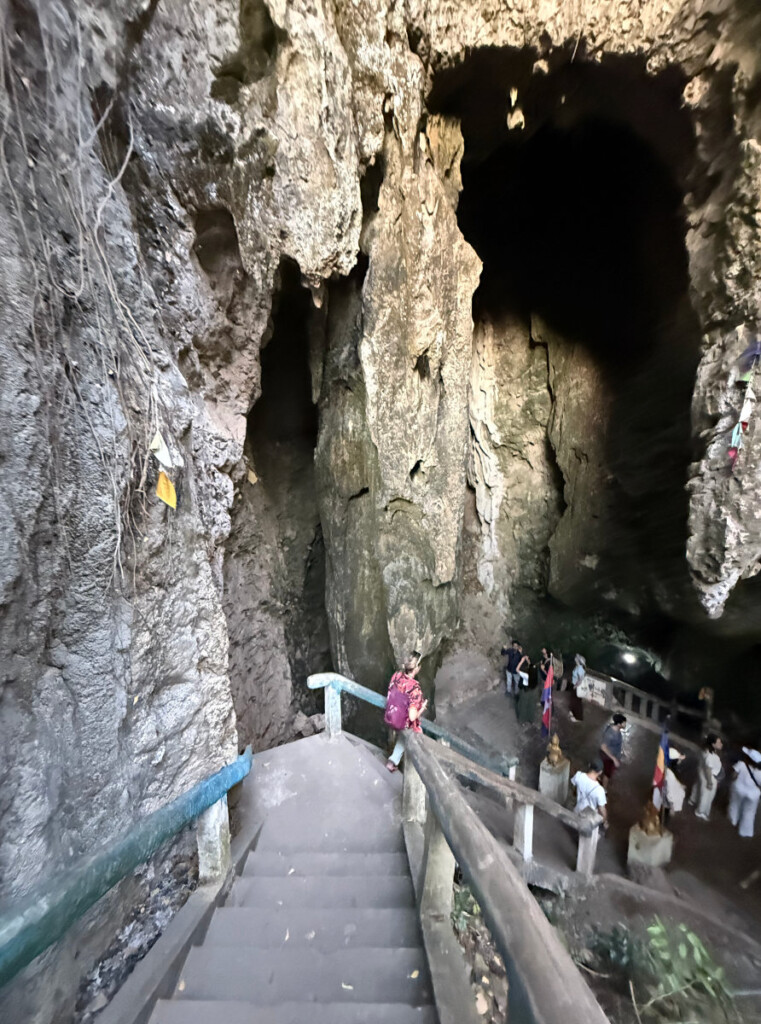
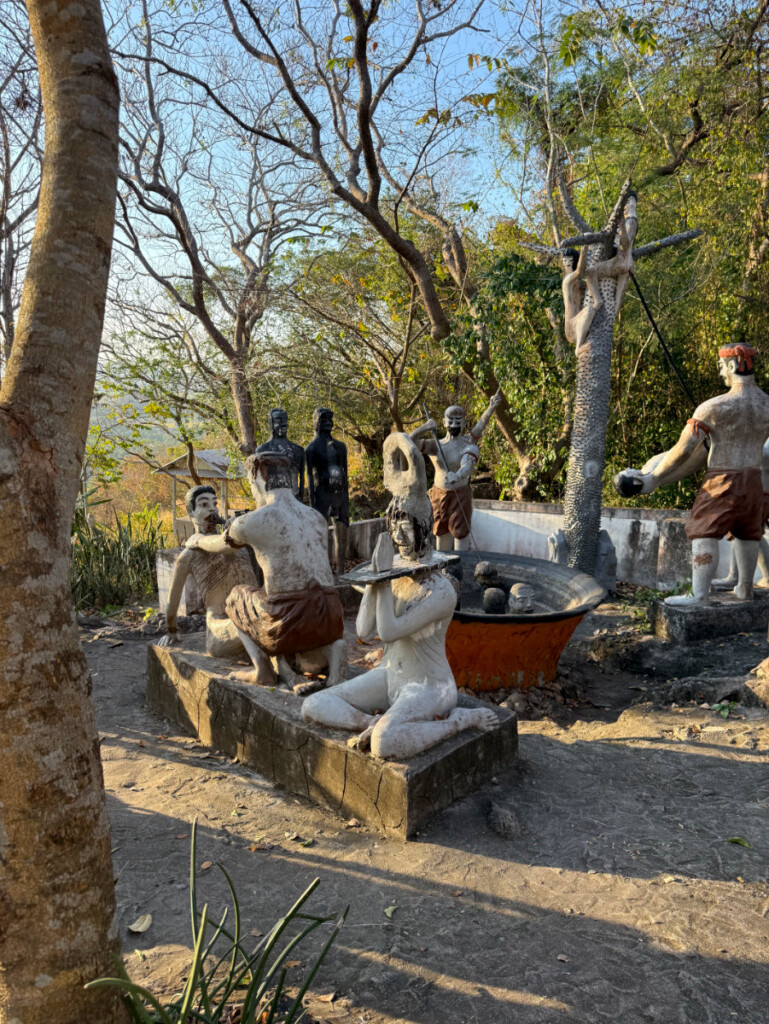
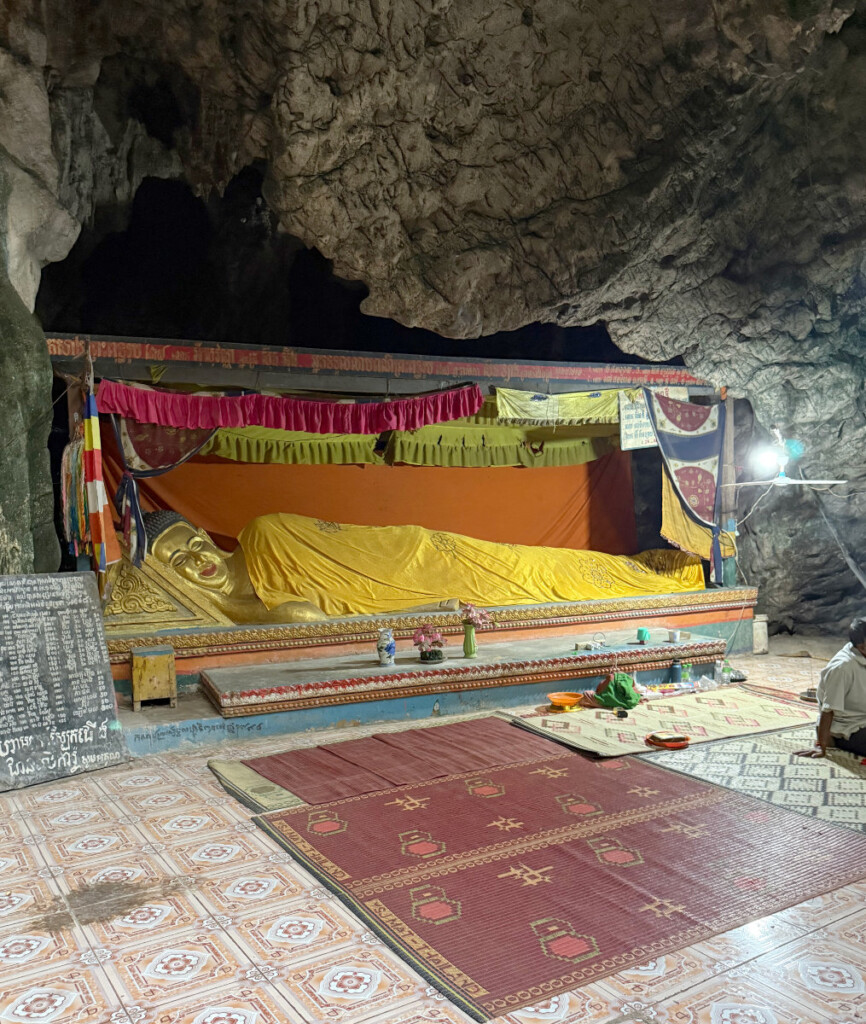
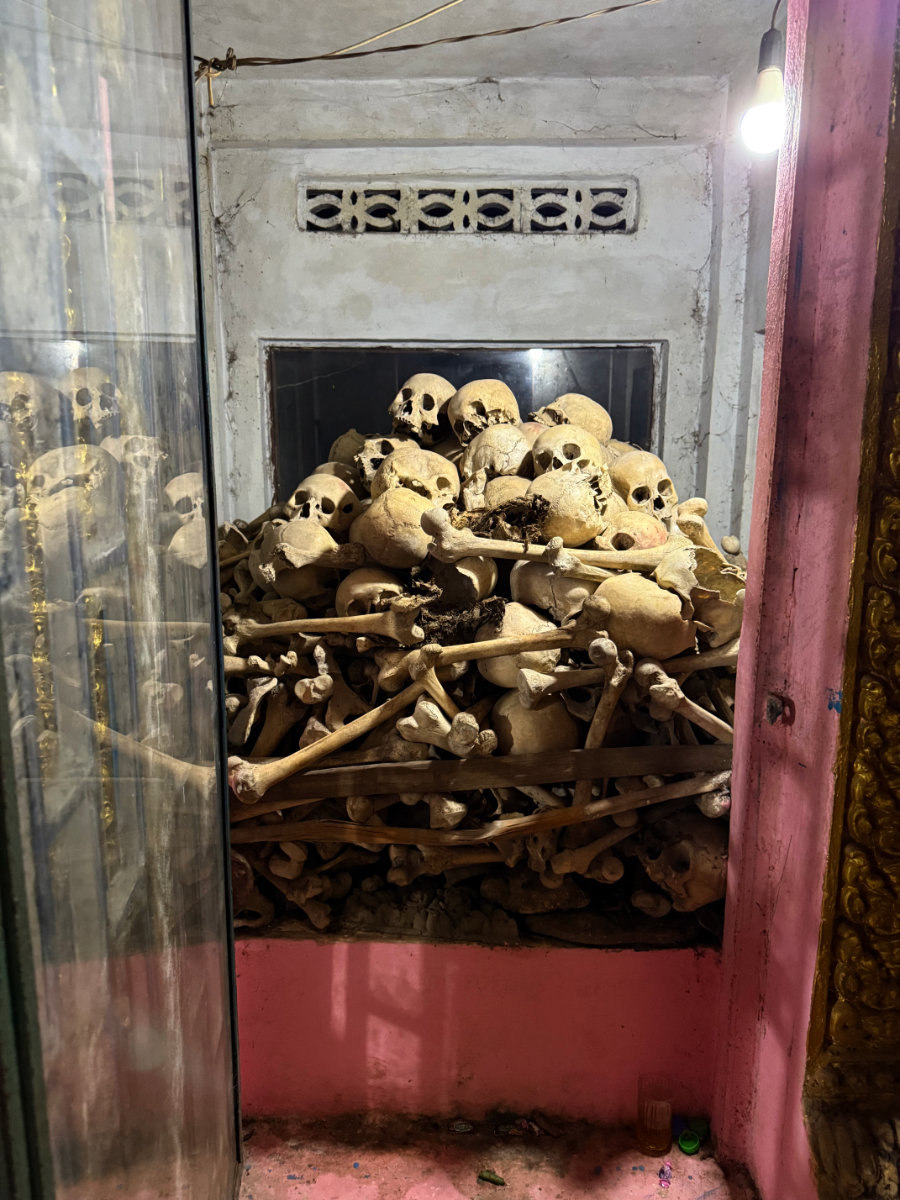
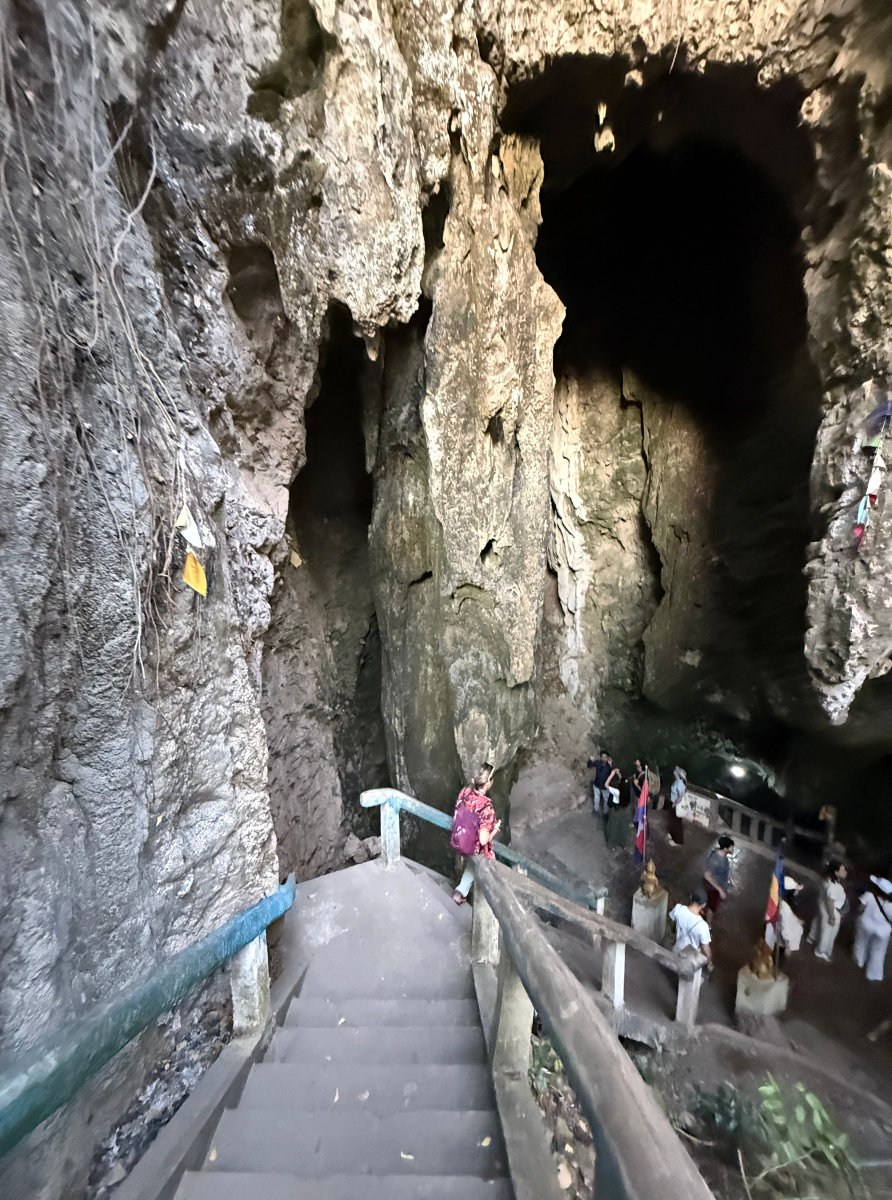
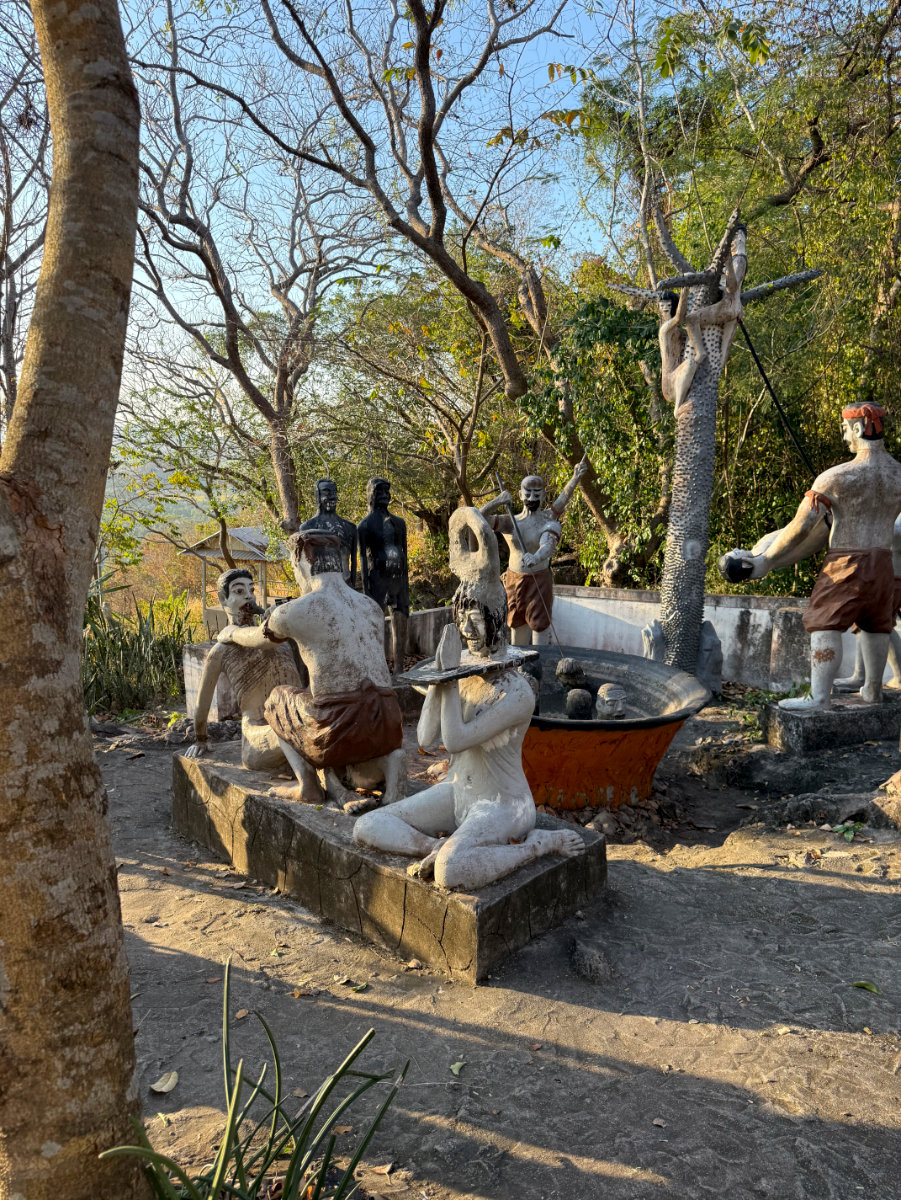
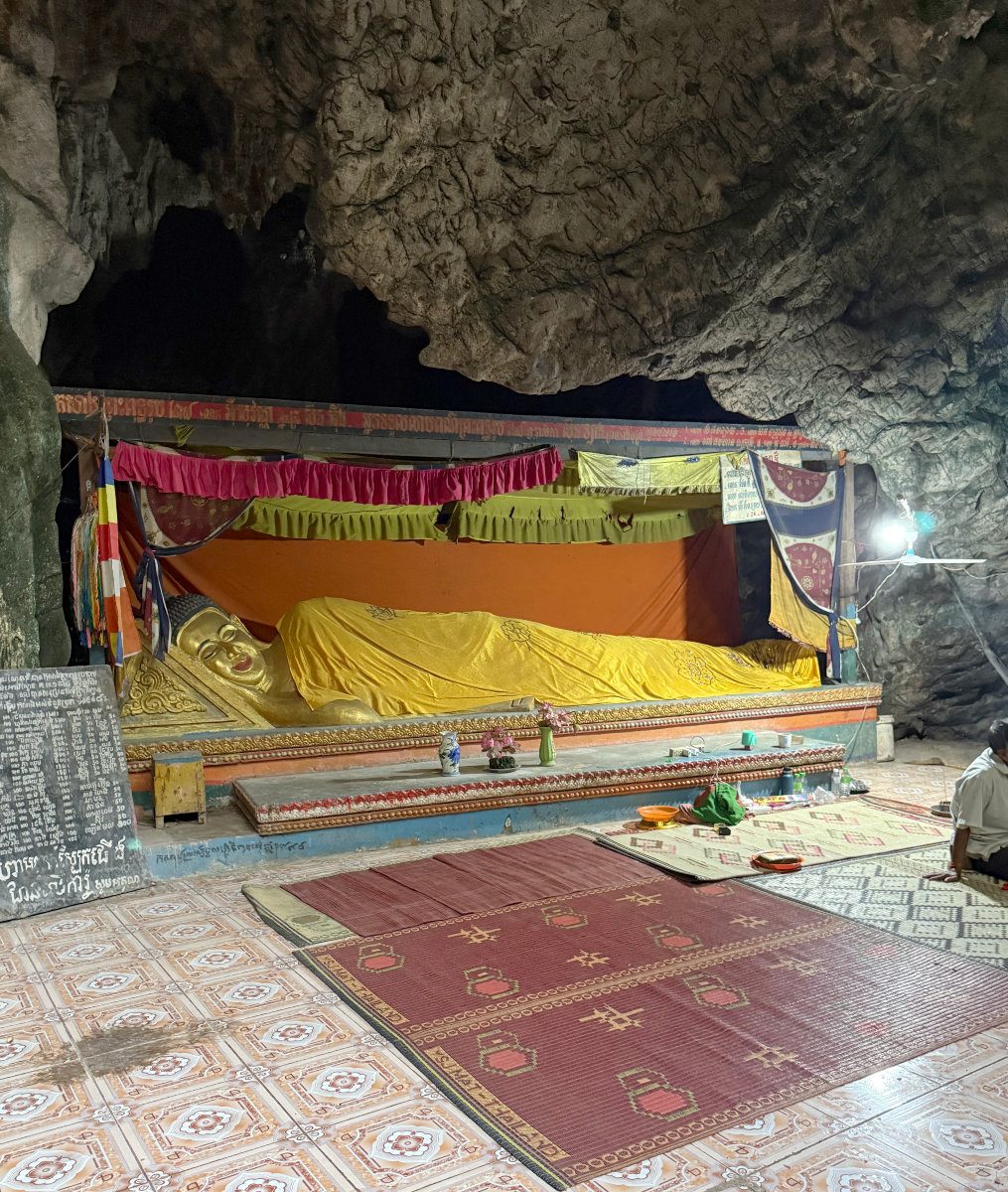
The cave at Phnom Sampeau isn’t grand or dramatic. It’s a natural limestone cavern cut into the hillside, reached by a narrow stairway that descends into cool, dim air. The temperature drops the moment you step inside. The air smells faintly of incense and stone. Sound changes — even whispers feel absorbed by the rock. During the Khmer Rouge era, prisoners were brought here, killed at the cave’s edge, and pushed into the darkness below.
Today, a glass memorial stupa filled with recovered skulls stands near the entrance, quiet and unguarded.
How could a leader do this to his own people? A mere fifty years ago — on top of decades of turmoil already endured?
Standing there, I’m reminded that life isn’t fair. Evil exists. Justice isn’t guaranteed.
And yet.
Despite it all, Cambodians choose rebuilding over revenge. Forward over fury.
Battambang.
Bat-tam-BONG.
Not bang.
There’s been enough of that already.