Angkor Wat. Let’s see Wat the kerfuffle’s about.
Having never seen Tomb Raider, not a member of Angelina’s fan club, and teetering on the brink of full-blown temple burnout, motivation is not exactly coursing through my veins.
Nothing wrong with temples. They’re cool and everything. But after traveling around Europe and visiting practically every church in Italy, I developed a severe phobia of stained-glass windows. When my niece Ryan got married, I had to pop a couple Valium just to walk into the church.
With over forty temples open to visitors inside the Angkor Archaeological Park — including Ta Prohm, where Tomb Raider was actually filmed — I decide on Angkor Wat. One and done. I can’t be going through Asia popping pills every time I see a rock formation.
Getting around Siem Reap is a piece of cake. Tuk-tuks are the primary mode of transportation. Open the Grab app and they’re the first option. Step outside and there are five lined up, ready to take you wherever you want to go. Negotiate and they’ll charge five to eight bucks, take you there, and wait while you wander. Some establishments even have tuk-tuk waiting areas where drivers sit in the shade.
My driver takes me to purchase my ticket — about ten minutes from the actual site. While waiting for the 4 p.m. ticket line to open for sunset entry, I read up on what I’m about to see.
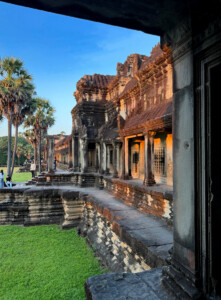
Angkor Wat isn’t just another temple in the complex. It’s the big daddy of them all — the largest religious monument in the world. Built in the early 12th century by King Suryavarman II as a Hindu temple dedicated to Vishnu, it was designed as a stone model of the universe before later transforming into a Buddhist sanctuary — which may be the only reason it’s still standing.
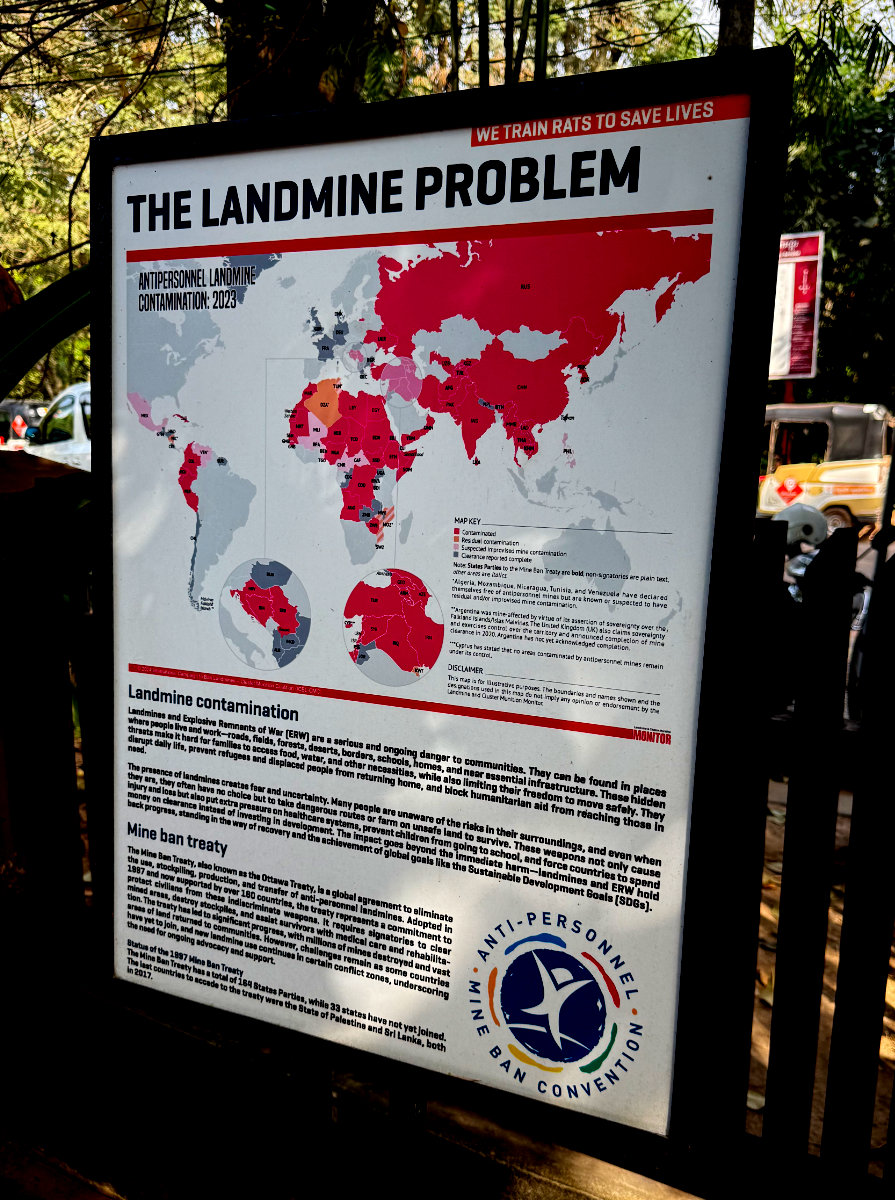
I notice a poster about “Hero Rats.” Huge rats. Trained rats to sniff out buried explosives. I’ve seen a lot of things in this world, but I’ve never heard of anything like this.
These I gotta see. After Angkor Wat, that is.
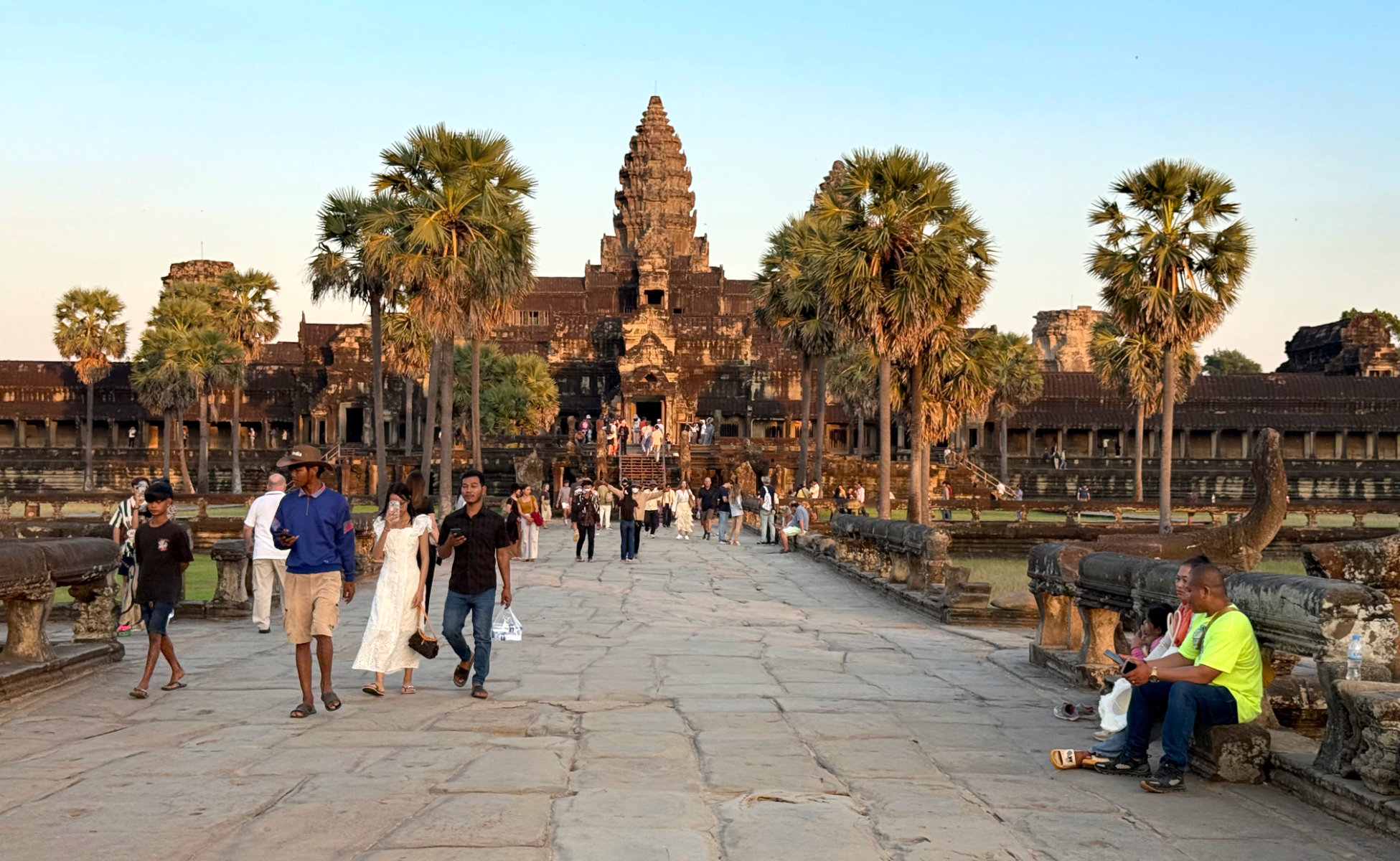
Tickets in hand, my driver drops me at the entrance and shows me where he’ll be waiting when I’m ready to head back. The walkway stretches nearly four football fields, cutting across the wide moat that completely surrounds the structure — a slow approach that forces you to feel the scale before you ever reach the massive facade.
The majestic stone roadway. Lush palm trees along hand-carved rails. Stone Nāga serpents — multi-headed mythological snakes apparently tasked with keeping things in order. I sure wish they’d scare away the nonstop hawkers peddling photo ops every ten steps.
I haven’t even gotten to the main event and I am in full-blown wonderment. This ain’t your regular five-and-dime deal. Now this is what I call a temple.
If I weren’t so hell-bent on seeing those mine-sniffing rats on my last day in Siem Reap, I’d be checking out more of what Angkor has to offer.
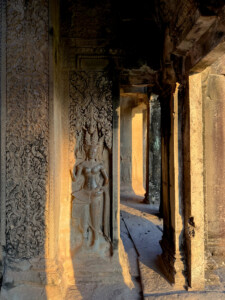
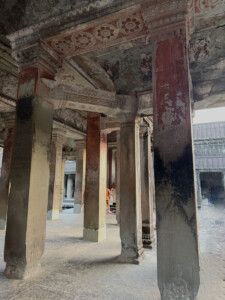
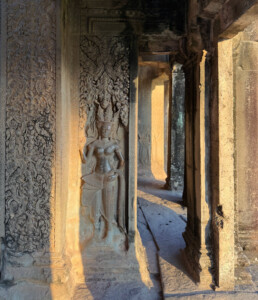
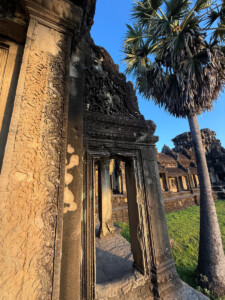
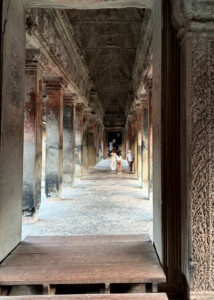
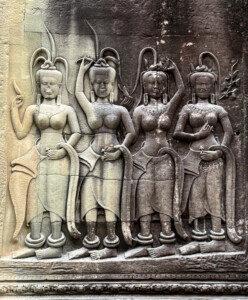
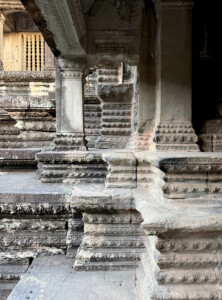
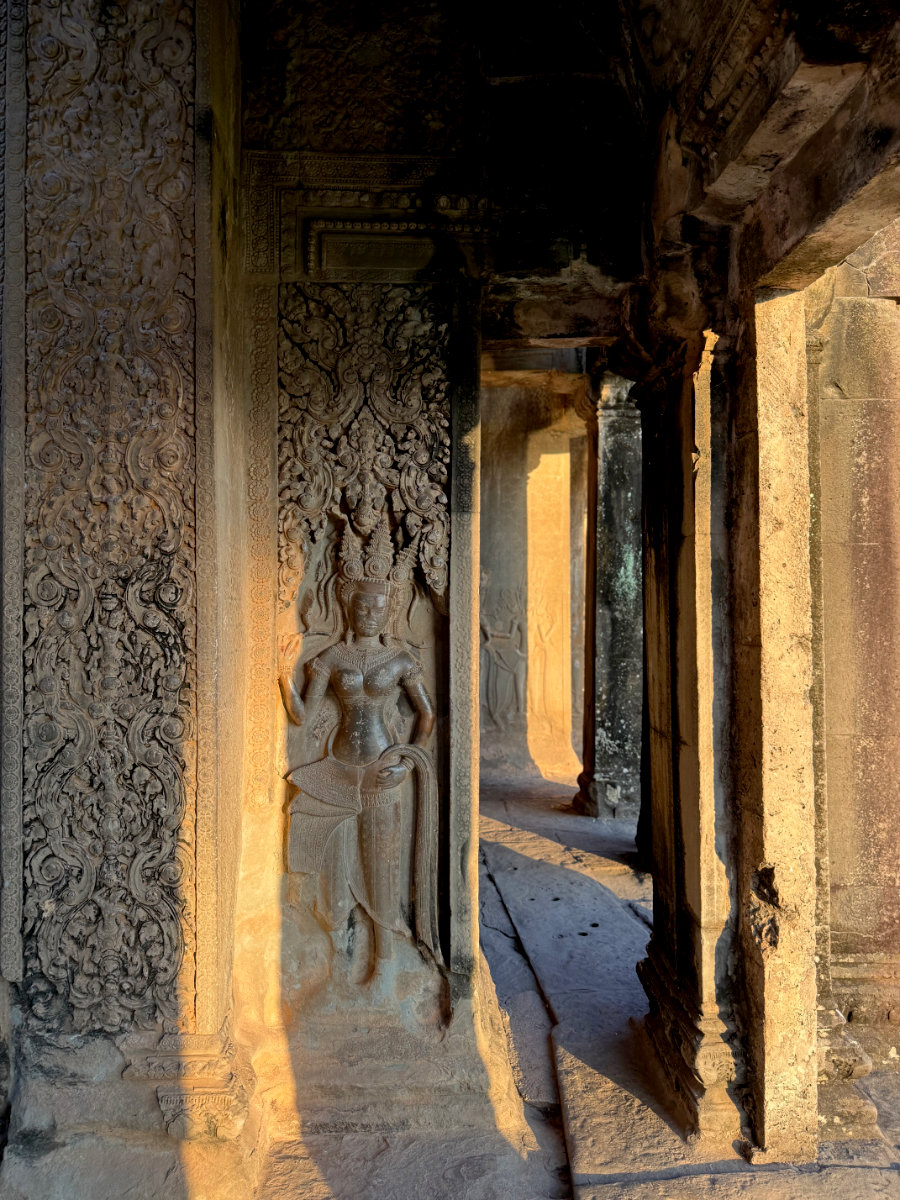
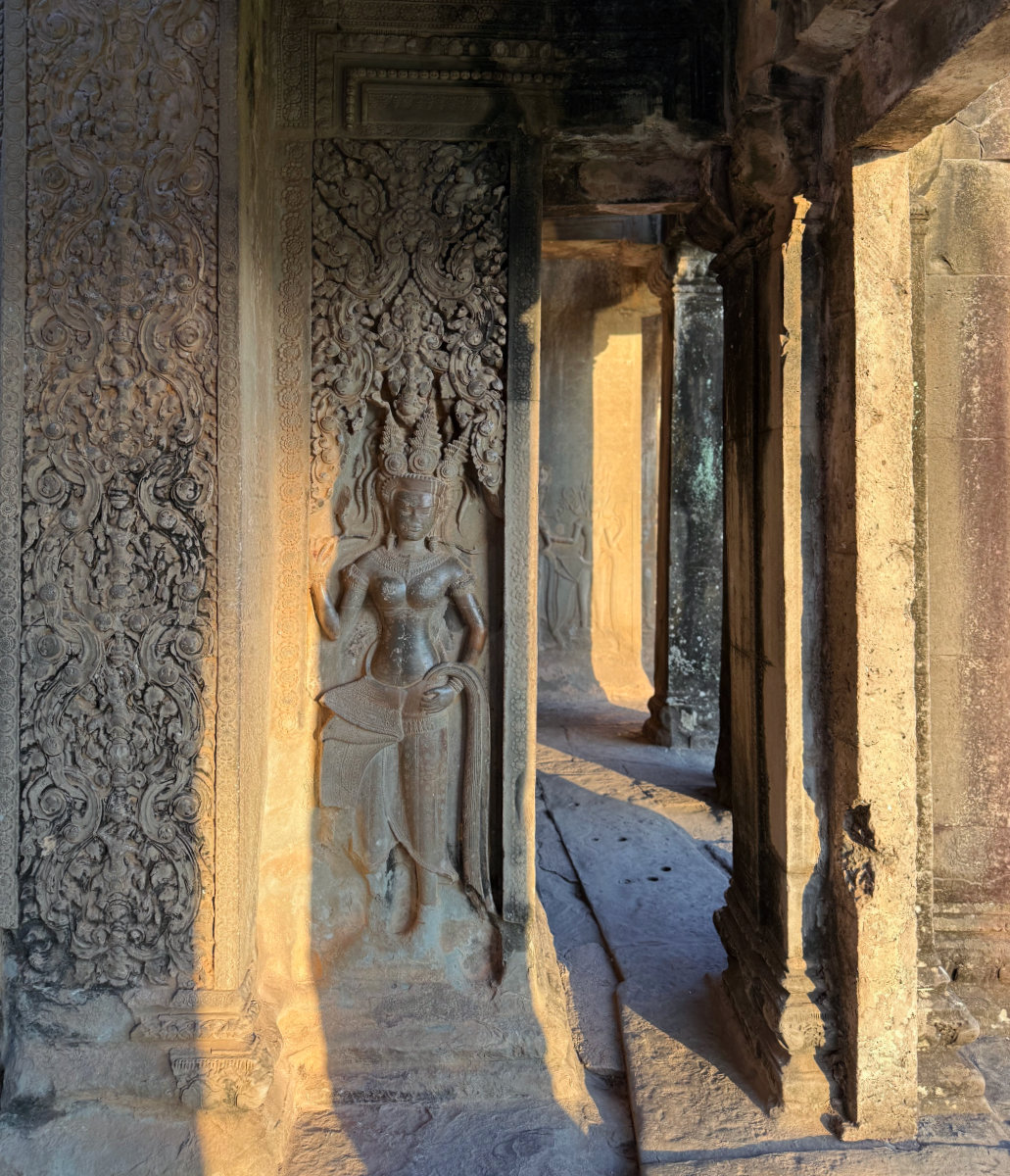
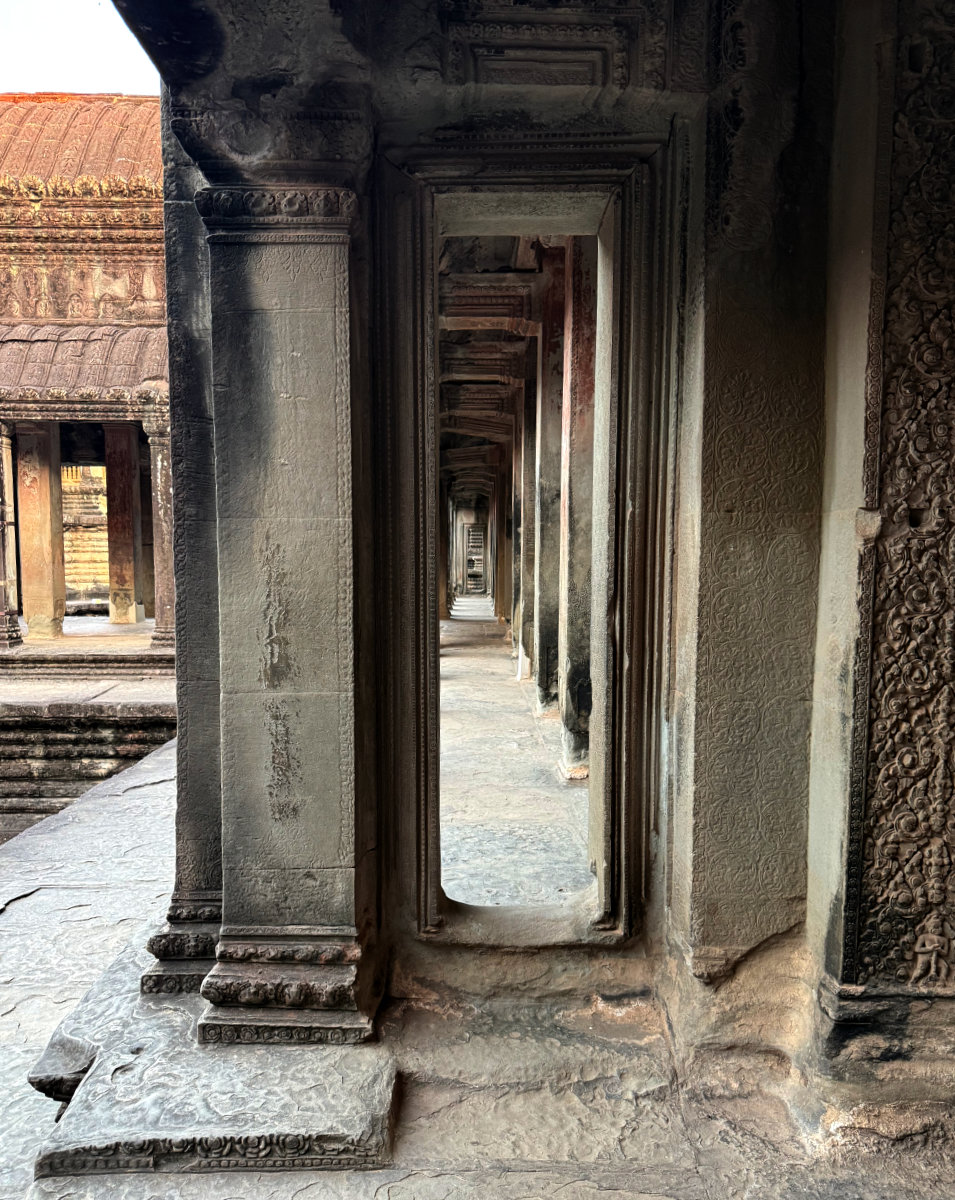
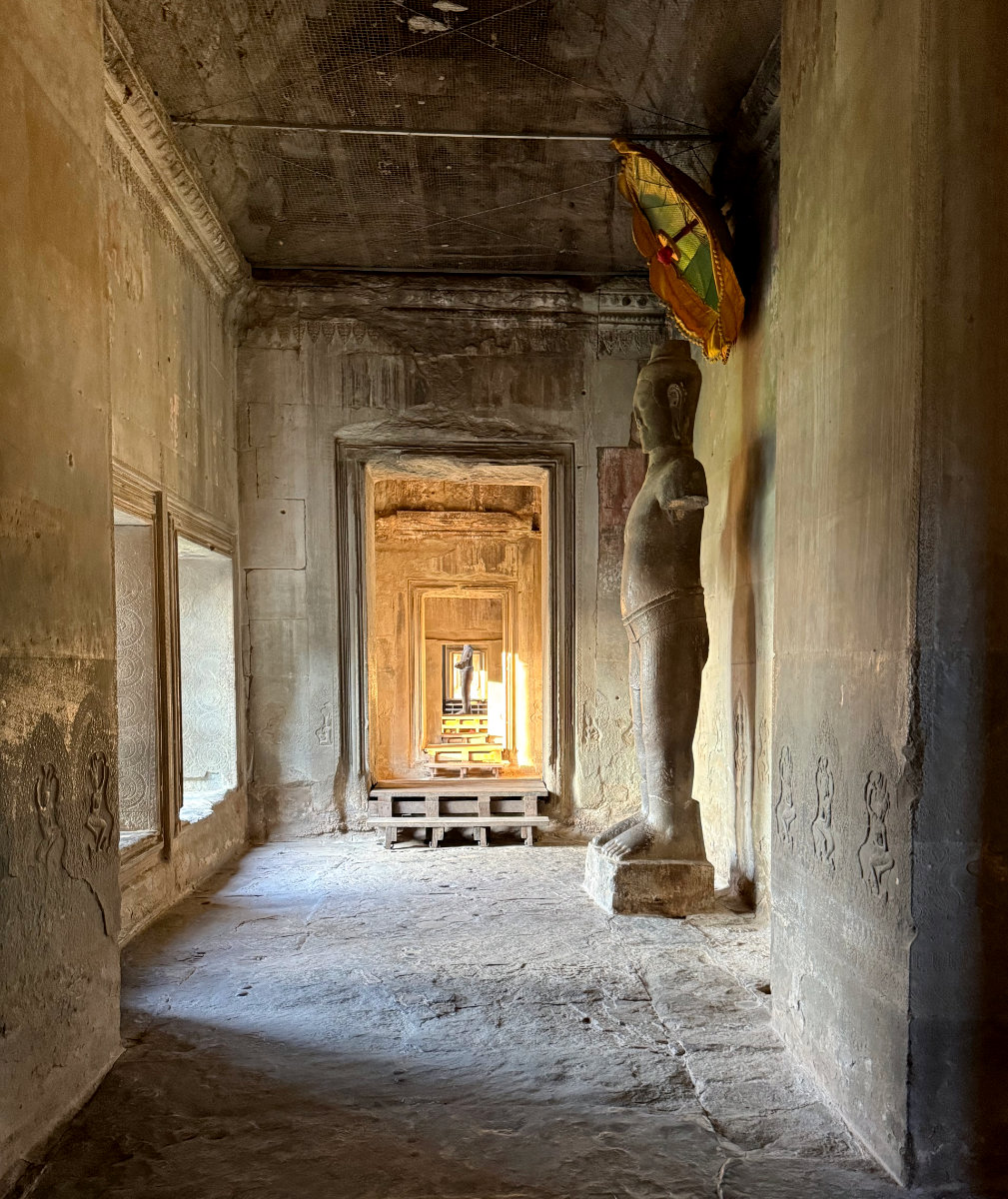
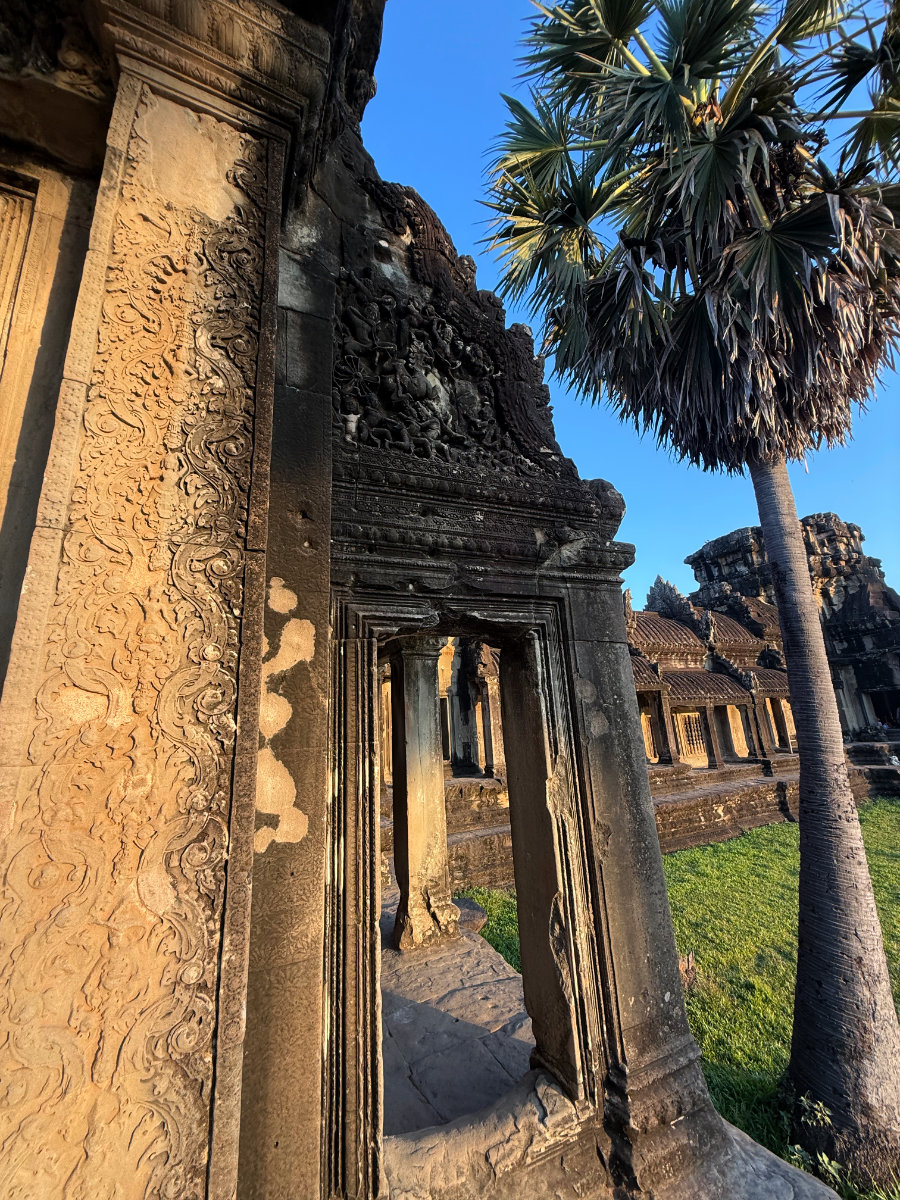
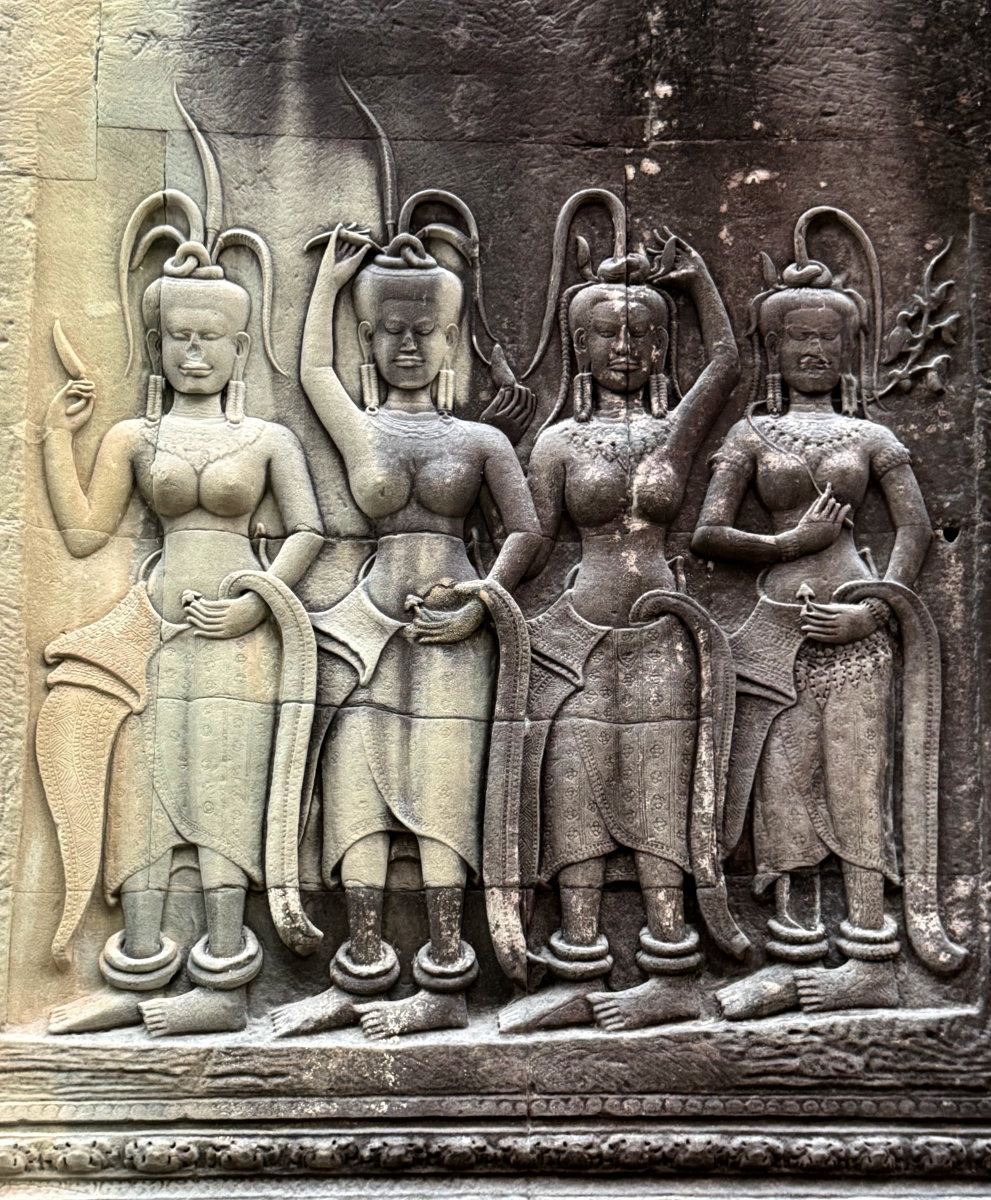
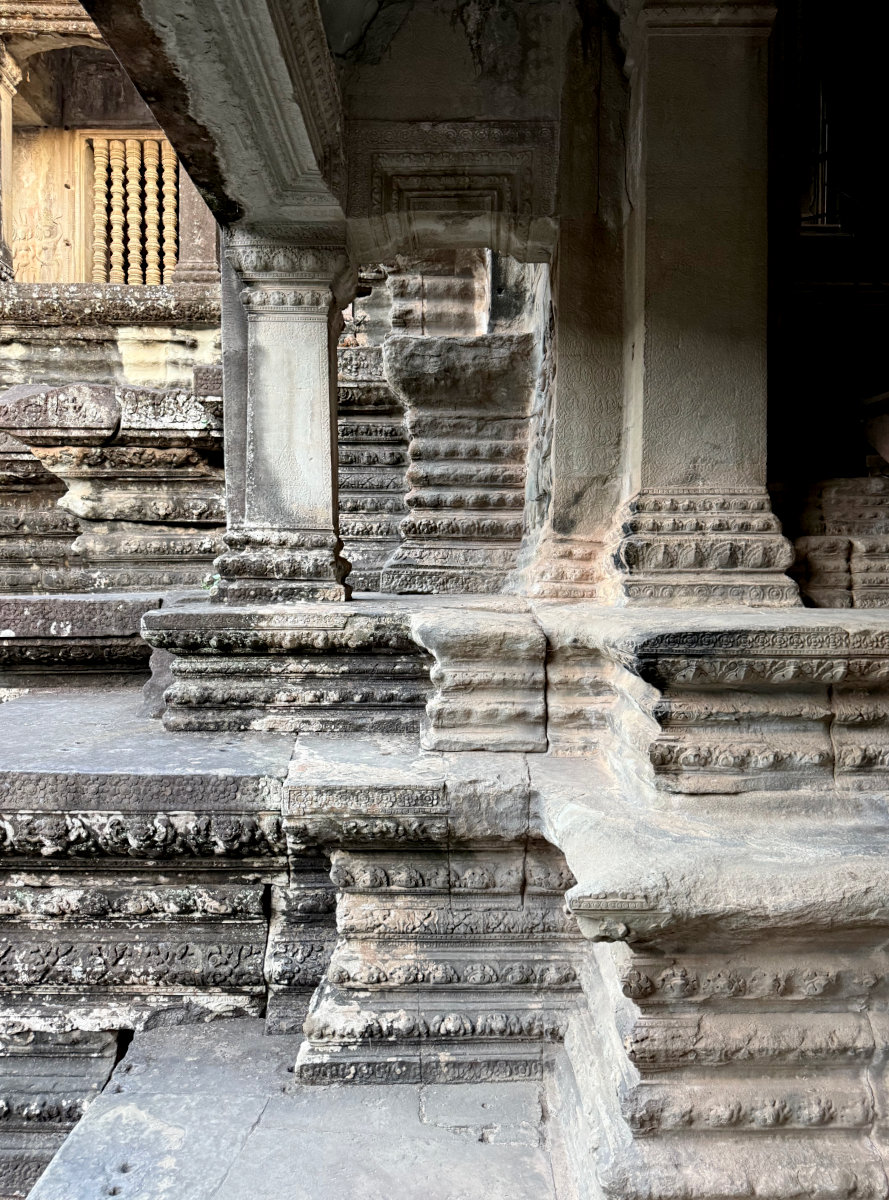
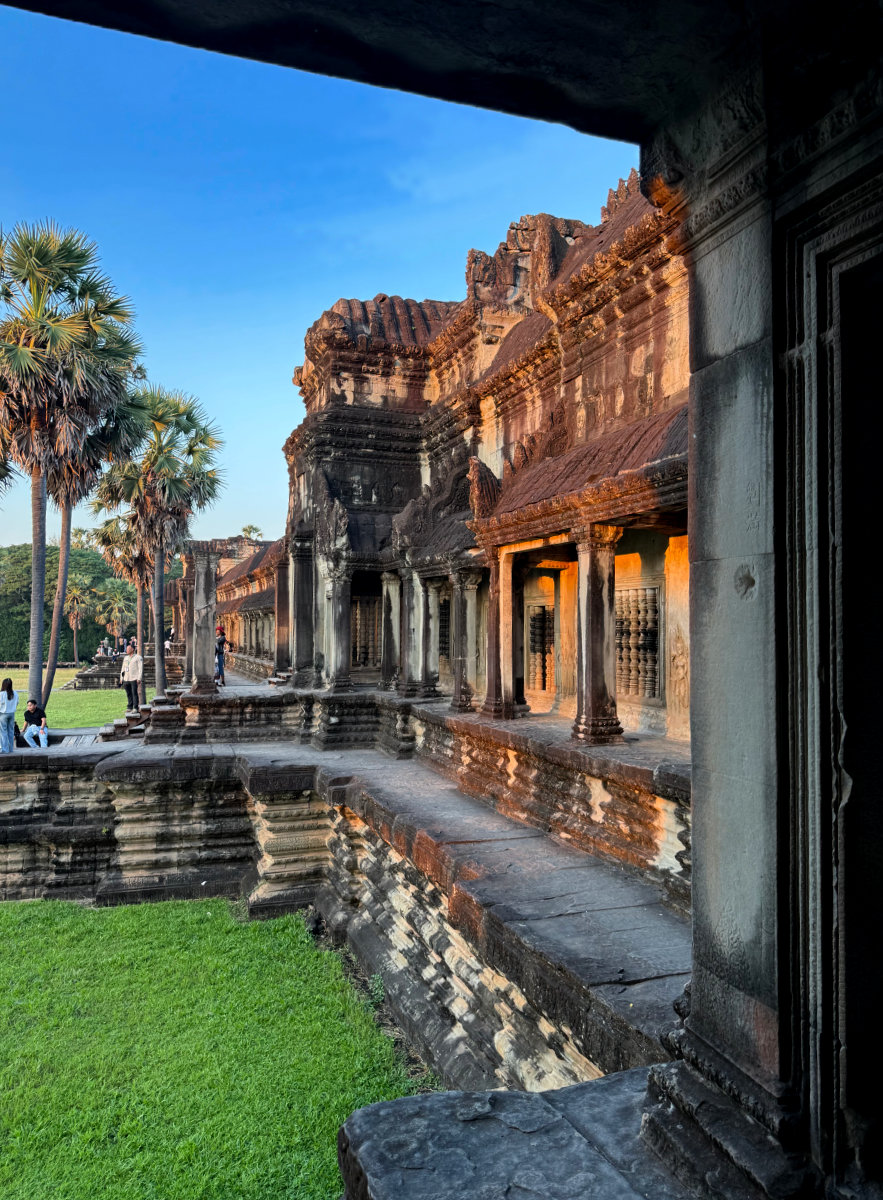
The architecture is fascinating — the pillars, the design, the foundation, the windows, the sculptures — all built over thirty years by hundreds of thousands of people to create this vision. There are over 1,700 carved female figures called Devatas (divine guardians) and Apsaras (celestial dancers) throughout. No two are exactly alike. Different hairstyles, jewelry, expressions, body shapes, headdresses.
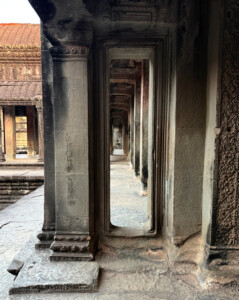
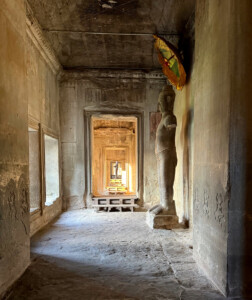
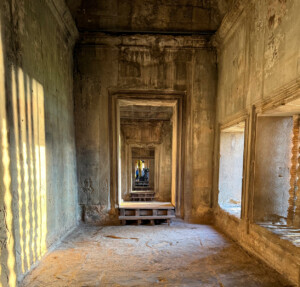
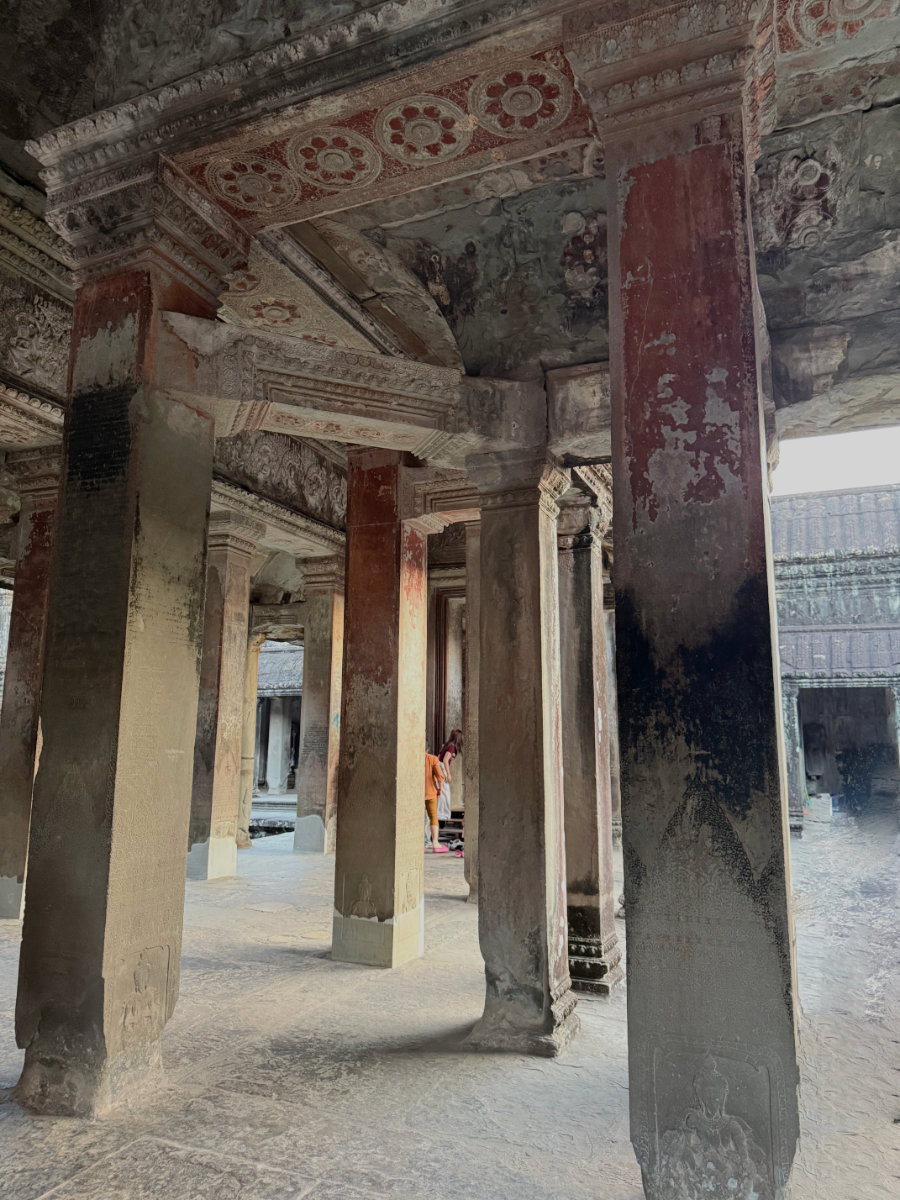
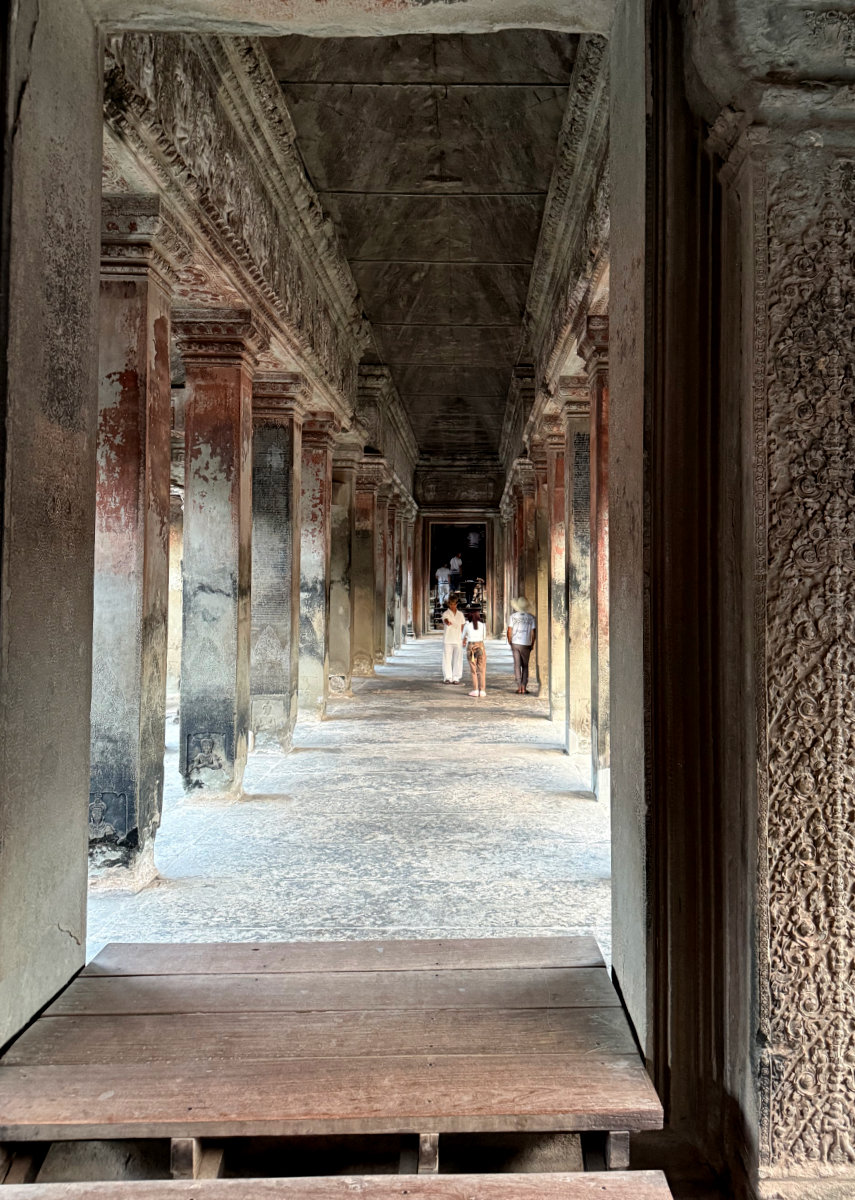
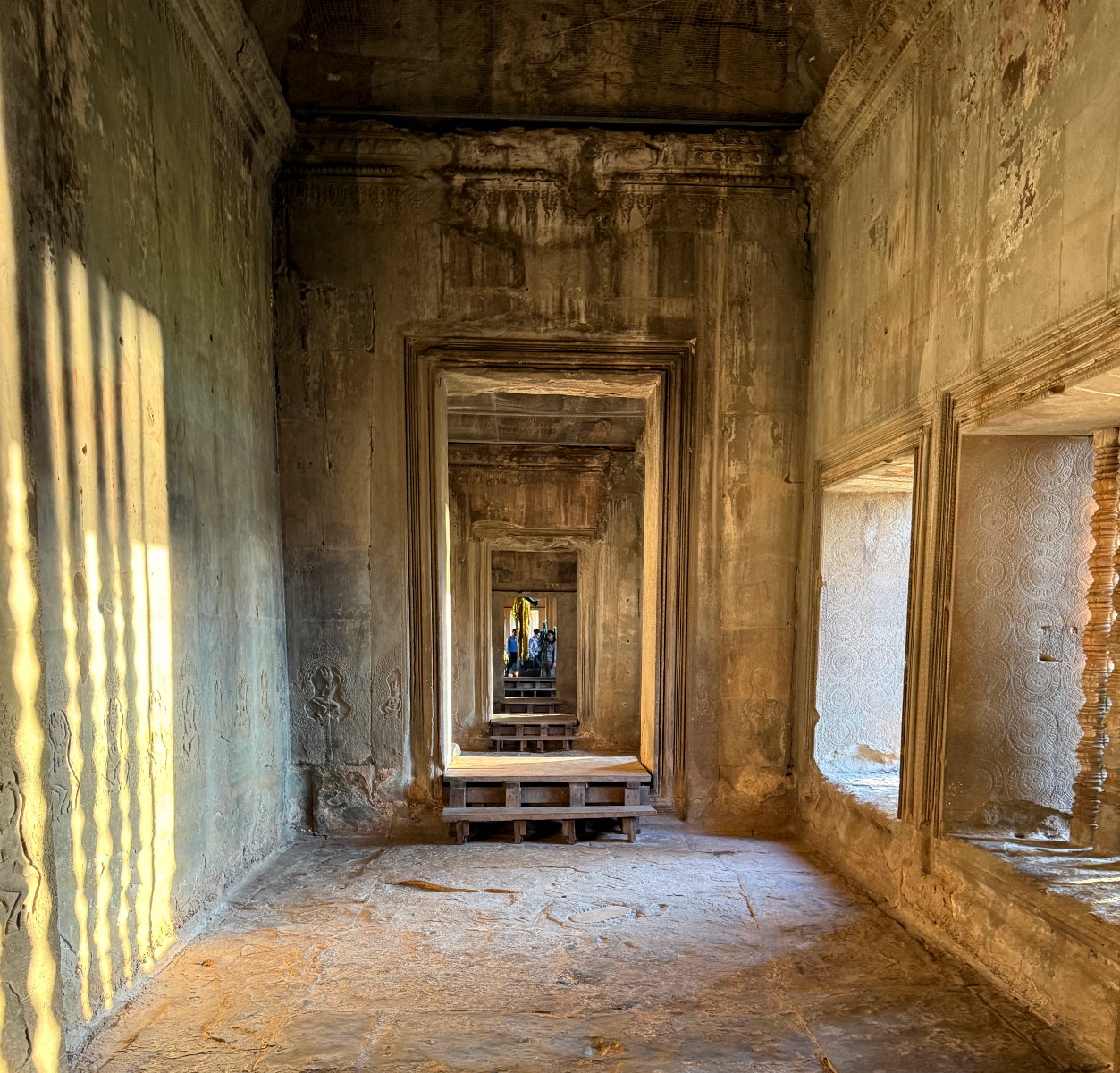
I love the corridors folding into themselves over and over. Doorways within doorways, mirror-like. The rhythmic pattern of bricks opening into courtyards. Time-worn sandstone throwing off colors that were never originally there. Yet the detail remains. The foundation still exists. The beauty still radiates.
Angkor Wat has survived empires, wars, jungle overgrowth, and tourism, yet somehow Angkor Wat still feels intimate when you’re standing inside it alone. For something so massive, it doesn’t overwhelm — it absorbs you.
This should be considered one of the Wonders of the World. For real. I’m mailing in my vote.
Without a doubt, this was worth getting out of bed for. I’m elated my mind won over my body on that one.
Final day in Siem Reap my mind, body, and soul in sync and en route to see the Hero Rats.
Cambodia has been war-torn for roughly three decades — the Cambodian Civil War beginning in 1967, the spillover of the Vietnam War from 1968 to 1971, the Khmer Rouge genocide from 1975 to 1979, and continued insurgency until around 1998.
That’s a lot of violence for such a small country that values peace.
For the past twenty-six years, Cambodia has moved beyond the atrocities inflicted on its citizens and its land. But just because the country has progressed doesn’t mean the past has disappeared. There are many, many reminders still buried beneath the surface.
Cambodia remains one of the world’s most heavily landmine-contaminated countries. An estimated four to six million landmines and unexploded ordnance (UXOs) are scattered across the countryside. Cambodia has one of the highest amputee rates globally.
The Cambodian Mine Action Centre (CMAC) and other organizations are working tirelessly to clear affected areas. It is an ongoing, massive, never-ending project.
Here’s where the Hero Rats come in.
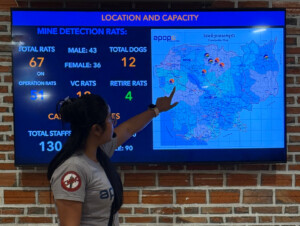
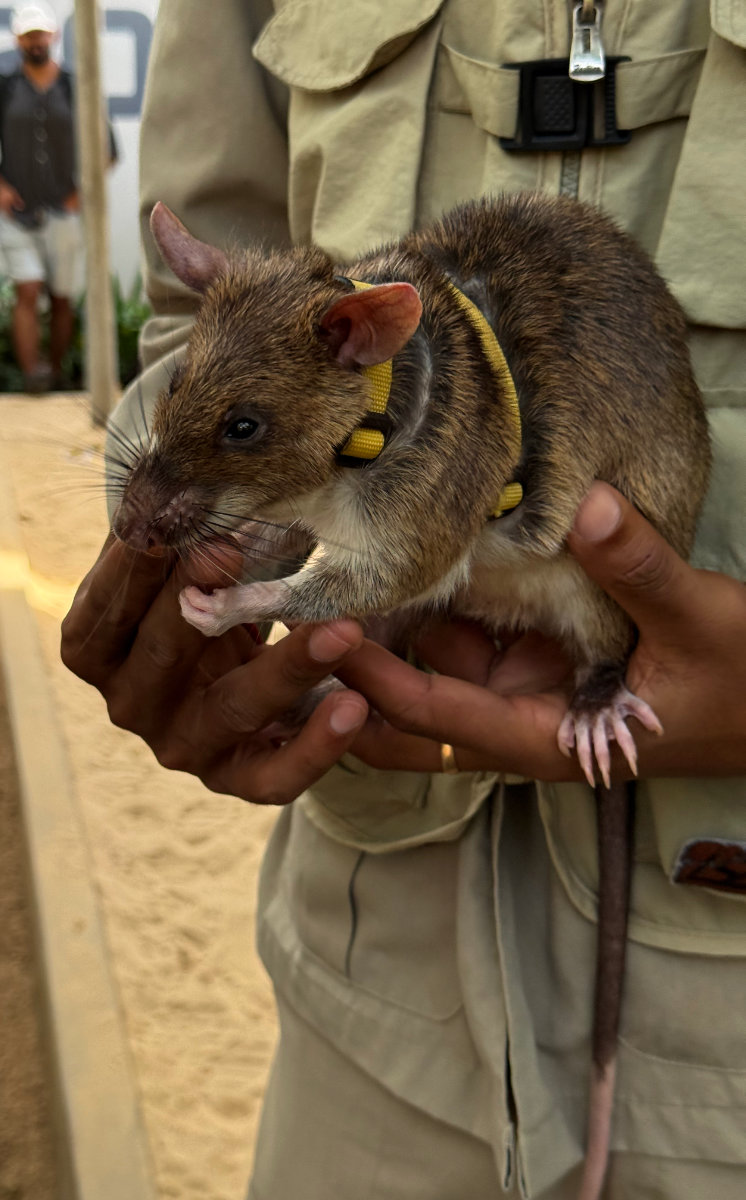
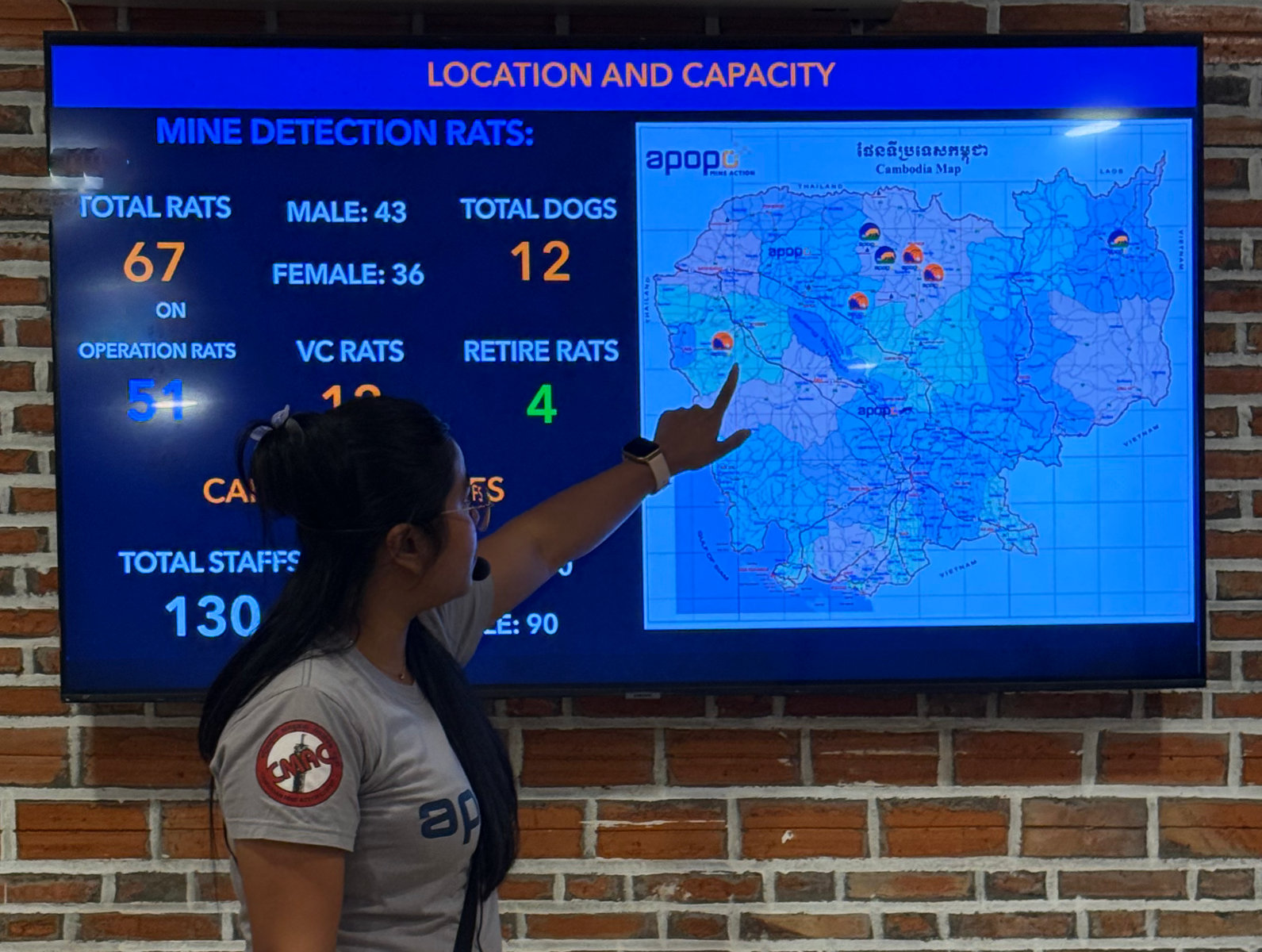
In the 1990s, a Belgian engineer had what sounded like a strange idea — train rats to detect landmines. An organization called APOPO(Anti-Personnel Landmines Detection Product Development) began training African giant pouched rats to sniff out TNT. Light enough not to trigger explosions and smart enough to be guided by food rewards, these “Hero Rats” can clear a field in a fraction of the time it would take a human with a metal detector.
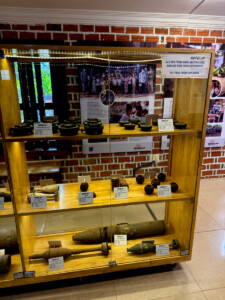
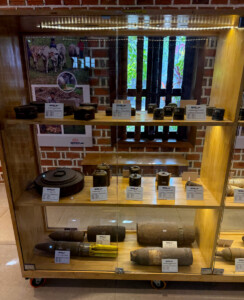
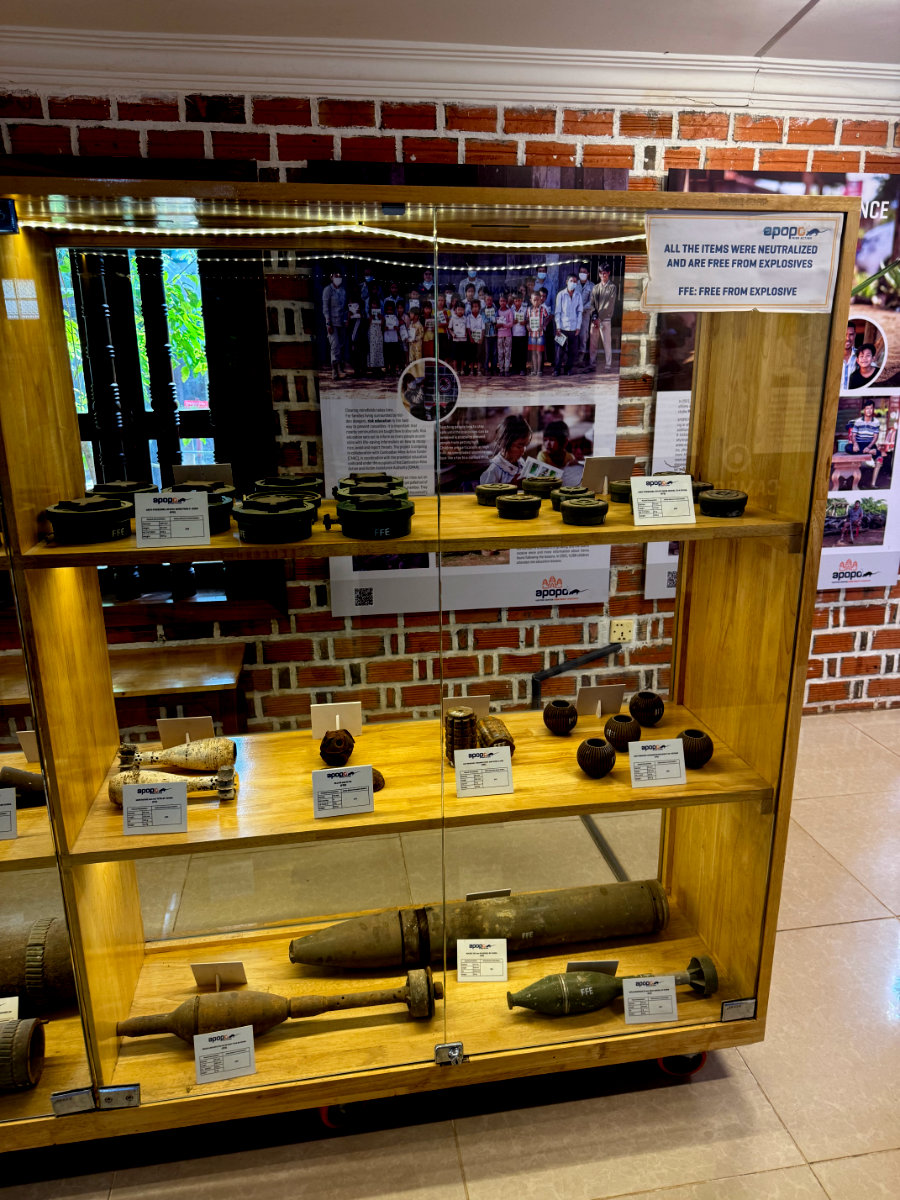
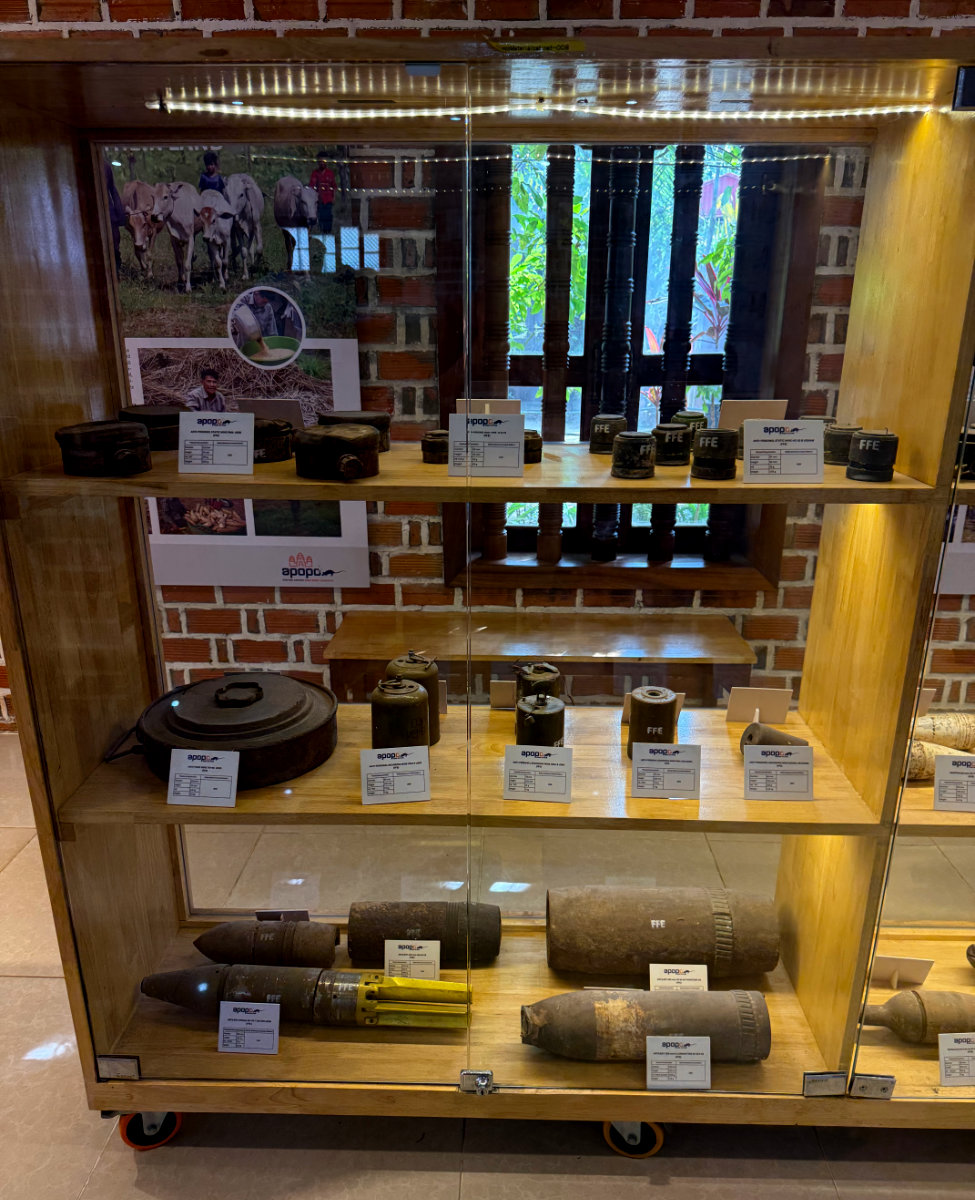
Various explosive devices designed to blow men, women, children, and animals to smithereens are displayed in the APOPO waiting area. Humans are incredibly creative when it comes to designing weapons for maximum destruction.
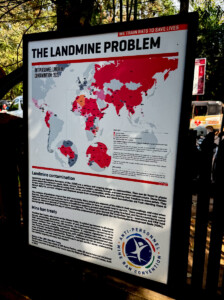
Before meeting the rats, we’re led past a series of interpretive panels explaining the scale of the global landmine crisis. It’s staggering how much still lie buried across vast regions of the world.
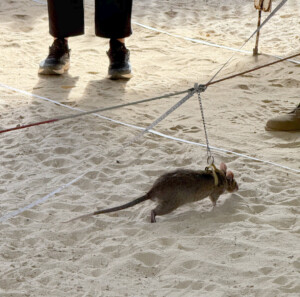
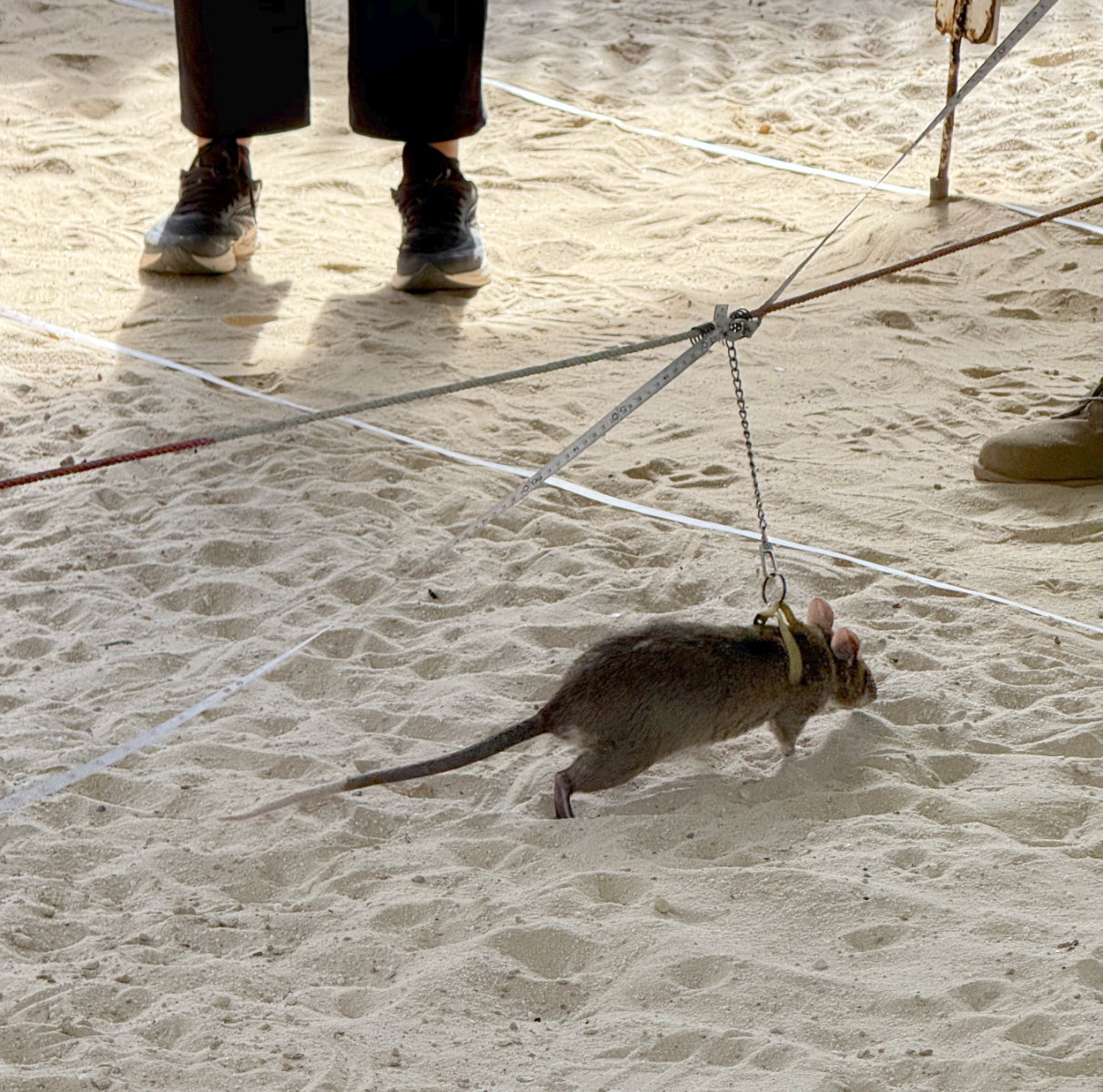
According to our guide, HeroRATs are trained using positive reinforcement. From a young age, the African giant pouched rats learn to associate the smell of TNT with a food reward — usually mashed banana. In controlled settings, they’re taught to pause and scratch at the ground when they detect explosives. Because they’re too light to trigger landmines, they can safely move across contaminated fields on a harness, clearing land far faster than traditional methods.
They’re trained and tested at this very facility, she explains. Each rat must pass a rigorous accreditation test before working in active minefields.
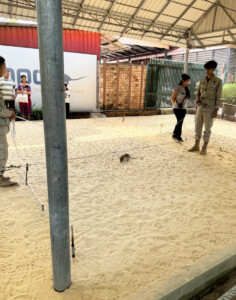
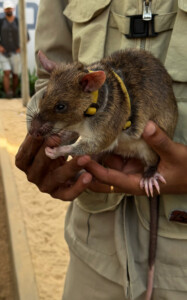
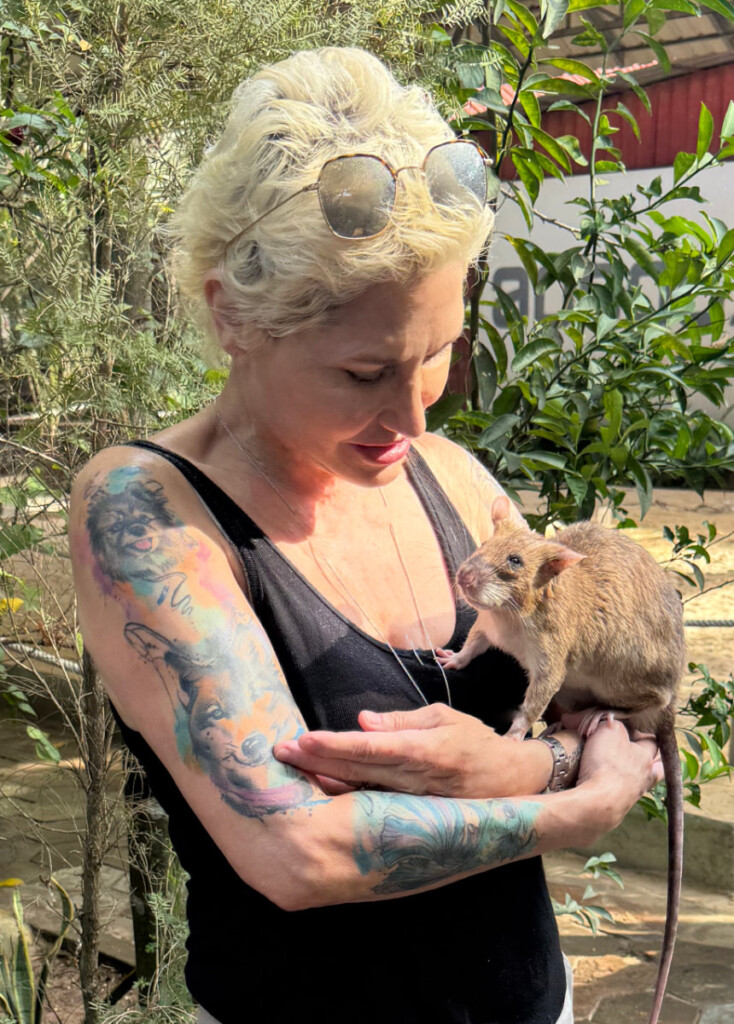
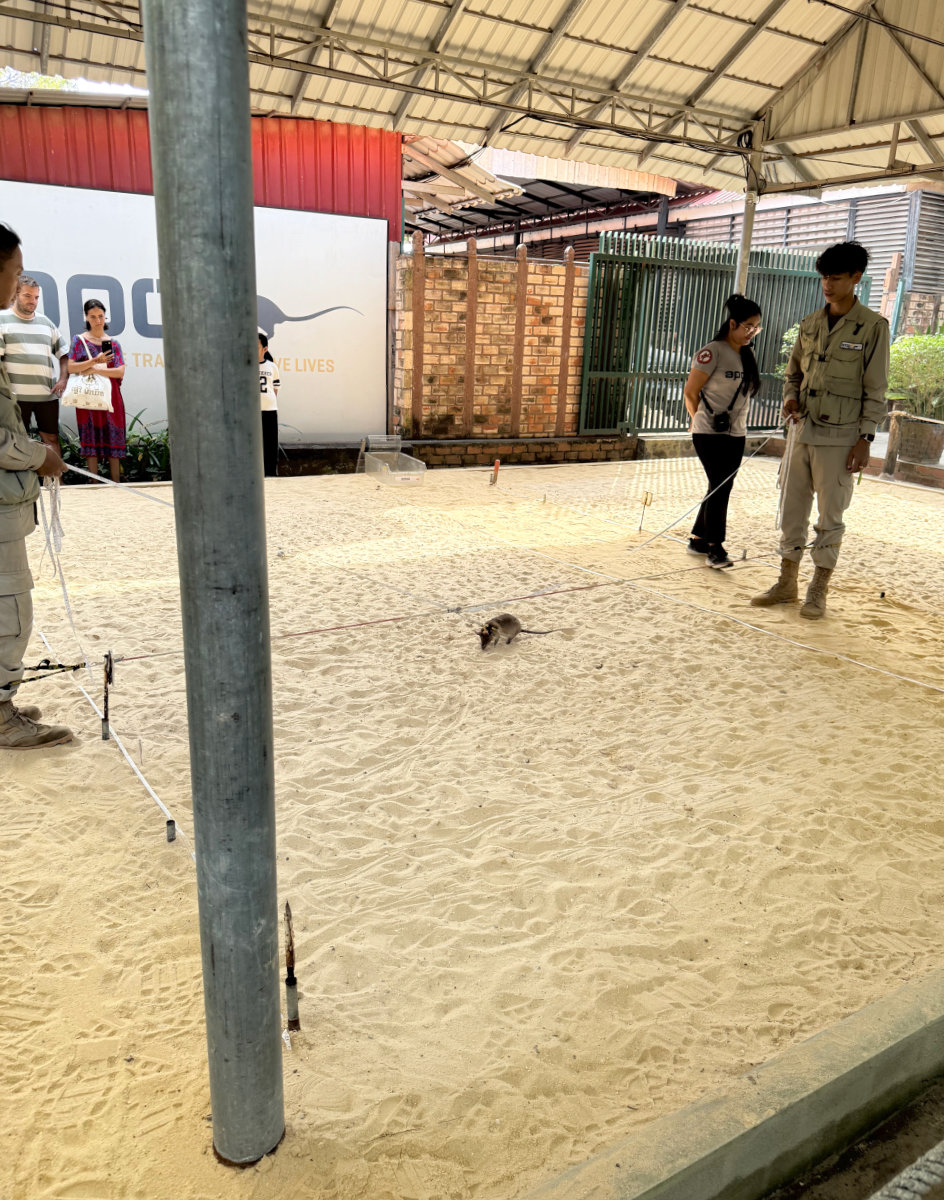
“Today you’ll be meeting Nina,” she says with a little laugh. “She flunked out of the program.”
That’s why we’re meeting her instead of one of the working heroes.
Apparently, Nina likes to scratch for goodies without actually finding the goods.
HAHA.
I have never been so excited to see a rat in my life.
After Nina demonstrates what would have happened if she’d gotten hired, we line up to pet her. What a delightful creature. Love at first sight — what can I say?
Through video, we’re introduced to a few of the center’s most revered alumni. Magawa is the most famous HeroRAT, recognized for detecting over 71 landmines, clearing more than 1.5 million square feet of land — roughly 20 soccer fields — in Cambodia, and earning the prestigious PDSA Gold Medal for bravery.
Another video depicts the debilitating, destructive, and insane devastation these mines create. A young boy playing ball after school steps on a mine, losing his leg. A farmer working in his rice field loses a leg and his eye. Farm animals helping cultivate the land ignite a mine and must be put down.
How fucked up is that.
One day you’re walking to the office, slip off the sidewalk and BAM. Say bye-bye to pickleball.
What inspires me most about this place is using our intelligence to work with animals in a positive way to save ourselves from our past. We have a very long way to go. But it’s an awesome start.
Visiting the APOPO center ranks as one of the most incredible encounters I’ve had — not only on this tour, but of my life.
Experiences like this are exactly why I embarked on the Living Like I’m Dying tour in the first place. Not just to click off destinations, but to understand what lies beneath them.
If this moved you even a little, CLICK HERE to buy me a glass of wine.